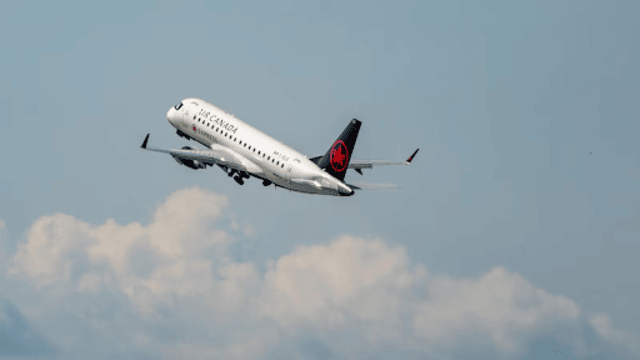
An Air Canada jet departs from Montreal’s Pierre Elliott Trudeau International Airport. The airline and the union for 10,000 flight attendants will return to the negotiating table today, aiming to reach a deal and prevent a possible strike set for next week.
Flight attendants at Air Canada are gearing up for a nationwide show of frustration over their working conditions. On August 11, members of the Canadian Union of Public Employees (CUPE), which represents these workers, will gather at major airports across the country for what the union is calling a “national action.”
Earlier this week, CUPE members voted overwhelmingly — 99.7 percent in favour — to authorize a strike. The union says this move is meant to draw attention to what it describes as long-standing issues, including low pay and unpaid hours, as well as to underline the crucial role flight attendants play in passenger safety and the smooth running of flights.
While CUPE has not explicitly confirmed that the August 11 action will be a full strike, it has made it clear that its members are prepared for significant measures if necessary. In a brief statement, the union said it would not be taking media questions for the next week due to ongoing intense negotiations with Air Canada.
The Core Issues Behind the Dispute
At the heart of the disagreement is pay — particularly the fact that flight attendants are only compensated for time spent in the air. Hours spent preparing the cabin before departure or assisting passengers after landing go unpaid. CUPE argues that these unpaid hours form a substantial portion of the job and need to be recognized financially.
The union is also pushing for higher wages overall, saying the current compensation does not match the workload, responsibilities, and irregular schedules flight attendants face.
Air Canada’s Response
Air Canada has stated that it is not yet planning to cancel or postpone flights, emphasizing its goal of reaching an agreement before any walkout takes place. The airline also pointed out that a strike vote is a routine part of labour negotiations and does not necessarily mean a strike will occur.
Still, the potential for disruption looms large. If the union does proceed with a strike, Canadian law requires Air Canada to find alternative transportation for affected passengers. This could include rebooking them on competing airlines — an expensive option for the company.
What Passengers Need to Know
Travelers may be offered refunds if flights are disrupted, but passenger rights advocate Gabor Lukacs warns against accepting them too quickly. According to Lukacs, taking a refund could mean losing the right to have Air Canada arrange alternate travel. “If you accept a refund, then Air Canada can wash its hands of your alternate transportation,” he cautioned.
For now, both sides remain locked in negotiations, with the union expressing hope that it won’t have to strike — but also making it clear that it is ready to if Air Canada does not address its demands.