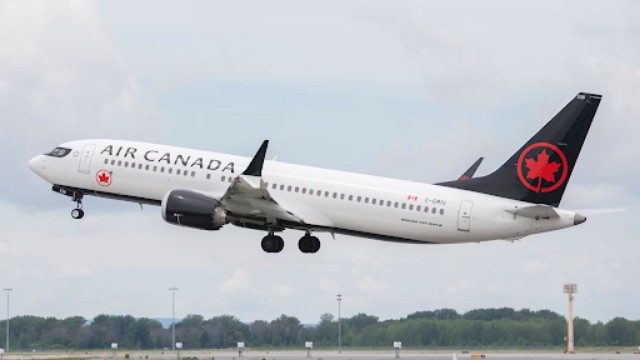
An Air Canada plane lifts off from Montreal’s Trudeau Airport. (Photo: Graham Hughes/The Canadian Press)
Air Canada has reported a noticeable dip in profits for the second quarter of 2025, largely due to a sharp decline in travel to the United States. The airline is feeling the pinch as tensions grow between Canada and its southern neighbour, leading many Canadians to rethink their travel plans.
Relations between the two countries took a hit after U.S. President Donald Trump imposed tariffs on Canadian goods and made controversial statements suggesting Canada should be annexed. These actions triggered a wave of public outrage, prompting many Canadians to avoid American-made products—and, more significantly, for Air Canada—to cancel travel plans to the U.S.
This trend became especially evident during the summer, typically the busiest and most profitable time of the year for airlines. But instead of a seasonal boost, Air Canada saw fewer passengers booking U.S. flights, leaving a dent in its earnings.
Canadian Travellers Back Away from U.S.
Many Canadians are now choosing to explore domestic destinations or other international locations over U.S. cities. This growing disinterest in travelling south of the border has directly impacted Air Canada, as the U.S. is one of its largest and most important markets.
Financial Snapshot
During the second quarter, Air Canada earned 60 cents per share—down from 98 cents per share in the same period last year. Despite the lower profit, the airline did see a small increase in its total operating revenue, rising to C$5.63 billion from C$5.52 billion last year.
While revenue grew slightly, it wasn’t enough to counterbalance the reduced travel volume, especially in the U.S. sector.
Looking Ahead: Slight Capacity Growth
In an effort to regain momentum, Air Canada plans to increase its available seat miles (ASM) capacity by 3.25% to 3.75% in the third quarter compared to the same period last year. This suggests the airline is still betting on recovery, possibly expecting demand to bounce back as public sentiment shifts or new international markets become more accessible.
But with political tensions still running high and public frustration lingering, the road to recovery may not be smooth.