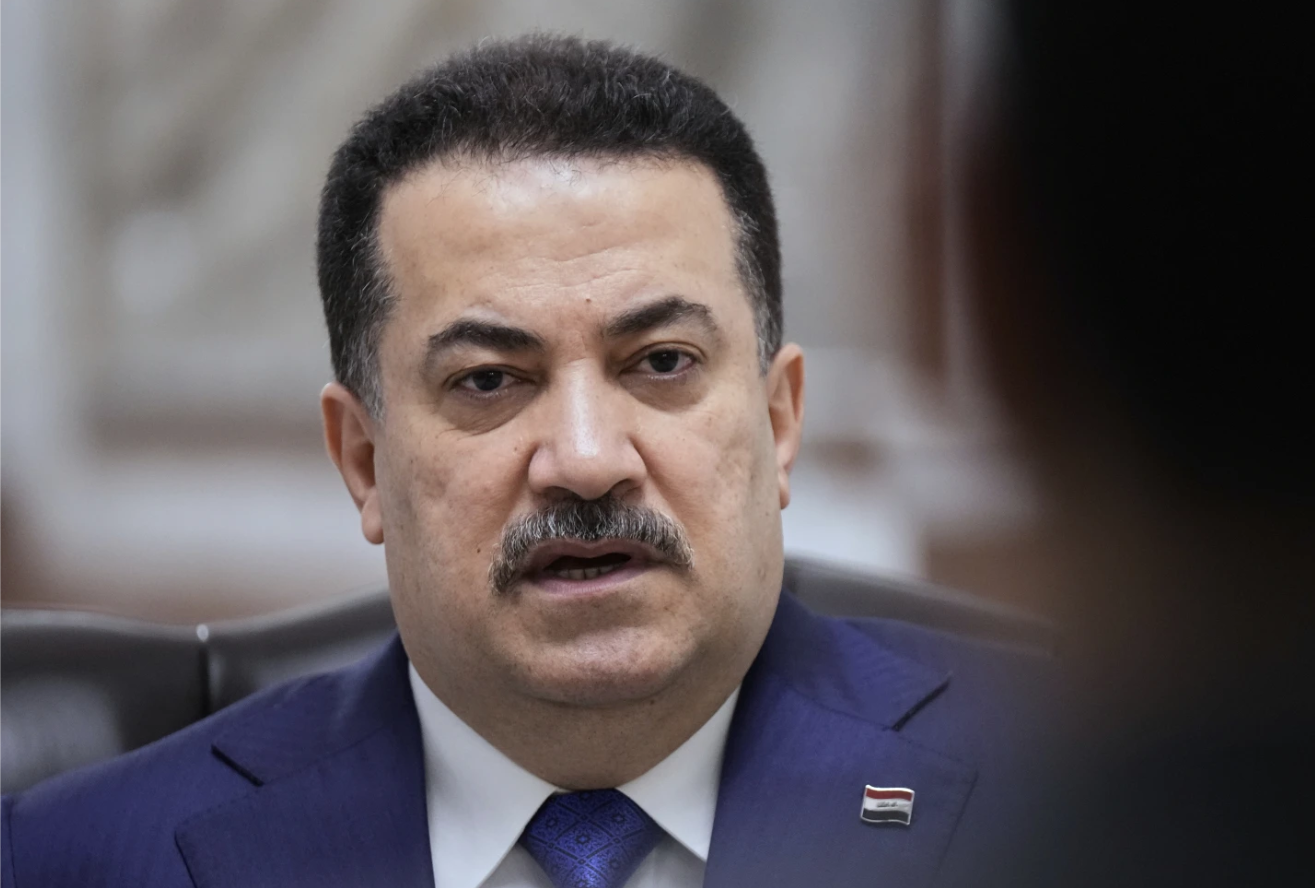
Iraq’s Prime Minister Mohamad al-Sudani speaks during an interview in Baghdad on Monday, July 28, 2025.
Iraq’s Prime Minister Mohammed Shia al-Sudani has walked a fine line between diplomacy and deterrence in one of the world’s most volatile regions. With nearby conflicts escalating, including a major flare-up between U.S. ally Israel and Iran, al-Sudani has focused on shielding Iraq from becoming a battleground. At the same time, he’s working to deepen economic and security ties with the United States — all while managing the influence of Iran-backed militias within Iraq’s borders.
Navigating the Crossfire of Iran-Israel Tensions
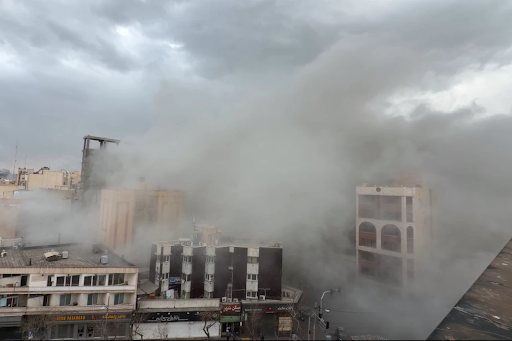
When hostilities between Iran and Israel peaked — including missile exchanges and U.S. strikes on Iranian sites — Iraqi armed factions attempted to join the fray. But al-Sudani’s government blocked 29 attempted strikes by these militias, some targeting Israel, others aimed at U.S. troops stationed in Iraq.
Al-Sudani attributed this success to “security operations” and behind-the-scenes diplomacy, particularly with Iranian leaders. “We aimed to avoid giving any side an excuse to attack Iraq,” he told the Associated Press.
His message to both Tehran and Washington was clear: Iraq should remain neutral, and stability must prevail.
Future of US Troops in Iraq Remains Uncertain
In 2023, the U.S. and Iraq agreed to wind down the presence of the American-led coalition against ISIS. A key milestone was achieved in March 2025, when the coalition killed ISIS’s top commander in Iraq and Syria through a joint operation.
Despite this, signs of withdrawal have been minimal. Al-Sudani said that both countries plan to finalize new bilateral security terms by year-end. He hopes this partnership will extend beyond defense to U.S. investments in Iraq’s oil, gas, and artificial intelligence sectors.
“These investments,” he noted, “can help achieve economic growth and strengthen regional security.”
Iran-Backed Militias Pose Long-Term Challenge
Iraq continues to grapple with how to manage the Popular Mobilization Forces (PMF) — a network of mainly Iran-aligned militias initially formed to fight ISIS. Officially brought under the Iraqi military’s control in 2016, the PMF still operates with significant independence.
A controversial new draft law in Iraq’s parliament aims to formalize the PMF’s role in the state. But the U.S. has raised alarms, saying the bill could entrench Iranian influence and empower armed groups that threaten Iraq’s sovereignty.
Al-Sudani defended the move, insisting that the goal is to put all weapons under state control. “Security forces must operate under law, be held accountable, and follow chain of command,” he said.
Drone Strikes Expose Weakness in State Control
Recent drone attacks on oil facilities in Iraqi Kurdistan have highlighted Iraq’s security vulnerabilities. Kurdish authorities accused PMF-linked groups of the strikes, a claim denied by Baghdad. Al-Sudani condemned the attacks as terrorism and vowed to find those responsible in collaboration with Kurdish forces and coalition allies.
Similarly troubling is the 2023 kidnapping of Israeli-Russian academic Elizabeth Tsurkov. She is believed to be held by Kataib Hezbollah, an Iraqi militia. While al-Sudani didn’t confirm the group’s involvement, he said a government team is dedicated to locating her — though “we do not negotiate with kidnappers.”
Strengthening Relations with Syria Amid Postwar Uncertainty
Al-Sudani is also working to reset relations with Syria’s transitional government. Its new president, Ahmad al-Sharaa — once an al-Qaida fighter — now leads efforts against ISIS in Syria. Despite past tensions, Iraq sees common ground in combating terrorism.
Al-Sudani stressed the importance of learning from Iraq’s post-Saddam chaos. “We have warned Syria against repeating the mistakes that led to years of sectarian violence in Iraq,” he said.
He called for Syria’s leaders to include all communities in a national political process and rejected any foreign military presence in Syria, referencing Israel’s operations in the region.
Looking Ahead: Stability Through Diplomacy and Development
As he eyes a second term, al-Sudani’s leadership hinges on two pillars: maintaining internal order and rebuilding Iraq’s global partnerships — especially with the U.S. While balancing Iran’s influence remains complex, al-Sudani is betting on economic growth, security reforms, and diplomatic ties to keep Iraq stable.
“Iraq’s future lies in being a bridge between powers — not a battlefield for their conflicts,” he said.