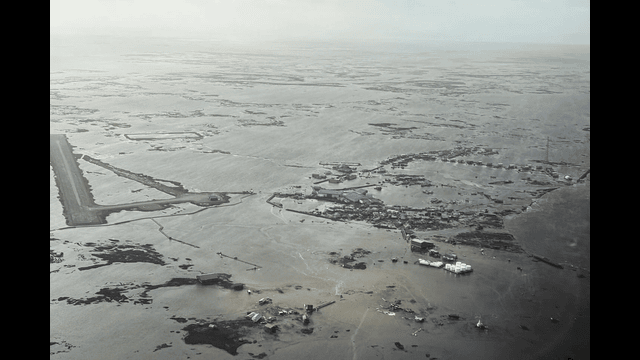
In this photo provided by the Defense Visual Information Distribution Service, Alaska Air National Guard rescue personnel conduct a search and rescue mission in Kipnuk, Alaska, on Monday, Oct. 13, 2025.
One of the largest airlifts in Alaska’s history is underway. Hundreds of residents are being evacuated from coastal villages battered by the remnants of Typhoon Halong. The storm struck over the weekend, bringing fierce winds and record-breaking high surf.
Low-lying communities faced catastrophic flooding. Homes were washed away, some with people still inside. At least one person has died, and two remain missing. Makeshift shelters quickly filled to about 1,500 people, an extraordinary number in this sparsely populated region. Remote locations and severe damage have slowed relief efforts. Emergency teams are gradually moving from search-and-rescue to restoring essential services.
Floodwaters Surge in Kipnuk and Kwigillingok
The villages of Kipnuk and Kwigillingok, near the Bering Sea, saw water levels rise more than six feet above normal high tide. Officials say some homes are now uninhabitable, even with emergency repairs. Winter is approaching, and temperatures could drop below freezing this weekend, with rain or snow expected.
State emergency management spokesperson Jeremy Zidek confirmed that authorities have been asked to evacuate over 1,000 residents. “Some homes cannot be reoccupied safely, and others may be unlivable by winter,” officials said.
Focus on Safety and Shelter
Mark Roberts, incident commander for the state emergency management agency, emphasized the priority: “Our immediate goal is ensuring people are safe, warm, and cared for while we work to restore basic services.”
At the school in Kwigillingok, where about 350 residents had taken shelter overnight Tuesday, restrooms were restored. Officials warned that residents should avoid reentering damaged homes due to safety risks.
Evacuation to Anchorage
About 300 evacuees were flown to Anchorage on Wednesday, roughly 500 miles from the devastated coastline. They are being housed at the Alaska Airlines Center, a sports and events complex with room for around 400 people.
Regional shelters in Bethel, the southwest Alaska hub, were nearing capacity. Authorities are exploring additional shelter locations. The aim is to transition evacuees from congregate shelters into hotels or dormitories, Zidek said.
Federal Funding Cuts Raise Concerns
The disaster has highlighted past federal funding cuts affecting small, mostly Indigenous villages. A $20 million EPA grant to Kipnuk, meant to protect the community from flooding and river erosion, was terminated during the Trump administration. Environmental groups have criticized the decision, arguing it reduced the village’s ability to prepare for storms.
Jill Habig, CEO of Public Rights Project, said, “Pulling back promised support places people’s safety, homes, and futures at risk. These grants were essential to help communities adapt to climate change.”
Though the halted project may not have prevented the recent flood, efforts such as removing abandoned fuel tanks and other debris could have minimized risks to the village. The tragedy underscores the real-world consequences of reduced funding for front-line communities.
Continuing Efforts
Authorities continue airlifting residents to safety and assessing damage in affected villages. Emergency teams remain focused on stabilizing living conditions and preventing further hazards. Officials caution that the evacuation and recovery process will take time, as the storm’s impact is extensive and resources remain stretched.
The Alaska airlift demonstrates both the scale of the storm’s devastation and the ongoing challenges in protecting remote coastal communities from extreme weather events.