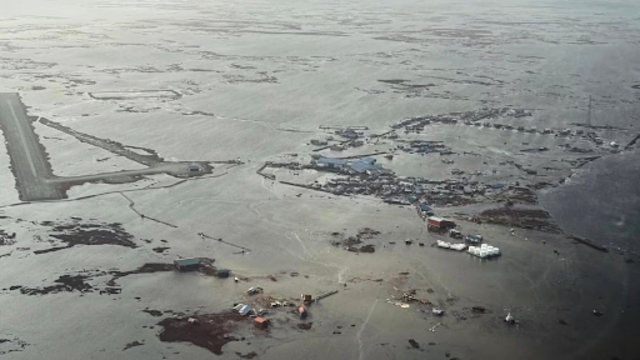
This image, released by the Defence Visual Information Distribution Service, shows Alaska Air National Guard rescue crews carrying out a search and rescue operation in Kipnuk, Alaska, on Monday, Oct. 13, 2025. AP
Alaska officials are carrying out one of the largest airlift operations in the state’s history to rescue hundreds of residents stranded after the remnants of Typhoon Halong struck the state’s southwest coast last weekend.
The storm caused widespread destruction across several small villages, sweeping away homes and forcing around 1,500 people into temporary shelters. Officials confirmed that one person died and two remain missing after the powerful system tore through the region.
Record Storm Surge Destroys Villages
The coastal communities of Kipnuk and Kwigillingok were among the hardest hit. With populations of about 715 and 380, both villages experienced severe flooding and extensive damage.
According to Jeremy Zidek, a spokesperson for the state’s emergency management office, leaders from both communities requested help from the state to relocate residents after homes were destroyed or left unsafe.
“The damage in these areas is extensive,” Zidek said. “We’re working quickly to get people to safety.”
The Alaska Department of Military and Veterans Affairs organized airlifts to transport about 300 evacuees to Anchorage, several hundred miles away. The evacuees are being housed at the Alaska Airlines Center, a large events facility capable of sheltering up to 400 people.
Zidek added that not everyone in the affected areas chose to leave. Some residents have opted to stay behind or stay with friends and relatives nearby.
Shelters Reaching Capacity
Officials said shelters in Bethel, the regional hub for southwest Alaska, have nearly reached their limits as displaced residents arrive from surrounding villages. Relief teams are providing food, water, and medical support while coordinating transportation to larger facilities.
The National Weather Service reported that Typhoon Halong’s remnants brought hurricane-force winds and a storm surge six feet above normal levels, breaking records along parts of the Bering Sea coastline.
Homes, boats, and community buildings were destroyed as floodwaters rushed inland. Many residents lost power and access to clean water, prompting an urgent need for state and federal assistance.
Federal Grant Cuts Draw Scrutiny
The devastation has renewed attention on previous cuts to federal disaster-prevention funding that affected several Indigenous and remote Alaskan communities.
For example, Kipnuk lost a US$20 million grant from the U.S. Environmental Protection Agency that would have helped the community build flood and erosion protection systems. The funding was cancelled under the Trump administration, a decision environmental groups later challenged.
Local leaders and advocates say the loss of such programs left small villages more vulnerable to extreme weather events like this one.
Hope Amid Hardship
Despite the widespread destruction, rescue efforts continue as state and federal agencies coordinate relief operations. Evacuees arriving in Anchorage are receiving medical checks, warm meals, and mental health support.
Officials have described the ongoing evacuation as one of the most significant emergency responses in Alaska’s history, underscoring the storm’s devastating impact on already fragile coastal communities.