Australian Prime Minister Anthony Albanese, right, and Foreign Minister Penny Wong address a press conference at Parliament House in Canberra, Australia, Monday, Aug. 11, 2025.
Australia will officially recognize a Palestinian state. Prime Minister Anthony Albanese confirmed the decision on Monday after a Cabinet meeting.
This move aligns Australia with countries like France, Britain, and Canada, which have already signaled similar intentions. The announcement follows growing domestic pressure and rising criticism over the humanitarian crisis in Gaza.
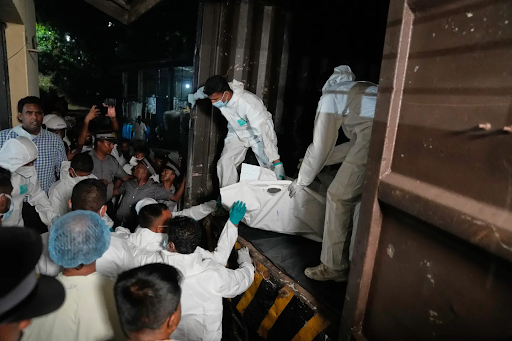
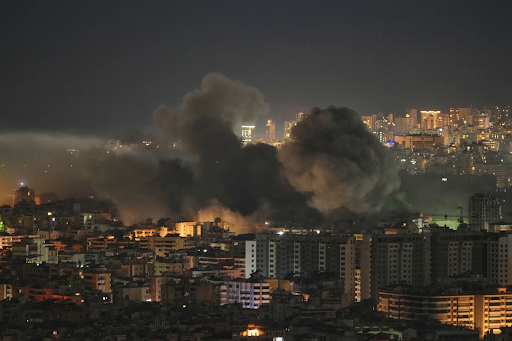
Albanese described the situation as a “humanitarian catastrophe” and urged a political solution to end the suffering.
Formal Recognition at UN Assembly
The recognition will be formalized during the United Nations General Assembly in September. According to Albanese, this decision comes after assurances from the Palestinian Authority.
These assurances include:
- No role for Hamas in a future Palestinian government.
- Demilitarization of Gaza.
- Holding democratic elections.
Albanese emphasized that these commitments are crucial to ensuring peace and stability in the region.
A Push for a Two-State Solution
The Prime Minister reiterated his government’s support for a two-state solution. He called it “humanity’s best hope” to end decades of violence in the Middle East.
He said the goal is to end the conflict, relieve suffering, and stop starvation in Gaza. “The situation has gone beyond the world’s worst fears,” he added.
Albanese criticized Israel for what he described as violations of international law and blocking aid to civilians.
Netanyahu Calls Move ‘Shameful’
Israeli Prime Minister Benjamin Netanyahu reacted strongly to the announcement. On Sunday, he criticized Australia and several European nations for recognizing a Palestinian state.
He called the decision “disappointing” and “shameful,” accusing them of falling for a “canard.”
Israel continues to reject such recognition, viewing it as undermining negotiations for a lasting peace agreement.
No Support for Hamas
Australia has officially designated Hamas as a terrorist group. Albanese repeated calls for Hamas to release Israeli hostages taken during the October 7, 2023 attacks.
He also stressed that Hamas does not support a two-state solution and must be isolated.
“This is an opportunity to deliver self-determination for Palestine while removing Hamas from the region,” he said.
Talks with Palestinian Leadership
Last week, Albanese held talks with Palestinian President Mahmoud Abbas. Abbas, who governs parts of the occupied West Bank, supports the two-state plan and works with Israel on security matters.
Western leaders, including Albanese, have received assurances from Abbas to uphold peace commitments if recognition proceeds.
Most Nations Already Recognize Palestine
Almost 150 of the 193 UN member states already recognize Palestine, many having done so decades ago.
The United States and some Western powers have withheld recognition, insisting that Palestinian statehood should come through a final peace settlement with Israel.
Despite this, Albanese rejected the idea that Australia’s move is only symbolic.
Building Global Momentum
“This is a practical contribution towards building momentum,” Albanese said. “This is not Australia acting alone.”
He discussed the decision with leaders from Britain, France, New Zealand, and Japan. He also had a lengthy conversation with Netanyahu earlier this month.
New Zealand Weighs Its Position
New Zealand’s Foreign Minister Winston Peters confirmed that his country is also reviewing its stance. A decision is expected in September.
Peters said, “Recognition of a Palestinian state is a matter of when, not if.”
Path Forward for Peace
The proposed two-state solution envisions Palestine existing alongside Israel in the West Bank, Gaza, and East Jerusalem. These territories were captured by Israel in the 1967 Middle East war.
While recognition alone cannot resolve decades of conflict, Albanese believes it is a step toward meaningful negotiations and lasting peace.
“This is about creating hope and a political path forward,” he said.