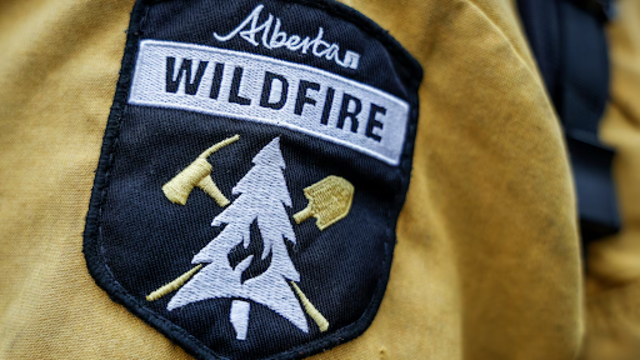
An Alberta Wildfire service patch is seen in a photo taken in Fort McMurray, Alta., on May 16, 2024. The Canadian Press
Unusual warmth and dry ground continue across southern Alberta, and wildfire crews face growing challenges in the Calgary Forest Area. Alberta Wildfire reports two active fires of concern this week as winds stay strong and vegetation dries out. The region stretches along the eastern edge of the Rockies, from Carstairs down past Pincher Creek to the U.S. border.
Officials say the fire danger sits at a moderate level, which is higher than usual for this time of year. They warn that warm temperatures and gusty winds can cause flames to spread quickly.
First Fire Grows in Tough Conditions
Crews discovered three fires in the area this week. Two started on November 10, and one started on November 11. The largest, marked CWF067, sits about two kilometres north of Highway 579. It covers roughly 27 hectares and continues to burn.
Firefighters use helicopters and heavy tools to slow the flames. The wind creates sudden shifts, and the rough terrain limits access. Crews still report solid progress as they work across steep and brush-covered slopes. Officials say no homes or structures sit in the path of the fire.
Crew Stops Second Fire Quickly
A second wildfire also appeared on November 10. Crews reached it fast and knocked it down the same day. Firefighters credit quick movement and favourable conditions for the result. The fire no longer poses a threat in the area.
Third Fire Remains Stable
The third fire, named CWF069, started on November 11. It sits in the Porcupine Hills region, about six kilometres north of Highway 520 and ten kilometres east of Highway 22. The fire measures about three hectares. Officials say crews hold the fire in place and expect to keep it contained.
Like the other fires, this blaze does not threaten homes or nearby buildings. Crews continue to monitor the site and strengthen control lines.
A Longer Season Raises Concerns
Alberta Wildfire reports 69 fires in the Calgary Forest Area since January 1. These fires burned a total of 69 hectares. The wildfire season normally runs from March 1 to October 31, but this year’s mild fall weather extends the risk. Crews remain ready even as winter approaches.
Officials urge people to stay cautious. They ask residents and visitors to avoid activities that could spark flames. Dry grass and wind can turn a small spark into a fast-moving fire.
The wildfire team continues to patrol forest zones, track new hot spots, and respond to any reports from the public. They ask Albertans to call in smoke or flames as soon as possible.
Warm, dry weather may continue in the region, and crews expect more challenges in the coming days. Alberta Wildfire says quick reporting and careful behaviour can help prevent further fires.