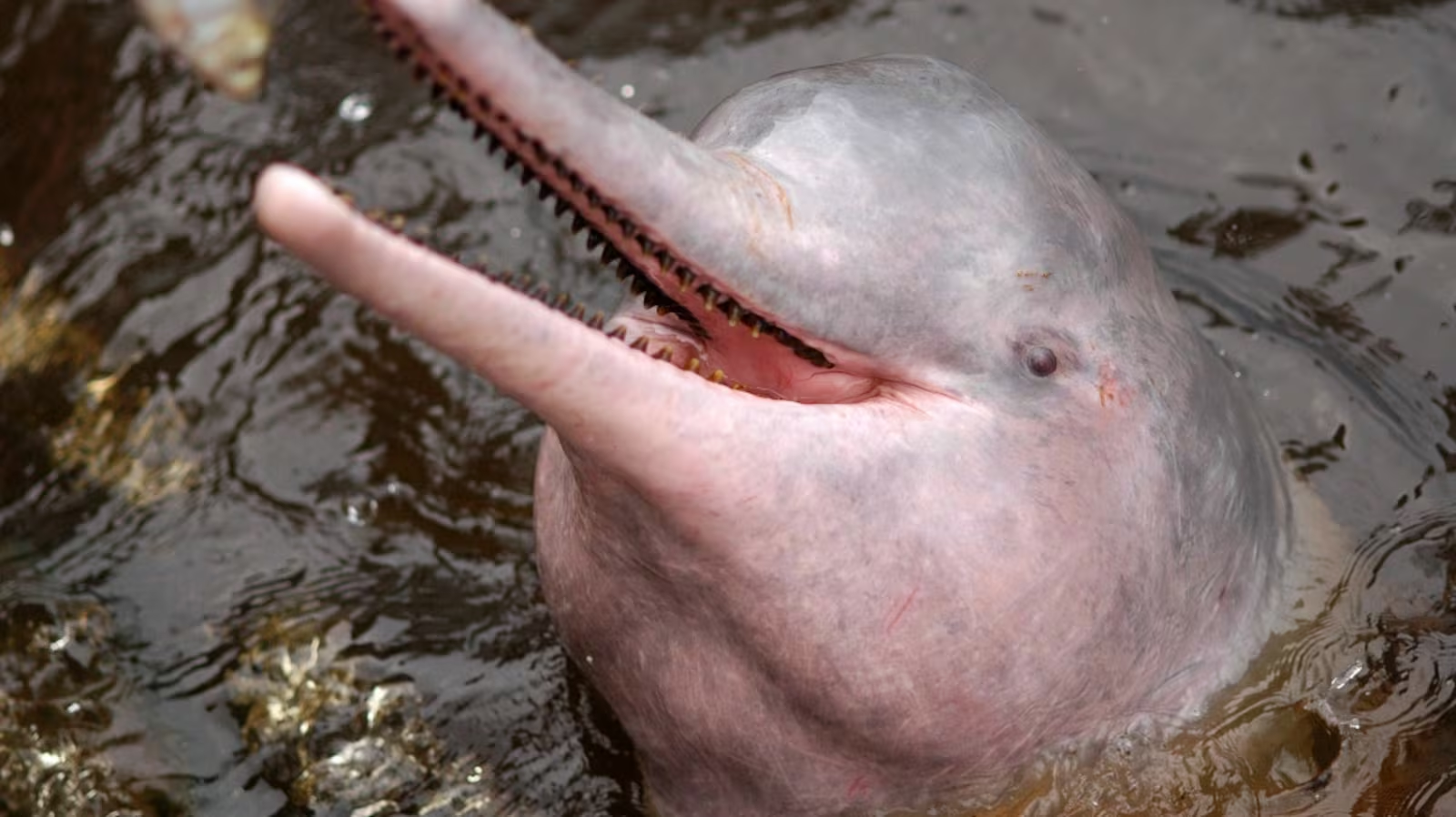
n glides through the Airao River in Brazil’s Amazonas state. (AP Photo)
A devastating drought and extreme heat wave have turned Lake Tefé, in Brazil’s Amazonas state, into what scientists describe as a “steaming cauldron.” The lake’s temperature climbed to 41°C, hotter than most hot tubs, killing hundreds of dolphins and countless fish in one of the Amazon’s worst environmental disasters in recent memory.
The shocking findings, published Thursday in the journal Science, reveal the growing dangers of global warming in tropical regions. The study was released as world leaders gather in Brazil for the COP30 climate summit, where experts will discuss the urgent need to protect ecosystems like the Amazon.
A tragedy for wildlife and local communities
When dozens of dolphins began washing up dead in September 2023, hydrologist Ayan Fleischmann and his team from the Mamirauá Institute for Sustainable Development set out to find the cause. What they found stunned them.
“You couldn’t put your finger in the water,” Fleischmann said. He described the emotional toll of seeing lifeless Amazon River dolphins and tucuxis, another freshwater species.
The researchers found that five out of ten lakes they studied had reached daytime temperatures over 37°C, far above the normal range of 29 to 30°C. Lake Tefé was the hottest, with its surface shrinking by nearly 75 percent during the drought.
What made the discovery more alarming was that the entire two-metre depth of the lake reached the same extreme temperature — a condition rarely seen in natural freshwater systems.
The science behind the disaster
The study identified four main causes: strong solar radiation, shallow water, low wind speeds, and high turbidity, meaning the water was murky. These factors combined to trap heat inside the lake, creating a dangerous cycle.
“Low winds mean less cooling, and murky water traps more heat,” Fleischmann explained. “Everything worked together to push temperatures to deadly levels.”
Nighttime temperatures dropped sharply to around 27°C, creating extreme swings that added stress to aquatic life.
Beyond the dolphin deaths, the disaster also triggered a mass die-off of fish and a phytoplankton bloom that turned the water red. The algae bloom, a sign of environmental stress, is the focus of another upcoming scientific paper.
Long-term warming trend
By analysing NASA satellite data dating back to 1990, researchers found that Amazonian lakes have warmed by 0.6°C per decade, a rate higher than the global average. Fleischmann warned that these conditions are no longer isolated events but part of a growing trend driven by climate change.
“The climate emergency is here — there is no doubt about it,” he said.
He plans to attend COP30 to push for more consistent monitoring of Amazon lakes and stronger involvement of local and Indigenous communities in crafting climate solutions.
A warning for the world
While the focus has been on the 200 dolphins found dead, scientists say they represent only part of a much larger crisis. The extreme heat has devastated the ecosystem, threatening food sources and livelihoods for communities that depend on the Amazon’s waters.
“This isn’t just about animals,” Fleischmann said. “It’s about people, survival, and the future of the Amazon.”