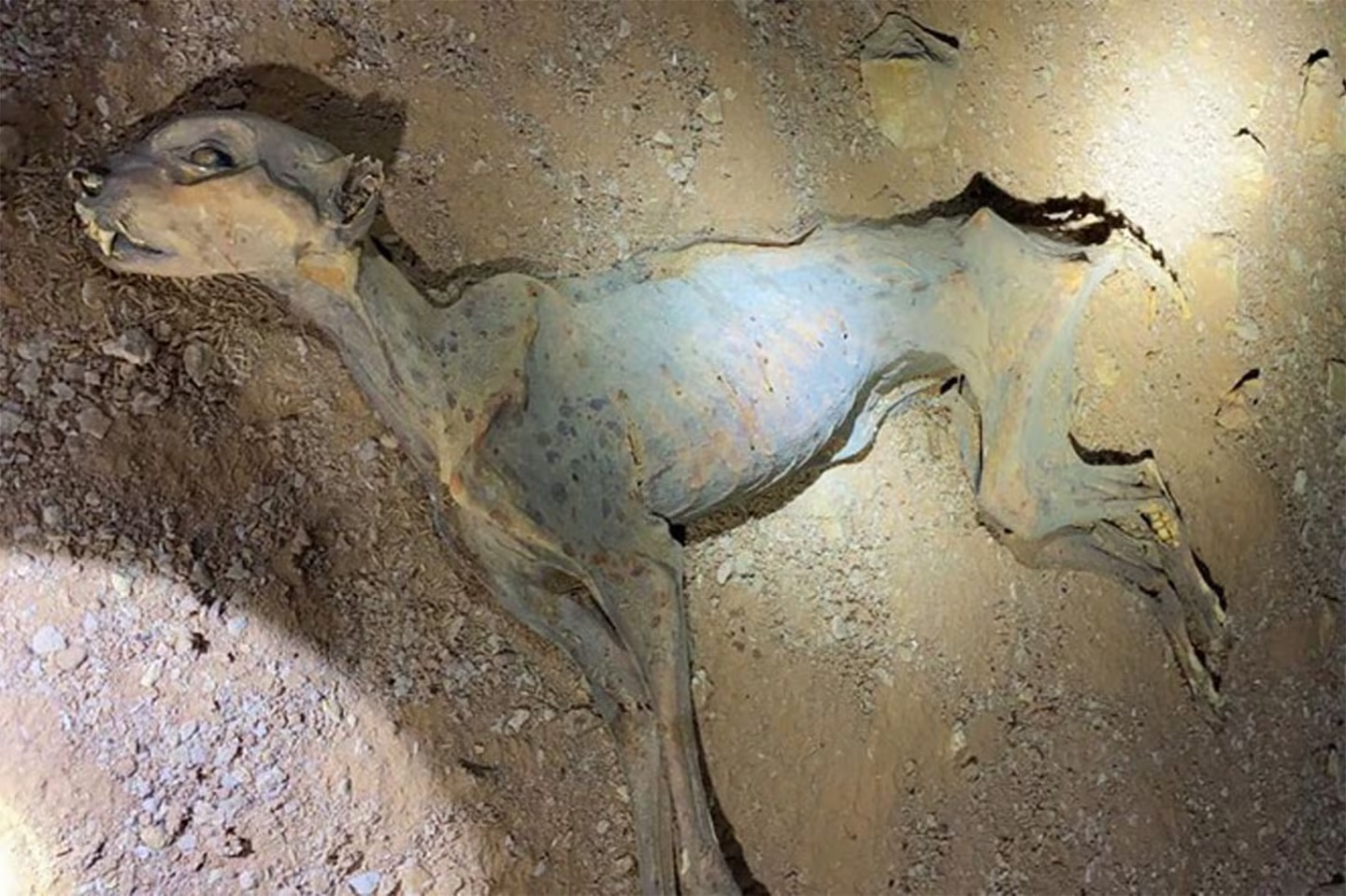
Researchers found cheetah remains in five caves, and many of the bodies were still largely complete, with soft tissue and bones well preserved, according to the National Center for Wildlife. CNN
Scientists in Saudi Arabia have uncovered remarkable new evidence about cheetahs that once lived on the Arabian Peninsula. During wildlife surveys conducted in 2022 and 2023, researchers exploring caves near the northern city of Arar discovered seven naturally mummified cheetahs.
The remains, found in five separate caves, were largely intact. Soft tissue and skeletons remained well preserved due to the region’s dry climate.
A Surprising Genetic Discovery
Researchers extracted complete genome sequences from three of the mummified cheetahs. It marked the first time scientists successfully recovered DNA from naturally mummified large felines.
The results brought an unexpected finding. Experts had long believed that only the Asiatic cheetah, known scientifically as Acinonyx jubatus venaticus, once lived in Saudi Arabia. That subspecies now survives in very small numbers in Iran and remains critically endangered.
However, DNA testing revealed that two of the older mummies were genetically closer to a different subspecies — Acinonyx jubatus hecki, commonly known as the Northwest African cheetah.
The findings confirm that at least two cheetah subspecies once roamed the Arabian Peninsula.
“It was highly surprising,” said Ahmed Al Boug, lead author of the study and deputy CEO of the National Center for Wildlife in Saudi Arabia. “This finding represents the first documented case of natural mummification in cheetahs, and first physical evidence that cheetah subspecies occurred in the Arabian Peninsula.”
He added, “Moreover, cave use by cheetahs is extremely atypical behavior, making both the discovery itself and the context in which it occurred entirely unexpected.”
Thousands of Years of History
In addition to the seven mummies, scientists found skeletal remains of 54 more cheetahs inside the caves. Researchers dated five samples and discovered that the oldest dated back about 4,000 years.
Two of the mummified specimens examined through DNA analysis lived between approximately 130 and 1,870 years ago. The discovery shows that cheetahs lived in Saudi Arabia far more recently than many believed.
Wildlife specialist Adrian Tordiffe, who was not involved in the research, said the timeline stands out.
“Even more striking is that the remains show different subspecies of cheetahs lived there at different times,” he said.
“This tells us the Arabian Peninsula was once an important natural bridge for cheetahs, not an ecological dead end.”
What It Means for Conservation
Cheetahs once occupied large parts of Africa and Asia, but today they survive in only a small fraction of their former range. In Saudi Arabia, they were declared locally extinct in the 1970s.
Researchers believe this new genetic evidence could guide efforts to reintroduce cheetahs to the region. By identifying which subspecies historically lived there, conservationists can choose animals better suited to the environment.
Tordiffe explained, “Because we now know which cheetah lineages lived in Arabia, reintroduction efforts can focus on using animals that are ecologically appropriate, rather than bringing in cheetahs from completely different environments.”
The presence of both young and adult remains suggests that cheetahs once bred and thrived in the region. That indicates the landscape previously supported healthy populations.
Looking Ahead
Overhunting and land changes reduced wildlife populations across the Arabian Peninsula over time. However, Saudi Arabia has recently created large protected areas and restored prey species such as gazelles.
Al Boug believes these conditions improve the chances for cheetah recovery.
“Showing the length of time the cheetah lived in Saudi Arabia shows that they were an important part of the ecosystem and not just passing through,” said Laurie Marker, founder of the Cheetah Conservation Fund.
She added, “As the Saudis are bringing back their wildlife species, the cheetah will be an important addition to rewilding, bringing back a healthy ecosystem to the desert once again.”
The discovery sheds new light on the region’s natural history and may help restore a predator that once played a key role in the desert ecosystem.