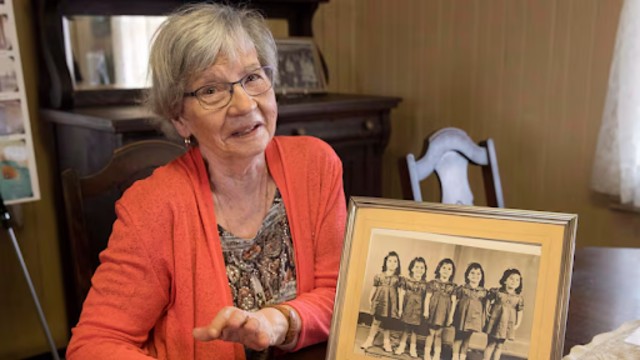
Annette Dionne, one of the Dionne quintuplets, is seen in North Bay, Ont., in August 2018. She and her sisters became a global sensation, but the attention came at great personal cost. (The Canadian Press)
Annette Dionne, the final surviving member of Canada’s famous Dionne quintuplets, has died at the age of 91. Her death marks the end of a remarkable and deeply troubling chapter in Canadian history.
The Dionne Quints Home Museum in North Bay, Ontario, confirmed that Annette passed away on Christmas Eve. However, no cause of death was disclosed. Museum officials described her as a devoted guardian of the sisters’ legacy and a lifelong advocate for children’s rights.
A Birth That Stunned The World
Annette Dionne was born on May 28, 1934, alongside her identical sisters Emilie, Yvonne, Cecile and Marie. Their birth made global headlines. They were the first known quintuplets to survive beyond infancy.
During the Great Depression, their survival was seen as a medical miracle. It also became a commercial spectacle.

Elzire Dionne is seen with her quintuplets in their farmhouse in Callander, Ont., in May 1934. (The Canadian Press)
Taken From Their Parents
Just months after their birth, the Ontario government removed the five girls from their parents’ care. Their mother and father already had five children and were deemed unfit to manage the attention.
The province placed the infants under a board of guardians. Officials claimed it was for their protection. In reality, it became a profitable public display.
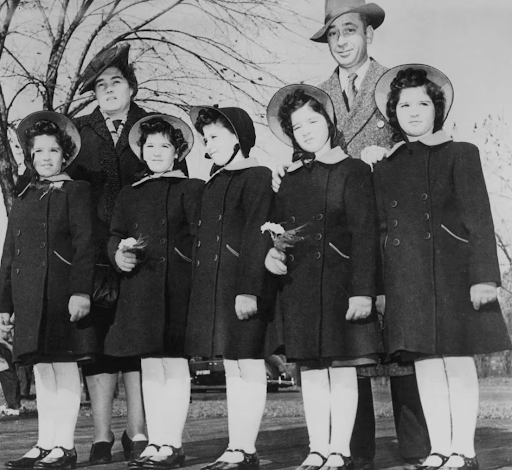
Elzire, back left, and Oliva Dionne stand with their quintuplets, Cecile, Yvonne, Marie, Emilie and Annette in this undated photo. (The Canadian Press)
Life Behind One-Way Glass
The sisters were housed in a purpose-built nursery known as “Quintland.” There, millions of tourists watched them daily through one-way glass.
Quintland became Canada’s biggest tourist attraction of its era. It generated an estimated $500 million for the province.
The girls were treated as public property. Hollywood films were produced about them. Major brands used them in advertising campaigns. Even five identical ships were named in their honour during the Second World War.
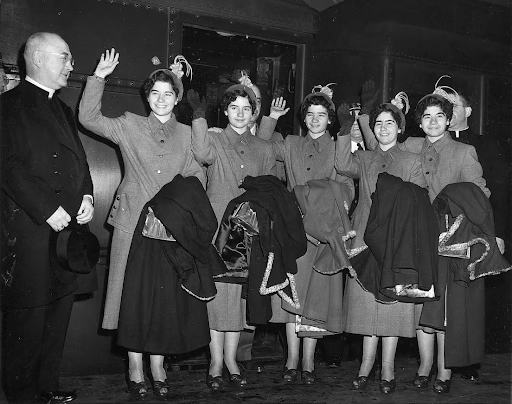
From left: Annette, Cecile, Yvonne, Marie and Emilie wave as they board a train in New York City in October 1950. (The Canadian Press)
A Childhood Shaped By Exploitation
For nine years, Annette and her sisters lived under constant observation. Their parents fought unsuccessfully to regain custody, and the experience left lasting scars
The sisters later spoke openly about the emotional damage they suffered during their childhood.
When they turned 18, the quintuplets left Ontario for Montreal. They withdrew from public life and sought anonymity.
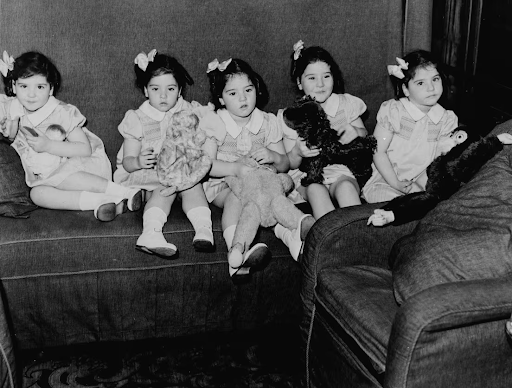
The Dionne quintuplets are seen in a train car while en route to Toronto in 1939. (The Canadian Press)
Loss, Regret, and a Long-Awaited Apology
Tragedy followed them into adulthood. Emilie died in 1954. Marie passed away in 1970. Yvonne died of cancer in 2001.
Cecile, who died earlier this year, became the most vocal advocate for justice. Her efforts led to a formal apology from Ontario in 1998.
The province acknowledged wrongdoing and issued a $4-million settlement for the exploitation they endured.
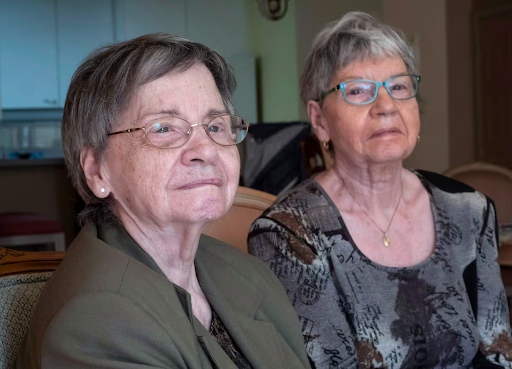
Cecile Dionne, left, and her sister Annette, two of the Dionne quintuplets, are seen in St-Bruno, Que., on Thursday, May 18, 2017. (The Canadian Press)
Annette’s Final Message
Annette Dionne remained committed to preserving the truth of their story. She supported the Dionne Quints Home Museum, which now stands in North Bay as a reminder of what happened.
In a 2019 interview, she urged parents to protect childhood from exploitation. She called it a sacred time that should never be sacrificed for profit.
With Annette’s passing away, the last living witness to the Dionne quintuplets’ story is gone. What remains is a cautionary legacy about power, profit, and the cost paid by children caught in between.