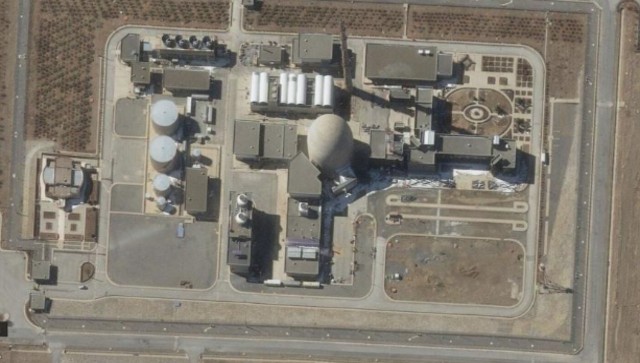
This Satellite image provided by Maxar technologies shows the Arak heavy reactor in Iran on Feb 15, 2025.
Tensions in the Middle East escalated further as Israel issued a stark warning on Thursday. Civilians were urged to evacuate the area surrounding Iran’s Arak heavy water reactor. This development comes amidst ongoing and intensifying airstrikes between the two nations.
Israel’s warning was shared through a post on X (formerly Twitter), accompanied by a satellite image of the reactor. The red-circled image resembled past posts made before Israeli military strikes, hinting at a potential upcoming attack on the facility.
Israel Steps Up Airstrikes, Iran Responds with Force
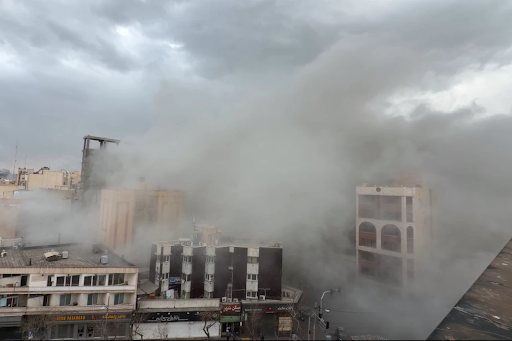
Thursday marked the seventh consecutive day of Israeli airstrikes on Iranian territory. The latest wave reportedly hit Tehran and other key locations. Israel did not disclose full details of the targets but later confirmed Iran had retaliated with more missiles.
Civilians in Israel were urged to take shelter as sirens blared across cities. Despite the escalating exchange, Israel has eased some civil restrictions, signaling that it believes the immediate missile threat from Iran may be diminishing.
Targeting Iran’s Nuclear Infrastructure
Israel’s recent military campaign has not spared Iran’s nuclear infrastructure. Strategic locations including Natanz, Tehran’s centrifuge workshops, and a major facility in Isfahan have already come under attack. These sites are critical to Iran’s uranium enrichment program.
Beyond infrastructure, the strikes have also resulted in the deaths of several top Iranian military leaders and nuclear scientists, dealing a blow to Iran’s technical and strategic depth.
Casualties Mount on Both Sides
The human toll from the conflict continues to climb. According to a Washington-based Iranian human rights organization, 639 people in Iran have died, including 263 civilians. Over 1,300 others are reported to be injured.
Iran has launched a counter-offensive, firing nearly 400 missiles and sending hundreds of drones into Israeli territory. These attacks have left 24 dead and hundreds wounded in Israel. Civilian areas, including central apartment buildings, have suffered severe damage.
Why Arak Heavy Water Reactor Matters
The Arak heavy water reactor, located 250 kilometers southwest of Tehran, is a point of international concern. Heavy water is used to cool reactors and can produce plutonium, a potential material for nuclear weapons.
Although Iran agreed in the 2015 nuclear deal to redesign the Arak reactor to ease global fears, the recent military focus suggests Israel views the site as a continuing threat. Back in 2019, Iran activated the reactor's secondary circuit, which did not breach the terms of the deal but did raise eyebrows internationally.
International Oversight and Iran’s Isolation
The International Atomic Energy Agency (IAEA) has repeatedly urged Israel not to target Iranian nuclear facilities. IAEA inspectors last visited the Arak reactor on May 14. However, due to Iranian restrictions, the agency admits it has lost “continuity of knowledge” about the country’s heavy water production.
This lack of transparency raises fresh concerns over Iran’s nuclear intentions, especially with Arak being one of the few remaining routes Iran could take toward weaponization via plutonium.
The West’s Previous Role in the Reactor Project
Under the 2015 deal, Iran agreed to export its heavy water to the West. Even the United States, before pulling out of the agreement, purchased over 32 tons of it for $8 million. After President Trump’s 2018 withdrawal, the UK stepped in to help redesign the Arak reactor.
This effort aimed to ensure the facility produced less plutonium, reducing proliferation risks. Now, that fragile progress appears under threat as Israel continues its targeted strikes.
Conclusion: A Region on Edge
The Israeli military’s focus on the Arak heavy water reactor underscores the seriousness of the current crisis. What began as a strategic air campaign has morphed into a volatile conflict with high civilian costs, growing international concern, and escalating nuclear tensions.
With diplomacy stalled and missiles flying, the future of regional stability — and the fate of Iran’s nuclear infrastructure — hangs in the balance.