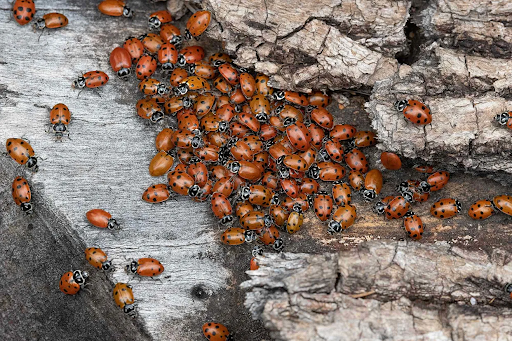
A cluster of ladybugs climbs over one another on a tree in Sugarloaf Park in Sonoma County, California. Getty Images
As cooler weather spreads across the United States, many homeowners have begun noticing clusters of insects gathering on exterior walls, porches and windows. These insects look much like the familiar red ladybugs, but experts say they are something entirely different. The multicoloured Asian lady beetle, an invasive species, grows more active every fall as it searches for warm spaces to survive the winter.
Not Your Usual Ladybug
The Asian lady beetle comes from parts of Asia and spreads widely across North America. It looks similar to the native ladybug, but it behaves differently. The beetle often bites, swarms in large groups and releases a sharp smell when disturbed. These traits make it a frustrating visitor for many households.
Scott Baker, an extension agent in Virginia, explained how the beetles operate. “They're originally from somewhere in Asia. Most of the growing season, people don't really notice them because they're outside, but they're always looking for a place to overwinter,” he said.
The “Death Spiral” Phenomenon
Scientists use the term “death spiral” to describe the way these beetles gather. They cling to sunny walls and windows in tight circles and spin slowly as they try to find entry points. Many become so exhausted that they fall and die near the building’s base, showing the lengths they go to in their search for warmth.
How They Enter Homes
These beetles appear most often in October and early winter. They gather on bright, warm spots such as the south side of houses, window frames and eaves. They squeeze through cracks around doors, siding, rooflines, utility cables and loose screens. Inside, they become more of a nuisance than a threat. They do not lay eggs indoors and they do not chew through wood or walls.
Odour and Staining Problems
Homeowners deal with other issues once the beetles settle in. When touched, cornered or crushed, the insects release a yellow fluid that smells strong and unpleasant. The fluid can stain walls, curtains and furniture. Their presence can also cause allergies or irritation in some people.
Environment experts say the beetles can bite when caught between skin and cloth, though these bites rarely break the skin. They can also disrupt local ecosystems. The beetles often outcompete native ladybugs and cause shifts in insect populations.
Where They Are Most Common
The beetles spread through almost every region of the country. Reports rise each fall in states such as Illinois, Ohio, Michigan, Pennsylvania, Virginia and New York. They also appear in parts of the West and Southeast. Cooler climates and city neighbourhoods often see the largest numbers.
Ways to Keep Them Out
Experts say prevention works best. They suggest sealing gaps around windows, doors, chimneys, pipes, attic vents and siding. Repairing screens and door sweeps also helps reduce entry points. Once beetles enter a home, experts recommend vacuuming them instead of sweeping or crushing them. Squashing them often triggers their strong smell and causes more stains.