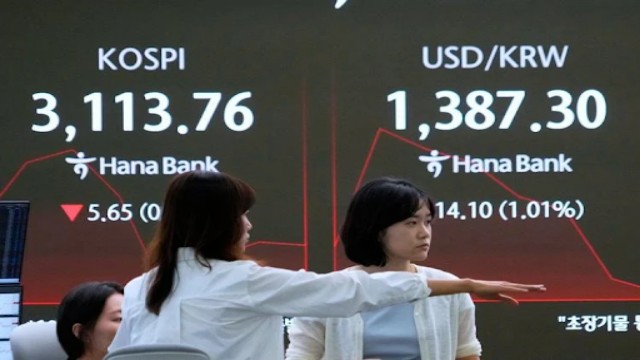
Currency dealers are seen working next to a display showing South Korea's KOSPI stock index and the U.S. dollar to Korean won exchange rate at Hana Bank’s main trading room in Seoul on Monday, August 4, 2025. (AP Photo/Ahn Young-joon)
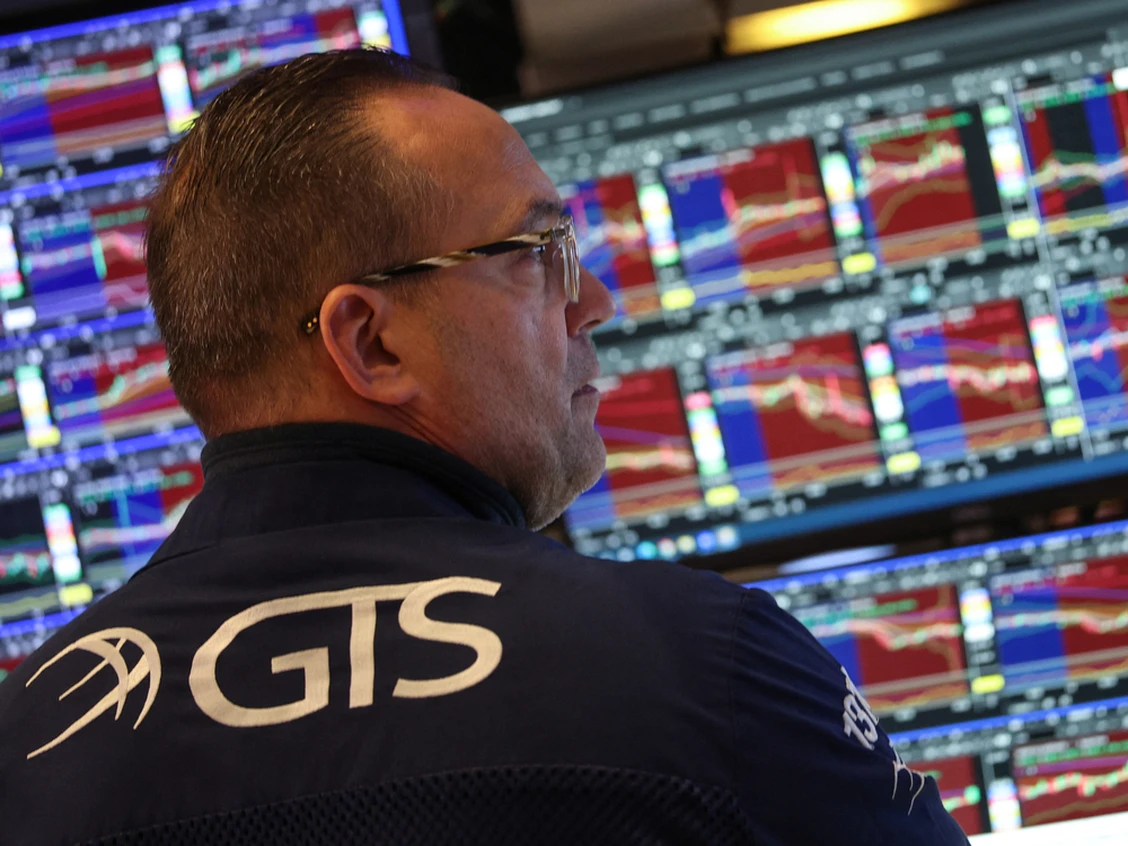
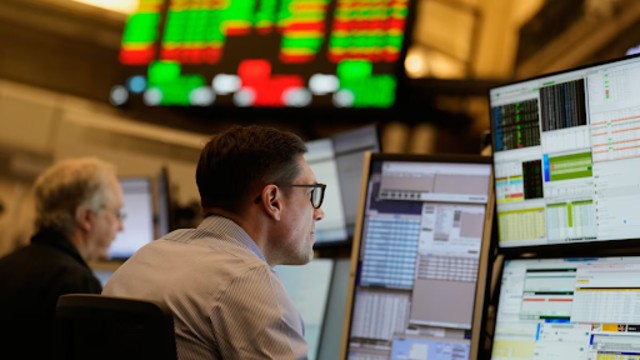
Asian stock markets opened the week with mixed results on Monday, following Wall Street’s steepest drop since May. Investors across Asia responded to a double whammy of disappointing U.S. job data and growing concerns over the impact of new import tariffs.
On Friday, Wall Street slumped after a surprisingly weak jobs report showed U.S. employers added only 73,000 new positions in July. Analysts had predicted much stronger hiring. Making things worse, previous data for May and June were revised downward by 258,000 jobs, shaking investor confidence.
Asian Indexes Reflect Uneasy Sentiment
In response, Tokyo’s Nikkei 225 dipped 1.6% to close at 40,134.97, recovering slightly from deeper morning losses. Hong Kong’s Hang Seng Index edged up just 0.2% to 24,589.21, and the Shanghai Composite barely moved, settling at 3,562.18.
Meanwhile, South Korea’s Kospi bucked the trend and jumped 0.7% to 3,140.92, showing surprising resilience. Australia’s S&P/ASX 200, on the other hand, fell 0.2%, ending at 8,643.00.
Wall Street Takes a Hit Amid Growing Fears
Back in the U.S., the job market news spooked investors. The S&P 500 dropped 1.6% to 6,238.01, its biggest single-day fall since May 21. It also marked its fourth straight day of losses and a 2.4% decline for the week. The Dow Jones sank 1.2% to 43,588.58, while the Nasdaq tumbled 2.2% to 20,650.13.
Big tech stocks were hit hard. Amazon plunged 8.3% despite strong quarterly results. Apple lost 2.5%, even after beating Wall Street expectations. Both firms are facing increased cost pressures from the new round of tariffs.
Tariff Worries & Political Turmoil Add Pressure
President Trump’s decision to impose broader tariffs on key trade partners has created further market turbulence. The import duties are set to begin on Thursday, sending waves of uncertainty through global businesses. Companies like Walmart and Procter & Gamble have already warned of higher costs and price hikes due to rising import taxes.
Adding to the unease, Trump unexpectedly dismissed the head of the government agency responsible for compiling jobs data. That move sparked fears of possible political interference in future employment statistics.
Rate Cut Hopes Rise, But Inflation Looms
The bleak hiring report boosted investor bets that the Federal Reserve might cut interest rates in September to help steady the economy. The 10-year Treasury yield dropped sharply from 4.39% to 4.21%, while the more sensitive 2-year Treasury yield fell from 3.94% to 3.68%.
However, inflation remains a concern. The Fed’s preferred inflation metric rose to 2.6% in June, above its target of 2%. The Fed has kept rates unchanged since December, and while Chair Jerome Powell is under pressure from Trump to lower them, any such move requires full committee approval.
Global Businesses Brace for Uncertainty
Ongoing tariff tensions have left businesses uncertain about future costs. The unstable policy environment is making long-term planning difficult. Many firms are already seeing shrinking margins and forecasting potential losses if tariffs remain in place or expand further.
Currency & Oil Markets Stay Volatile
The U.S. dollar strengthened against the yen, moving to 147.80 from 147.26. The euro weakened slightly to $1.1577. Meanwhile, oil prices slipped: U.S. crude fell by 18 cents to $67.15 per barrel, and Brent Crude dropped 23 cents to $69.44.