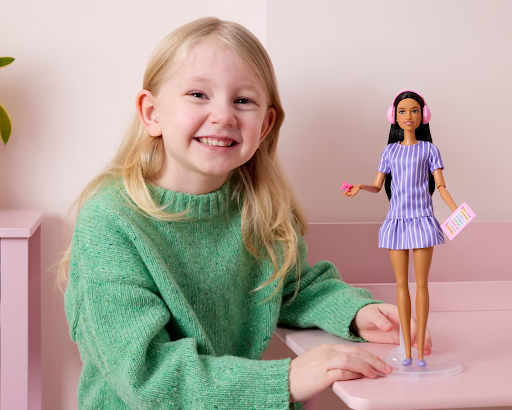
The doll features a finger fidget spinner to help calm stress and wears noise-cancelling headphones for comfort. Photo by Paul Michael Hughes. The Guardian
As Mattel continues to expand the world of Barbie, the company has introduced its first-ever autistic Barbie. The new doll arrived on Monday and joined the popular Fashionistas line. The launch followed the release of Barbie with type 1 diabetes just six months earlier. Together, these additions show a clear effort to help more children feel seen during playtime.
With another animated Barbie film now in development after the success of the 2023 movie directed by Greta Gerwig, Mattel plans to bring a wider range of characters to life on screen and in toy stores.
Designed With Care and Purpose
Mattel created the autistic Barbie in partnership with the Autistic Self Advocacy Network. The goal focused on reflecting how some autistic children experience the world. Autism affects how people interact, communicate, and respond to their surroundings. The World Health Organization estimates that more than one in 100 children worldwide live with autism.
The doll includes thoughtful details. Her eyes look slightly to the side, which reflects how some autistic people avoid direct eye contact. She has fully bendable elbows and wrists, allowing repetitive movements such as hand-flapping, which can help some children manage emotions or excitement.
Features That Reflect Daily Life
The autistic Barbie also comes with accessories meant to support comfort. She wears pink noise-cancelling headphones to help with loud environments. A pink fidget spinner rests on her finger to help reduce stress. She carries a tablet that displays symbol-based communication buttons to support everyday conversations.
Her clothing also reflects sensory needs. Barbie wears a loose purple dress designed to reduce fabric contact with skin. Flat purple shoes offer stability and ease of movement.
A Growing Range of Representation
Barbie first appeared in 1959. For many years, dolls reflected limited experiences. That changed in 2019, when Mattel introduced dolls with disabilities. Today, the collection includes Barbies who are blind, use wheelchairs, have Down syndrome, wear hearing aids, or have prosthetic limbs. Ken dolls also reflect similar experiences.
Jamie Cygielman, global head of dolls at Mattel, said the new doll continues that work.
“Barbie has always strived to reflect the world kids see and the possibilities they imagine, and we’re proud to introduce our first autistic Barbie as part of that ongoing work,” she said. She added that the doll “helps to expand what inclusion looks like in the toy aisle and beyond because every child deserves to see themselves in Barbie.”
Voices From the Community
Advocates welcomed the announcement. Jolanta Lasota said, “Theoretically any Barbie can be reimagined as autistic, because autism doesn’t have one look.” She added that the doll could help normalize supports like ear defenders and fidget toys, especially for children who worry about standing out.
Author Ellie Middleton also praised the move. “I never considered… that I might be autistic, because we had never seen anyone that looked like me,” she said. She believes the doll sends a clear message that difference deserves pride.