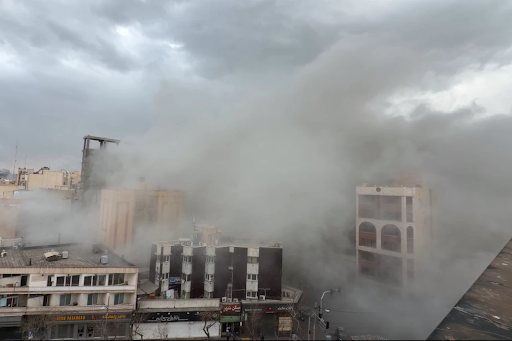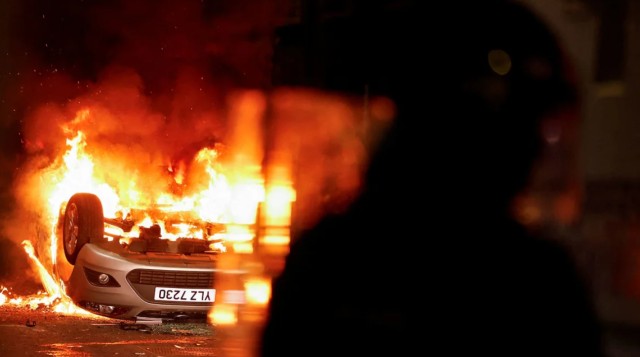
A vehicle burns during a second night of riots, in Ballymena, Northern Ireland, on June 11, 2025.
Northern Ireland has witnessed a second consecutive night of chaos as masked rioters set homes ablaze and clashed violently with police in the town of Ballymena. The unrest, triggered by outrage over an alleged sexual assault case, has escalated into scenes of destruction, fear, and widespread condemnation.
Second Night of Rioting Rocks Ballymena
Tensions flared once again on Tuesday night in Ballymena, located 45 km from Belfast. Hundreds of masked individuals launched attacks on police and torched both vehicles and homes. The town, usually quiet, became a battleground as angry mobs hurled petrol bombs and debris at law enforcement.
Authorities described the situation as "serious disorder" and urged locals to stay away for their own safety.
Violence Escalates as Rioters Set Fires
The rioters, armed with scaffolding poles and rocks torn from nearby walls, clashed with heavily equipped officers. Police responded with plastic baton rounds and water cannons, trying to disperse the violent crowds.
According to eyewitnesses, one house was completely burned, and a police officer became physically ill after exiting another home that was nearly set on fire. The town echoed with sirens past midnight as several vehicles, including one overturned, were engulfed in flames.
Rioting Follows Assault Case Protest
The unrest stems from public anger over a sexual assault case involving two teenage boys. The pair appeared in court on Monday, accused of assaulting a teenage girl in County Antrim. Reports indicate that interpreters were used to communicate the charges, sparking a wave of protests from local residents.
The initial protest on Monday night quickly turned violent. Four homes were set on fire, while windows and doors of other buildings were smashed. Authorities are treating these incidents as racially motivated hate attacks.
Officers Injured in Widespread Unrest
The cost of the rioting has extended to law enforcement as well. On Monday alone, fifteen police officers were injured, some seriously enough to require hospitalization. The situation deteriorated rapidly as officers faced a barrage of petrol bombs and physical attacks.
Unrest Spreads but Remains Localized
While Ballymena bore the brunt of the violence, ripple effects were felt in Belfast on Tuesday. Protesters blocked roads, but no violent incidents were reported in the capital. Other parts of Northern Ireland remained calm despite the tension.
Government and Leaders Denounce the Violence
The violent riots in Ballymena drew swift condemnation from the British government and local officials. Northern Ireland Minister Hilary Benn voiced his concerns on X (formerly Twitter), stating:
“The terrible scenes of civil disorder we have witnessed in Ballymena again this evening have no place in Northern Ireland.”
Leaders across the political spectrum have called for calm, urging citizens to reject violence and allow justice to take its course.
Rising Concerns Over Community Safety
The back-to-back nights of rioting have raised serious concerns about public safety, community tensions, and the need for responsible dialogue. The use of racially charged violence and attacks on homes suggests deep-rooted issues beneath the surface.
Authorities remain on high alert as the investigation continues into the initial assault case and the coordinated riots that followed.
Conclusion: A Town in Turmoil
The Ballymena riots are more than just outbursts of anger—they represent a boiling point in community frustration and mistrust. As homes burn and police suffer injuries, Northern Ireland is reminded of the fragile line between protest and chaos. Resolving the underlying issues will take more than just restoring order—it requires understanding, justice, and strong community engagement.