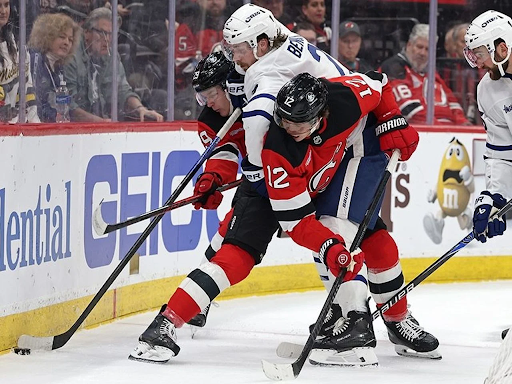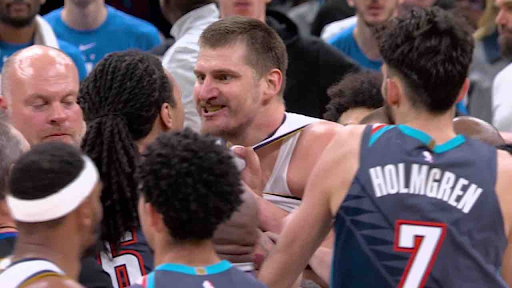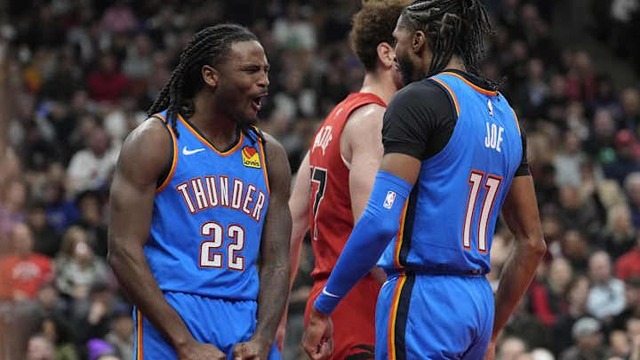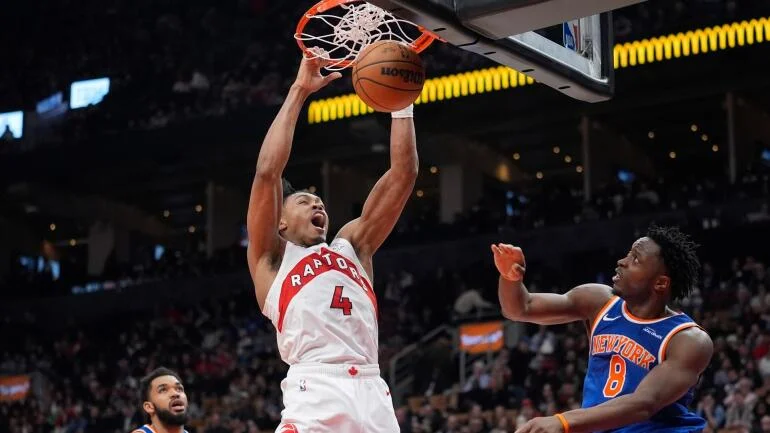
An intense moment in the game of Raptors and Orlando.
The feeling came back far too quickly for Toronto.
Just two days after a second-half collapse against New York, the Raptors slipped again.
This time, it happened against the Orlando Magic.
A strong start faded into a 130-120 home loss on Friday night.
Toronto once again struggled to answer physical pressure.
Orlando raised its defensive intensity after halftime.
The Raptors failed to match that energy.
The result was another costly second-half unraveling.
Early Control Slips Away
Toronto built momentum early and looked comfortable.
The ball moved well, and the defence held firm.
A double-digit lead suggested progress from recent mistakes.
That confidence did not last.
As the third quarter wore on, Orlando pushed back.
The Magic increased contact and sped up the game.
Toronto’s offence slowed and became predictable.
Shots stopped falling at the worst possible time.
Barnes Sparks, Then Sits
Scottie Barnes tried to change the story.
He returned late in the third and brought immediate impact.
Barnes blocked shots, grabbed rebounds, and attacked the rim.
He also delivered timely scoring when Toronto needed it.
Toronto actually won Barnes’ minutes by six.
The problem came when he rested.
In just 12 non-Barnes minutes, the Raptors were outscored by 16.
That swing proved decisive.
Ingram Keeps Toronto Alive
Brandon Ingram provided much-needed stability.
He punished Orlando’s defence with isolation scoring.
His ability to slow the game helped Toronto rebuild a lead.
At one point, the Raptors were up by 14 again.
Ingram finished with 35 points on efficient usage.
He consistently found space in half-court situations.
On most nights, that output would be enough.
This night required more help.
Bane Leads Magic Rally
Desmond Bane changed everything in the fourth quarter.
He caught fire from beyond the arc.
Bane scored 32 points and hit seven three-pointers.
Each shot drained Toronto’s momentum.
The Magic, usually a poor shooting team, turned red-hot.
They finished 17-of-34 from deep.
Toronto, outside of Ingram, went just 3-of-20.
That shooting gap told the story.
Orlando’s Physical Edge Shows
Paolo Banchero controlled key stretches.
He attacked in pick-and-roll situations effectively.
Banchero and Anthony Black drew frequent fouls.
Free throws slowed the game and hurt Toronto’s rhythm.
Orlando also leaned into physical play.
This marked the second straight opponent to do so.
Toronto struggled to respond with equal force.
That toughness gap remains a concern.
Familiar Structural Issues
This loss exposed recurring Raptors weaknesses.
Toronto thrives when forcing late-clock stops.
They excel in transition and open-floor attacks.
Those chances disappear without defensive control.
When the game slows, problems emerge.
Toronto’s half-court offence lacks consistent shooting.
They rank strong defensively in crunch time.
Offensively, they become average at best.
Depth Struggles Add Pressure
Toronto’s bench offered limited support.
RJ Barrett continues easing back from injury.
Immanuel Quickley lacked his usual scoring punch.
Lineups without Barnes or Ingram struggled badly.
Ja’Kobe Walter stood out positively.
His transition offence remained effective.
Other reserves failed to provide impact minutes.
Rotation flexibility suffered as a result.
Bigger Picture Concerns
The Magic have underperformed this season.
Injuries to key players disrupted their rhythm.
Still, Orlando flashes top-four Eastern Conference upside.
Friday night showed why.
For Toronto, the loss stings deeply.
They recently beat the defending champions.
Now, they have dropped two games after strong starts.
Both losses came against direct conference peers.
Pressure Builds Ahead
A critical homestand begins Sunday.
It stretches through the trade deadline and All-Star break.
Several tests await the Raptors.
They must respond to quiet doubts around competitiveness.
The message is clear after another collapse.
Talent alone will not be enough.
Until Toronto handles physical pressure consistently,
Nights like this will keep repeating.