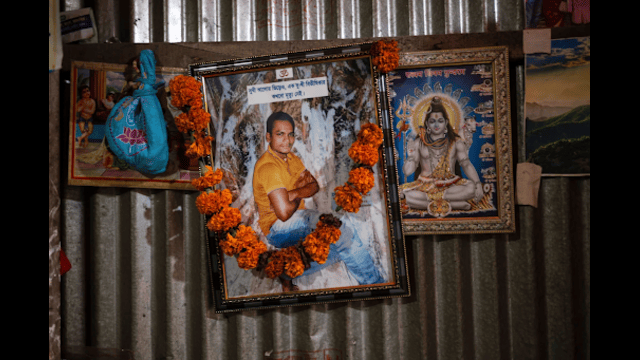
A portrait of Dipu Chandra Das hangs alongside images of Hindu deities inside his home in Tarakanda village, Mymensingh District, Bangladesh, Jan. 9, 2026.
Violence against Bangladesh’s Hindu minority is intensifying as the country heads toward a crucial national election.
Fear is spreading across Hindu communities after a series of brutal attacks.
Many now worry about safety, justice, and political exclusion.
The killing of a young garment worker has become a chilling symbol of the crisis.
Dipu Chandra Das, 27, was accused of insulting Islam by coworkers in December.
A mob stormed his workplace.
He was beaten to death, hung from a tree, and set on fire.
Videos of the killing spread quickly online.
Across Bangladesh, Hindus watched in horror.
Protests followed in Dhaka and other cities.
Demonstrators demanded justice and stronger protections.
Authorities later arrested about a dozen suspects.
Yet fear has not eased.
Rising Violence Against Bangladesh Hindu Minority
Rights groups say the killing was not an isolated incident.
They report a sharp rise in violence against the Bangladesh Hindu minority.
The trend has worsened since the ouster of former Prime Minister Sheikh Hasina in August 2024.
Hindus make up about 8% of Bangladesh’s population.
Muslims account for more than 90%.
Despite their long presence, minorities often face political targeting.
The Bangladesh Hindu Buddhist Christian Unity Council documented more than 2,000 violent incidents.
These occurred after the change in government.
At least 61 people were killed.
Dozens of women faced sexual violence.
Nearly 100 temples were vandalized or burned.
Community leaders accuse the interim government of downplaying these attacks.
Election Anxiety Deepens Community Fear
Bangladesh will hold national elections on February 12.
Past elections have often triggered communal violence.
This time, fears feel sharper.
The Awami League is barred from contesting.
Sheikh Hasina now lives in exile in India.
Many Hindus are perceived as her supporters.
That perception increases their vulnerability.
Activists say minorities are seen as voting as one bloc.
This makes them easy political targets.
Human rights activist Ranjan Karmaker described widespread panic.
He warned of an “existential crisis” in some regions.
Impunity, he said, fuels repeated attacks.
Islamists Re-Enter the Political Arena
The violence coincides with the return of Islamist parties.
Jamaat-e-Islami is regaining political space after years of restrictions.
The party now leads an alliance of 11 Islamist groups.
Its leaders see the election as a turning point.
Jamaat has tried to soften its image.
It organized rallies with Hindu participants.
It even nominated a Hindu candidate.
Critics remain unconvinced.
Jamaat still supports Shariah-based governance.
Minority leaders question its commitment to inclusivity.
The student-led National Citizen Party has promised minority protections.
It proposed a special rights unit within the Human Rights Commission.
Analysts say such pledges remain symbolic.
Rural Areas See Targeted Intimidation
Political analysts warn of systematic attacks in rural districts.
They believe fear is being deliberately spread before voting day.
The goal, they say, is voter suppression.
Lower turnout among minorities could shape results.
Many Hindus now hesitate to attend rallies or polling booths.
Some families are considering leaving their homes temporarily.
Tensions Spill Over Into India Relations
Violence against the Bangladesh Hindu minority has strained ties with India.
Hindu nationalist groups in India staged protests.
New Delhi publicly criticized Dhaka’s response.
India accused Bangladesh of minimizing religious violence.
Bangladesh rejected the claims.
It accused India of fueling anti-Bangladesh sentiment.
The dispute escalated quickly.
Visa services were suspended.
Sporting ties were disrupted.
Bangladesh boycotted a major cricket event in India.
Experts say India’s concerns are serious.
They describe Hindus in Bangladesh as deeply vulnerable.
They also warn the interim government may be disengaging.
Families Seek Justice Amid Grief
For victims’ families, politics feels distant.
Loss feels immediate.
Dipu Chandra Das was the sole earner for his family.
He was known as quiet and hardworking.
His death left his wife, mother, and child uncertain about the future.
His parents still struggle to process the images they saw online.
They want accountability.
They want justice.
As elections near, the Bangladesh Hindu minority waits anxiously.
Many fear the violence is not over.