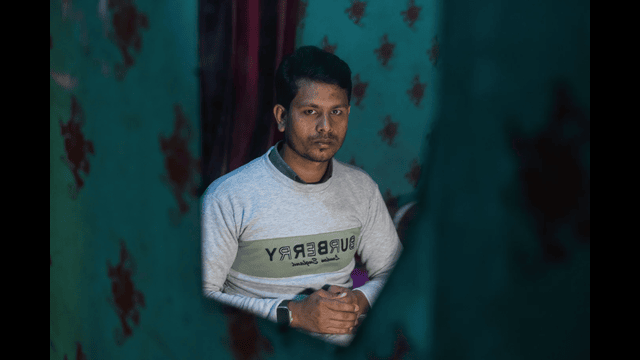
Maksudur Rahman, 31, who escaped after fighting for the Russian army, poses during an interview with the Associated Press in Lakshmipur, Bangladesh, Dec. 10, 2025.
A promise of steady income pulled Bangladeshi workers thousands of miles from home.
Instead of civilian jobs, many were pushed into Russia’s war in Ukraine.
An Associated Press investigation reveals a disturbing pattern.
Labor agents recruited men for cleaning, cooking, or technical work in Russia.
Once there, they were coerced into signing military contracts.
Within weeks, they faced combat, threats, and violence.
False Promises Lured Desperate Workers
Maksudur Rahman left Bangladesh in late 2024.
A recruiter offered him janitorial work at a Russian military camp.
The salary sounded life-changing.
Permanent residency was also promised.
Rahman borrowed heavily to pay the agent’s fee.
He arrived in Moscow expecting civilian work.
Instead, he was handed Russian documents to sign.
He later learned they were army contracts.
From Training Camps to Front Lines
Rahman and other Bangladeshis were taken to military camps.
They received weapons and basic combat training.
Drone operations and medical evacuation were also taught.
When Rahman protested, a commander responded bluntly.
“Your agent sent you here. We bought you,” the message said.
Soon, they were sent near the Ukraine border.
They dug bunkers and carried supplies.
Bangladeshis were often pushed ahead of Russian troops.
Bombs fell nearby.
Drones hovered overhead.
One worker serving food was killed instantly by a drone strike.
Threats, Beatings, and No Way Out
Rahman said refusal was met with brutal punishment.
Workers were beaten and threatened with long prison terms.
Some were kicked for crying or hesitating.
Language barriers made matters worse.
Simple mistakes triggered severe beatings.
Several men described torture and confinement.
Rahman was eventually wounded in the leg.
He was taken to a hospital near Moscow.
From there, he escaped and sought help from Bangladesh’s embassy.
Similar Stories From Other Survivors
Mohan Miajee’s story followed a similar path.
He first worked as an electrician in eastern Russia.
Harsh conditions forced him to look for another job.
A Russian army recruiter contacted him online.
He was promised technical work, far from combat.
Instead, he was sent to occupied Avdiivka.
The commander admitted the deception.
“You cannot do other work here,” Miajee was told.
Refusal led to beatings and torture in a basement cell.
Families Left Waiting and Grieving
Back in Bangladesh, families cling to documents and hope.
Many have lost contact with loved ones for months.
Some received final messages describing forced deployment.
Salma Akdar last heard from her husband in March.
He said he had been “sold” to the army.
After that, silence followed.
Another father, Mohammed Siraj, lost his 20-year-old son.
The young man believed he was going to work as a chef.
He was later killed in a drone attack.
Siraj hid the truth from his wife.
When she learned, the shock overwhelmed her.
She died soon after, calling her son’s name.
Evidence Supports Workers’ Claims
The AP reviewed travel papers and military contracts.
Medical reports showed injuries from combat.
Photos confirmed their presence in war zones.
Russian ministries and Bangladesh’s government did not respond.
The number of affected Bangladeshis remains unclear.
Survivors claim they saw hundreds at the front.
Trafficking Network Under Investigation
Bangladeshi police uncovered a trafficking network.
Multiple layers of agents profited from the scheme.
Some intermediaries had Russian connections.
At least 10 men remain missing.
Police estimate up to 40 Bangladeshis may have died.
Several families have received no wages at all.
A Plea From Broken Families
For families, money no longer matters.
They want answers and accountability.
Most of all, they want their loved ones home.
“I don’t want anything else,” Akdar said quietly.
“I just want my children’s father back.”