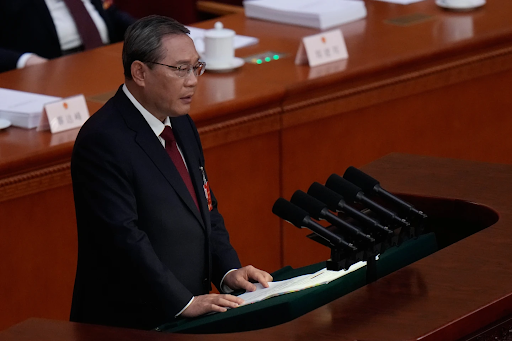
Bank of Canada governor Tiff Macklem, seen during a news conference in Ottawa, Wednesday, June 4, 2025, says flexibility is key as the bank prepares to review its rate-setting framework in a world undergoing an economic sea change.
The Bank of Canada is preparing for its next mandate review, with Governor Tiff Macklem stressing the need for flexibility in navigating today’s shifting global economy. Speaking in Mexico City on Tuesday at the centennial celebrations of Banco de México, Macklem underlined that while change is necessary, Canada’s two per cent inflation target remains firmly in place.
Adapting to a New Economic Reality
Macklem noted that the central bank’s inflation-targeting framework, introduced in the 1990s, has served Canadians well. But with global trade patterns shifting and supply shocks becoming more frequent, the framework must evolve to remain effective.
“Steep new U.S. tariffs and the unpredictability of U.S. policy have reduced economic efficiency and increased uncertainty,” Macklem said. Both Canada and Mexico, as the United States’ largest trading partners, are feeling the effects. Businesses in both countries are seeking new suppliers and markets in response.
These pressures, Macklem explained, could push inflation higher and make price swings more unpredictable. This calls for the Bank of Canada to prepare for a wider range of possible economic scenarios.
Three Key Questions for the Review
The upcoming 2026 mandate review will focus on three main areas. First, the bank will consider how more flexibility in its policy framework could help Canada cope with supply shocks.
Second, officials will examine the best way to measure core inflation. “At the Bank of Canada, we’ve used various measures of core inflation over the past few decades,” Macklem said. “In practice, we often look at an even broader range of indicators. Going forward, what’s the best approach — narrow or broad — and what are the most reliable indicators?”
Third, the review will look at the interaction between monetary policy, housing affordability, and inflation. Housing makes up a large part of the consumer price index in Canada, and interest rates have a direct impact on housing demand. “It’s worth examining how monetary policy affects housing dynamics, and how to factor affordability into our focus on price stability,” Macklem said.
Inflation Target Remains Unchanged
Despite calls for adaptation, Macklem stressed that the two per cent inflation target — the anchor of Canadian monetary policy for more than three decades — will not change. He pointed to the 2022 inflation surge as a stark reminder of the importance of keeping prices stable.
“The spike in inflation in 2022 was a painful reminder of how much Canadians dislike high inflation,” he said. “We also know that Canadians generally understand and support the two per cent target. That familiarity has helped anchor inflation expectations through thick and thin, including through the pandemic crisis.”
Looking Ahead
As global trade faces new barriers and supply shocks grow more common, Macklem believes adaptability will be essential. The 2026 review will not rewrite the foundation of Canada’s monetary policy but aims to refine the tools needed to keep inflation stable in uncertain times.
By keeping the target firm but allowing more flexibility in its approach, the Bank of Canada hopes to better manage risks while maintaining confidence in its ability to deliver price stability.