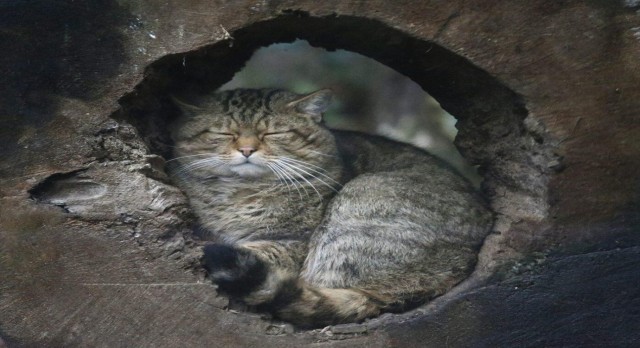
A European wildcat hides and sleeps in a hole at the zoo in Duisburg, Germany, Friday, Jan. 30, 2015. The Canadian Press
British Columbia is taking action to ban the future sale, breeding, and private ownership of exotic wildcats such as servals, ocelots, and European wildcats. The move follows long-standing calls from animal welfare advocates and comes in response to public safety concerns.
Servals in the Spotlight
On a quiet Vancouver Island property, Bill Edwards feeds raw chicken and frozen quail to his pet servals, Luna and Tumas. Native to Africa, these spotted wildcats weigh up to 40 pounds and don’t behave like house cats.
“They are basically wild animals,” Edwards said. “They’re not like a house cat by any means.”
The New Rulebook
Under proposed changes to B.C.’s Wildlife Act, these exotic cats will be added to the province’s Controlled Alien Species list. If passed, the legislation would prohibit new ownership, sale, and breeding—but allow current owners to keep their animals under a free permit system.
Edwards and his partner will be able to keep Luna and Tumas, but he thinks the law should make room for rural exceptions. “I don’t believe people in cities should own them,” he said, “but where I live—it’s different.”
Escapes Raise Red Flags
In 2022, both Luna and Tumas escaped. One killed a neighbour’s ducks. The other attacked a domestic cat. Though Edwards believes someone opened their enclosure, the B.C. SPCA viewed the incident as predictable—and avoidable.
“This was shocking, but not surprising,” wrote SPCA’s chief scientific officer, Sara Dubois, in a letter urging the province to tighten laws.
Welfare Over Vanity
The BC SPCA has been pushing for this change for over a decade. They argue that exotic pets, despite being born in captivity, remain wild. “Domestication takes thousands of years,” Dubois noted.
In 2019, the SPCA seized 13 neglected servals near Kamloops. Public support followed—over 8,000 people signed a petition for a ban.
Expensive Pets, Emotional Bonds
Edwards says caring for servals isn’t cheap. A single injury cost him $6,500. Still, he says, “I love them. They’re part of the family.”
While the proposed law would allow him to keep his pets, it sends a strong message—wild animals, no matter how loved, may not belong in backyards.