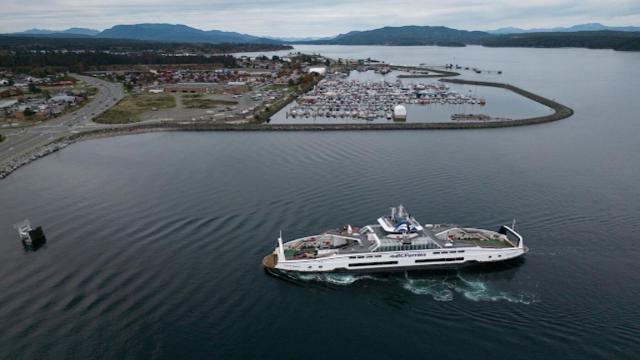
The BC Ferries vessel Island Nagalis, an island class ferry used to service Quadra Island, arrives in Campbell River, B.C., on Friday, Oct. 11, 2024. The Canadian Press
A political storm is brewing over BC Ferries’ decision to source four new vessels from China using a $1 billion federal loan — paid for by Canadian taxpayers.
The House of Commons transport committee has launched a formal study into how BC Ferries secured the loan from the Canada Infrastructure Bank (CIB) to buy four new hybrid ferries. The move comes after public pushback and growing concerns from politicians across party lines.
Why the Fuss?
Last month, BC Ferries announced it had selected China Merchants Industry Weihai Shipyards to build the vessels, following a five-year procurement process. No Canadian shipyards made bids. The CIB stepped in with up to $690 million for the ships and $310 million for supporting infrastructure.
The committee now wants to hear directly from key players. They’ve called on Transport Minister Chrystia Freeland, Housing and Infrastructure Minister Gregor Robertson, and the CEOs of BC Ferries and the CIB to testify.
A Question of Priorities
At the heart of the debate is whether public money should support shipbuilding overseas—especially while Canadian shipyards struggle for contracts. Conservative MP Dan Albas, who requested the hearing, said it’s troubling to see Canadian funds spent abroad while trade tensions with China grow and tariffs hit local farmers.
B.C. Premier Weighs In
Premier David Eby added fuel to the fire on Monday, saying the committee should also look at how B.C. ferry users are treated compared to those on the East Coast. The funding difference? A shocking $300 to $1 in favour of Atlantic Canada.
Eby wants future ferries built in Canada and says this deal highlights the need for fairer federal support for B.C.’s ferry system and shipbuilding sector.
No Bids, No Easy Choices
BC Ferries CEO Nicolas Jimenez defended the deal, saying there simply weren’t any Canadian bids. Without the CIB loan, he said, fares would go up—or governments would need to step in with more money.
Jimenez also pointed out that the loan will be fully repaid, unlike federal grants given to Marine Atlantic, which also had ships built by the same Chinese yard.
Security Concerns Raised
Freeland has already sent a letter to B.C. urging the province to review potential security risks tied to the deal. She also asked for confirmation that no additional federal funding will be used to support the purchase.
What Happens Next
The transport committee will hold hearings in the next 30 days. After hearing from witnesses, MPs will decide whether further action is needed.
The ferries are expected to join BC’s fleet between 2029 and 2031. But the political waves from this decision are hitting much sooner.