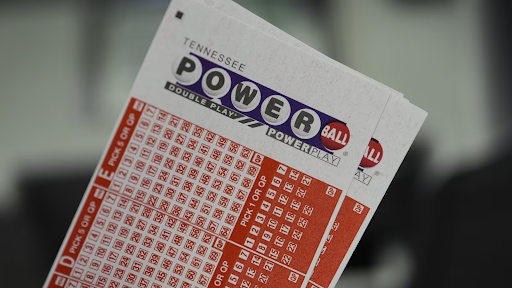
Powerball play slips are seen Friday, Aug. 29, 2025, in Nashville, Tenn.
U.S. lottery jackpots were once modest by today’s standards. Crossing the $1 billion mark was almost unthinkable. That changed rapidly. In the last five years alone, jackpots have reached or exceeded $1 billion 12 times, reshaping how Americans view lottery games.
Wednesday night’s Powerball drawing had no jackpot winner. That result pushed Saturday’s top prize to an estimated $1 billion. It is the second-largest jackpot this year. Only September’s $1.787 billion Powerball prize was bigger.
Billion-Dollar Jackpots Are No Longer Rare
The first U.S. lottery jackpot to cross $1 billion arrived in 2016. That $1.586 billion Powerball prize was split by winners in Florida, California, and Tennessee.
Since then, billion-dollar prizes have become frequent. The current Powerball prize is the 14th U.S. lottery jackpot to reach at least $1 billion. Remarkably, 12 of those occurred after January 2021.
The trend is not accidental. Powerball and Mega Millions have made deliberate changes to fuel larger jackpots.
Higher Ticket Prices Fuel Bigger Prizes
Lottery ticket prices have steadily increased over the past decade. A portion of every ticket sale feeds the jackpot pool. When no one wins, the prize rolls over and grows.
Powerball doubled its ticket price in 2012, moving from $1 to $2. That price remains unchanged today.
Mega Millions followed in 2017, raising its ticket price from $1 to $2. This year, it took a bigger step. Ticket prices jumped to $5, aimed at creating faster-growing jackpots.
According to Mega Millions officials, higher prices help generate massive prizes more quickly.
Tougher Odds Mean Fewer Winners
Winning a lottery jackpot has always been difficult. In recent years, it became even harder by design.
Powerball players must match five white balls and one red ball. In 2015, the game changed number ranges. That adjustment improved the odds for smaller prizes. However, jackpot odds worsened significantly.
The chance of winning the Powerball jackpot dropped from 1 in 175.2 million to 1 in 292.2 million.
Economist Victor Matheson explains the strategy clearly. Fewer jackpot winners mean more rollovers. More rollovers lead to larger prizes.
Mega Millions followed a similar path. In 2017, jackpot odds worsened to 1 in 302.6 million. This year, the odds slightly improved to 1 in 290.5 million, alongside the ticket price increase.
Big Jackpots Drive Ticket Sales
Lottery officials understand player behavior well. People do not buy tickets to win small amounts.
According to Matheson, players dream of becoming billionaires. That belief shapes lottery design. More money flows toward jackpots instead of smaller prizes. The result is explosive jackpot growth.
Large advertised prizes attract more players. More players create bigger prize pools.
Interest Rates Boost Advertised Jackpot Size
Lottery winners can choose between two payout options. One is a 30-year annuity. The other is a lump-sum payment.
The advertised jackpot reflects the annuity value. Saturday’s $1 billion Powerball prize equals an estimated $461.3 million lump sum.
Higher interest rates allow lottery organizations to promise larger annuity payments. Interest rates rose sharply between 2022 and 2023. While rates have eased, they remain elevated compared to early 2022.
That financial environment supports larger advertised jackpots.
Despite this, most winners choose the lump-sum cash option.
Nearly Nationwide Lottery Access Matters
Powerball and Mega Millions were once limited to different states. That changed after a 2010 agreement allowed states to sell both games.
Today, both lotteries operate in nearly every U.S. state. They also include Washington, DC, and the U.S. Virgin Islands.
Only a few states remain without lotteries. These include Alabama, Alaska, Hawaii, Nevada, and Utah. Puerto Rico offers Powerball but not Mega Millions.
More participating states mean more ticket sales. More sales mean larger jackpots.
A New Era for U.S. Lottery Jackpots
Billion-dollar jackpots are no longer rare events. They are the result of pricing changes, tougher odds, higher interest rates, and nationwide expansion.
As long as players chase massive dreams, U.S. lottery jackpots are likely to keep climbing.