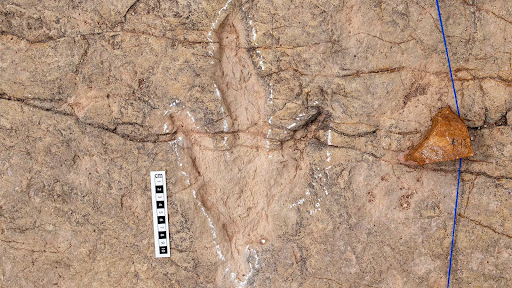
Three-toed, two-legged meat-eating dinosaurs called theropods left distinct footprints at the Carreras Pampas site in Bolivia. CNN
A large group of paleontologists has documented more than 16,000 dinosaur footprints on a wide rock surface in Bolivia. The tracks appear at the Carreras Pampas site in Torotoro National Park. Scientists say these prints belonged mostly to theropods, the two-legged meat-eaters that lived near the end of the Cretaceous period. They walked across deep, soft mud between 101 million and 66 million years ago.
Researchers describe the site as one of the most crowded dinosaur track areas ever recorded. The prints cover more than 80,000 square feet of land. They move in several directions, but most head either north-northwest or southeast. Experts believe the dinosaurs used this shoreline as a regular travel route and say it may have formed part of a larger “dinosaur highway” that stretched through Argentina, Bolivia and Peru.
Tracks Show Movement and Behaviour
Scientists studied the depth, shape and spacing of the prints. This helped them understand how the animals moved. Some walked slowly, while others ran across the mud. More than 1,300 tracks show signs of swimming. These prints have deeper marks from the middle toe and lighter impressions from the other toes, showing the dinosaurs floated slightly in shallow water.
A number of trackways include tail drag marks. The tracks also vary in size. Some belong to animals with hip heights of about 65 centimetres. Others come from larger dinosaurs that stood more than 125 centimetres tall. Researchers also identified hundreds of bird prints. Birds often shared these ancient shorelines with dinosaurs.
What the Tracks Reveal
Experts say the trackway offers rare insight into the daily activity of dinosaurs. Dr. Jeremy McLarty, a coauthor of the study, notes that every part of the rock surface contains prints. He says the site brings ancient life into clearer focus than bones alone. Trackways show movement, posture, speed and even interactions that fossils cannot capture.
Other paleontologists agree. They say the prints help scientists picture how animals used the land. They also show clear differences between walking and swimming behaviour. Deeper prints give clues about how dinosaur feet pressed into mud, offering a more detailed look at movement.
A Growing Picture of Ancient Bolivia
Carreras Pampas has been known for dinosaur prints since the 1980s, but this is the first full study of the entire area. The site raises new questions, such as why so many tracks come from theropods rather than plant-eating dinosaurs. Sauropod track sites are common elsewhere, and these animals often travelled in groups. Predators usually moved alone, making the large number of theropod prints surprising.
Bolivia already holds the record for one of the world’s largest track sites at Cal Orck’o, which contains more than 14,000 dinosaur prints. Scientists now hope to compare both sites to understand how dinosaurs moved across ancient landscapes.
McLarty says trackways give a direct window into the past. He notes that bones can move after an animal dies, but footprints remain fixed. When researchers stand on the Carreras Pampas surface today, they stand exactly where dinosaurs once walked.