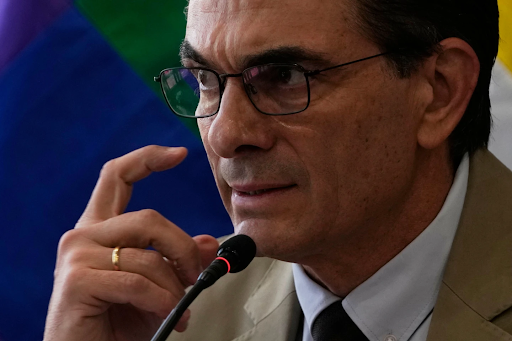
Bolivian President Rodrigo Paz holds a press conference at the presidential palace in La Paz, Bolivia, Tuesday, Nov. 25, 2025.
Bolivia’s new conservative president, Rodrigo Paz, has unveiled sweeping economic reforms aimed at lifting the country out of its worst financial crisis in four decades. Just two weeks into office, he has already announced tax cuts, deep spending reductions and plans to borrow billions to stabilize the nation.
First Bold Steps Toward Economic Recovery
Paz revealed on Tuesday that his administration will abolish key national taxes in a bid to revive investment and restore confidence. This marks a dramatic shift from nearly 20 years of left-wing economic policies under the Movement Toward Socialism (MAS) party.
His proposal includes scrapping Bolivia’s national wealth tax, which he argues has slowed growth and scared away billions in potential investments. Paz says removing such financial burdens is essential to boosting business confidence and stimulating job creation.
Everyday Transaction Tax Faces Elimination
Another major change involves scrapping the 0.3% tax on everyday financial transactions. For years, this levy discouraged Bolivians from using the banking system, driving many toward informal savings and cash-based dealings.
“We are giving the first signs of security that the country requires,” Paz said. “We are paving the way for economic activity.”
These tax-cutting bills will require congressional approval, but business leaders are already celebrating what they see as a new era of economic freedom. Klaus Freking from the national agricultural chamber said, “The persecution of the private sector is ending. It is the beginning of legal certainty.”
Massive Spending Cuts Announced
In addition to tax reforms, Paz plans to reduce federal spending by 30% in the 2026 budget. While he did not release details, the cuts are intended to reverse what he describes as years of unsustainable populist measures.
Economic analyst Gonzalo Chávez welcomed the reforms but warned that the president has yet to tackle deeper structural problems that continue to strain Bolivia’s financial system.
Fuel Subsidies and Currency Policy Remain Intact
Despite the aggressive reforms, Paz intends to maintain key components of the MAS economic model—for now. His government will preserve fuel subsidies, which keep gasoline among the world’s cheapest, and maintain Bolivia’s fixed exchange rate, even though it has been distorted due to a shortage of U.S. dollars at the central bank.
Analysts say these pillars remain politically sensitive, and removing them too quickly could trigger public backlash.
A Gradual Approach to a Deep Crisis
Paz is determined to avoid the “shock therapy” economic measures that traumatized Bolivia in the 1990s. Instead, he is pursuing a gradual recovery strategy. Early signs suggest the plan is working.
Gasoline shortages, once visible in long queues at fuel stations, have eased as the government secures new fuel imports.
A cooperative Congress also approved a $3.1 billion loan from the Andean Development Corporation, with $550 million already disbursed. Economy Minister José Gabriel Espinoza said Bolivia hopes to borrow up to $9 billion over the next three years to stabilize finances and cover the fiscal deficit.
Rebuilding International Relationships
Paz is also repairing relationships with global powers—most notably the United States. Relations had deteriorated under former president Evo Morales, who expelled the U.S. Drug Enforcement Administration in 2008 and leaned toward alliances with Russia, Iran and Venezuela.
Now, Washington and La Paz have signed new agreements on nuclear cooperation and security assistance. Paz has also granted approval for Elon Musk’s Starlink to operate in Bolivia for the first time, a move his predecessor blocked.
Renewed Investor Confidence
As Bolivia signals a more business-friendly environment, investor confidence is slowly returning. The country’s sovereign bonds have risen, and its heavily pressured local currency has regained value in informal markets.
While challenges remain, Paz’s early actions suggest a decisive shift toward restoring stability, attracting investment and rebuilding the credibility of the Bolivian economy.