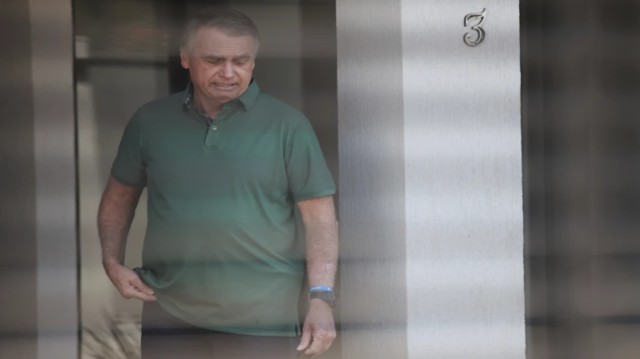
Brazil’s former President Jair Bolsonaro stands at the entrance of his home where he is under house arrest in Brasilia, Brazil, Thursday, Sept. 11, 2025.
Brazil’s Supreme Court has delivered a historic ruling. Former President Jair Bolsonaro was sentenced to 27 years and three months in prison for attempting a coup after his 2022 election defeat.
Bolsonaro has consistently denied wrongdoing and remains under house arrest in Brasília. His legal team has already indicated plans to appeal.
First Brazilian President Convicted of Coup Attempt
A five-judge panel of the Supreme Court reviewed the case. Four judges voted to convict Bolsonaro, making him the first former president in Brazil to be sentenced for a coup attempt.
Prosecutors accused Bolsonaro of trying to hold on to power after losing to Luiz Inácio Lula da Silva in 2022. The charges included:
- Attempted coup with alleged plans to kill Lula.
- Participation in an armed criminal organization.
- Violent attempt to abolish democratic rule of law.
- Damage caused by violence.
- Deterioration of protected heritage.
Several former officials close to Bolsonaro were also convicted. Gen. Braga Netto received 26 years, Admiral Almir Garnier 24 years, Gen. Augusto Heleno 21 years, and Gen. Paulo Sérgio Nogueira 19 years. Mauro Cid, a cooperating witness, received only two years.
Chief Justice Luís Roberto Barroso called the verdict a “watershed moment in Brazil’s history.”
U.S. Reaction Sparks Diplomatic Tension
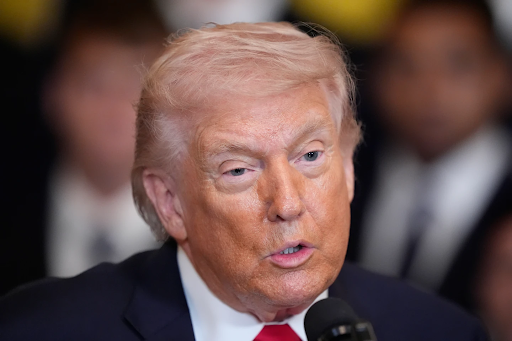
The ruling quickly drew criticism from the United States. President Donald Trump said he was “very unhappy” and described Bolsonaro as “outstanding.”
U.S. Secretary of State Marco Rubio went further, labeling the trial a “witch hunt.” He warned that Washington would “respond accordingly.”
Trump’s administration had already imposed 50% tariffs on Brazilian imports, citing the legal case against Bolsonaro. Analysts fear fresh sanctions could deepen diplomatic strains between the two nations.
Bolsonaro’s Legal Battle Is Not Over
Although sentenced, Bolsonaro will not go to prison immediately. The Supreme Court has up to 60 days to publish its ruling. Once released, his lawyers have five days to request clarifications.
The defense team is preparing to appeal before the full 11-member court. Legal experts, however, doubt the case will be overturned.
Justice Cármen Lúcia stressed that evidence showed Bolsonaro as the “instigator and leader” of an organized attempt to stay in power.
Divided Nation and Political Fallout
The trial has split Brazilian society. Supporters see Bolsonaro as a victim of political persecution, while critics hail the decision as a victory for democracy. Demonstrations have been reported in major cities, reflecting the polarized atmosphere.
Observers believe the U.S. backlash may worsen tensions with Brazil, though some argue it could eventually normalize relations.
Former minister Thomas Traumann said, “This is the most important day for Brazil’s democracy since the 1988 constitution.”
Bolsonaro’s Future Role in Politics
Despite the conviction, Bolsonaro remains a political force. He is already barred from holding office until 2030 due to a separate case. Many expect him to anoint a successor who could challenge Lula in the next election.
His family and allies continue to defend him. Son Eduardo Bolsonaro has called for amnesty in Congress, while Sen. Flávio Bolsonaro described the conviction as “supreme persecution.”
Michelle Bolsonaro, the former first lady, shared a religious message on social media, writing, “God loves justice and hates iniquity.”
Meanwhile, Lula emphasized that “Bolsonaro attempted a coup in this country, and there is abundant evidence.”
Democracy Tested in Brazil
The ruling underscores the resilience of Brazil’s institutions. Justice Alexandre de Moraes, who oversaw the case, declared Bolsonaro the leader of a criminal plot.
Lawmakers remain divided over whether to pursue amnesty. For many, however, the Supreme Court’s decision closes a dark chapter.
As Brazil prepares for its next election cycle, the spotlight shifts to who will inherit Bolsonaro’s political mantle—and how the nation’s fragile democracy will respond.