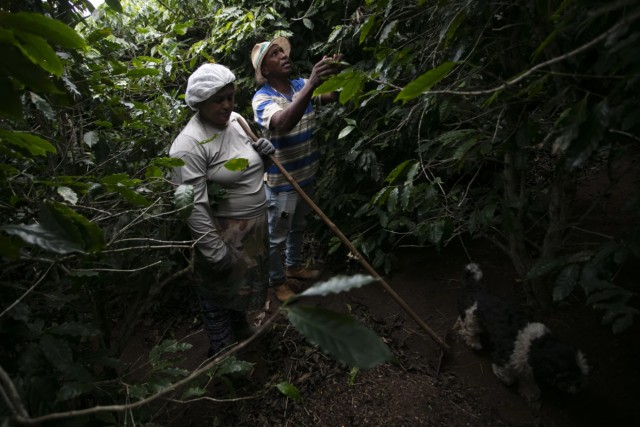
Coffee producer Jose Natal da Silva, right, and his wife Fernanda Marssola harvest coffee beans on their farm in Porciuncula, Rio de Janeiro state, Brazil, Thursday, July 17, 2025.
In the quiet hills of Brazil’s Rio de Janeiro state, coffee farmers are battling more than pests and drought. A new 50% tariff imposed by former U.S. President Donald Trump is now threatening their livelihoods — and possibly their future.
Long Days, Sleepless Nights for Coffee Farmers
José Natal da Silva tends to his coffee farm in Porciúncula mostly at night, warding off pests from his arabica crops. Yet, his biggest fear these days doesn’t crawl — it comes in the form of a political move thousands of miles away.
Since Trump’s announcement of the tariff on Brazilian imports, da Silva has struggled to sleep. “We fight every day to get ahead. Now it feels like we’re about to lose everything,” he said, sitting beside his green coffee shrubs.
Politics Brewing Trouble in the Fields
The U.S. tariff is widely seen as politically motivated. Trump introduced it after criticizing the trial of Brazil’s former president Jair Bolsonaro — his close ally — calling it a “witch hunt.” Bolsonaro faces charges related to a plot to overturn the 2022 election results.
The fallout has been swift. Brazilian exports tied to the U.S. — including coffee, beef, and orange juice — are bracing for impact. Coffee, in particular, is a concern because small producers lack the cushion larger operations enjoy.
U.S. Is Brazil’s Top Coffee Buyer
Brazil is the world’s leading coffee exporter. About 85% of its coffee is sold abroad, and the U.S. accounts for roughly 16% of those exports, according to Cecafe, Brazil’s coffee exporters council.
Cecafe’s Márcio Ferreira remains hopeful. “Even with tariffs, the U.S. cannot afford to give up Brazilian coffee,” he said. But experts disagree on how sustainable that optimism is.
Price Drop and Lost Competitiveness
Agribusiness professor Leandro Gilio from São Paulo’s Insper Business School warns that the tariff will slash Brazil’s edge in the U.S. market. “We can’t reroute production quickly. This hits small farmers the hardest,” Gilio said.
For families relying solely on coffee, the impact could be devastating. In Rio’s northwestern region, small coffee farms dominate. Many are already struggling due to erratic weather and rising costs.
Fighting Drought, Falling Prices, and Uncertainty
Da Silva owns about 40,000 trees. He also grows vegetables, fruit, and raises chickens to make ends meet. “We grow our own food because buying everything is impossible on such low profits,” he explained.
Last year’s drought — worsened by climate change — ruined parts of his crop. While the limited supply drove prices up, most small farmers had already sold their beans at lower prices.
Now, arabica coffee prices are dropping fast — down 33% since February, according to the University of São Paulo.
Broken Dreams and Shaky Futures
Nearby, Paulo Vitor Menezes Freitas grows coffee on a slightly smaller scale. He, too, worries about his family’s future. “We’re scared. You plan for one price and end up earning 30% less. That breaks us,” he said.
Freitas often works up to 20 hours a day during harvest. “You wake at 3 a.m., go to bed near midnight. There’s no rest,” he added.
With a child on the way, Freitas says the tariff has left him feeling uncertain. “If this continues, people will abandon coffee. They’ll find other ways to survive.”
Tariff Impacts Go Beyond Beans
The issue isn’t just about coffee. The tariff affects machinery and aluminum — both essential in the production process. For small farmers, these additional costs could make continuing nearly impossible.
Freitas hopes cooler heads prevail. “We just want stability. This hurts everyone — farmers, consumers, both countries. The tariff needs to go.”
Final Brew
As Brazil’s small coffee farmers battle climate, costs, and now tariffs, their resilience is being tested like never before. With no clear end in sight, their fight continues — one sleepless night, one bean at a time.