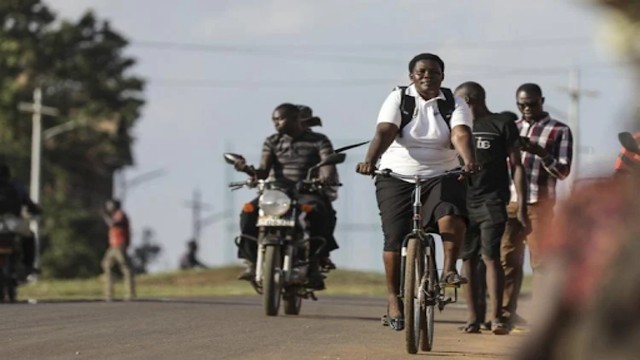
Lucy Abalo, Community Health Extension Worker riding her Buffalo bicycle in Lira, Uganda, May 19, 2025. (AP Photo)
In northern Uganda, one bicycle is quietly reshaping rural healthcare. It’s not sleek or stylish—but it’s saving lives. Buffalo Bicycles, a rugged, steel-framed two-wheeler, is making waves in remote villages where healthcare access is a daily challenge. For Lucy Abalo, a community health worker in Lira district, this bicycle has become a trusted lifeline—for her and her entire village.
A Lifesaver on Two Wheels
Abalo doesn’t claim the Buffalo Bicycle as her own. “Anyone can come and ask to use it,” she says. And they do—whether it’s a man rushing his pregnant wife to a checkup, a woman needing HIV medication, or a child hurt while playing. This shared sense of ownership reflects both the urgency and unity within the community.
Abalo is one of hundreds of CHEWs (Community Health Extension Workers) across Uganda. These frontline workers bridge the gap between isolated villages and health centres, offering basic care, health education, and emergency response. But for years, their biggest challenge wasn’t knowledge—it was movement.
Buffalo Bicycles — Stronger Bikes for Tougher Roads
That’s where the Buffalo Bicycle stands out. Designed by Chicago-based nonprofit World Bicycle Relief, this model is built specifically for harsh terrain. Its heavy-gauge steel frame, sturdy wheels, and reinforced components allow it to travel rough dirt paths that typical bikes can’t endure. Backed by a five-year warranty, the Buffalo Bicycles isn’t just another aid tool—it’s an investment.
Launched in Uganda in 2023, the program has already provided 331 bicycles to CHEWs across two districts, including Lira. Though many Ugandans own bikes, these tougher models are new, and at around $200, they’re not easily affordable for most health workers who still wait for regular pay.
Despite its usefulness, the Buffalo Bicycle takes getting used to. “It felt awkward at first,” Abalo admits. “It doesn’t allow backpedal braking, so I had to learn all over again.” But the learning curve is worth it.
Health Access, Multiplied
Since the rollout, results have been remarkable. According to a study by World Bicycle Relief, the number of households visited by CHEWs more than doubled. Travel time to health centres was cut in half. The impact is clear: reliable transportation leads to better, faster healthcare.
Stories from the field drive the message home. One evening, Abalo rushed a bleeding four-year-old to the clinic when no adults were around. The child survived—barely. “It wasn’t me who saved him,” she says. “It was that bike.”
Hope on Wheels
The Ugandan Ministry of Health now supports wider distribution. Health secretary Diana Atwine says more bikes could empower thousands of health workers like Abalo to save lives every day.
Neighbors, like Babra Akello, have already benefitted—using the bicycle for antenatal checkups and emergencies. In villages far from paved roads and modern clinics, the Buffalo Bicycle offers something priceless: a dependable route to care.
In Uganda, hope now rides on two wheels.