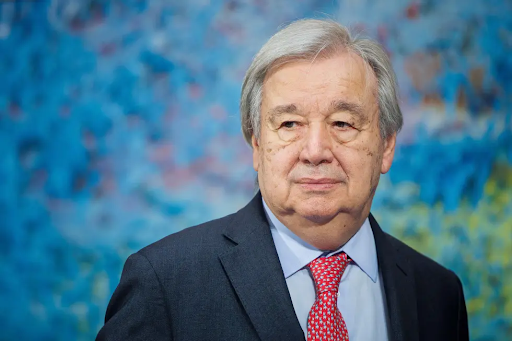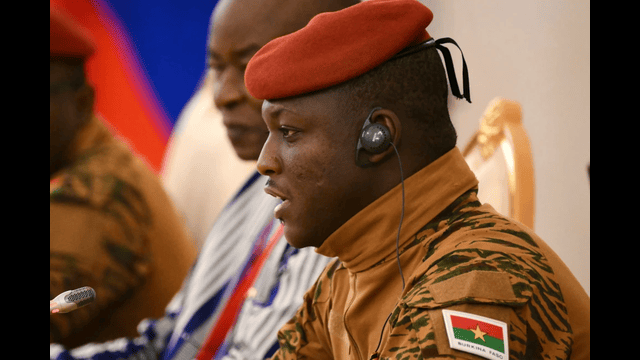
Burkina Faso President Ibrahim Traore speaks at the Kremlin in Moscow, Russia, on May 10, 2025.
Burkina Faso’s military rulers have taken a sweeping political step.
The junta has dissolved all political parties across the country.
Authorities say the decision aims to restore unity and stability.
Critics fear it signals deeper democratic erosion.
A Sudden End to Party Politics
The announcement came through an official decree.
All political parties and movements were immediately disbanded.
Their activities were ordered to stop nationwide.
Assets and offices linked to parties now face restrictions.
The junta said political groups fueled conflict and division.
Leaders argued parties no longer served the national interest.
They framed the move as necessary for social cohesion.
Junta Justifies the Crackdown
Military officials blamed parties for worsening political instability.
They claimed partisan competition weakened state authority.
According to the junta, unity must come before pluralism.
The statement stressed “national refoundation” as a priority.
Authorities said Burkina Faso needs order during its transition.
They insisted the decision was temporary but gave no timeline.
A Country Under Military Rule
Burkina Faso has been governed by a junta since a 2022 coup.
The military seized power amid rising insecurity.
Armed extremist violence has displaced millions.
Since then, civilian politics have been tightly restricted.
Elections were postponed under transitional arrangements.
Political freedoms have steadily narrowed.
Reactions From Civil Society
The dissolution sparked concern among activists.
Rights groups warned of shrinking civic space.
They said political parties are central to democracy.
Opponents argue divisions cannot justify blanket bans.
They fear silencing dissent will deepen mistrust.
Some warned of increased authoritarian control.
Regional and International Concerns
The move places Burkina Faso alongside other Sahel juntas.
Neighboring Mali and Niger have also restricted political activity.
The region has seen repeated military takeovers.
International observers expressed alarm quietly.
They worry about long-term democratic backsliding.
Calls for inclusive dialogue are growing.
What Happens Next?
The junta has not outlined a clear political roadmap.
No replacement framework for representation was announced.
Citizens remain uncertain about future participation.
Officials say reforms will continue under military oversight.
They promise eventual civilian transition.
Skeptics question whether parties will be allowed back.
A Defining Moment for Burkina Faso
The decision marks a major turning point.
Burkina Faso junta dissolves political parties at a critical moment.
The country faces security threats and political uncertainty.
Whether unity improves or tensions rise remains unclear.
For now, political life has entered uncharted territory.