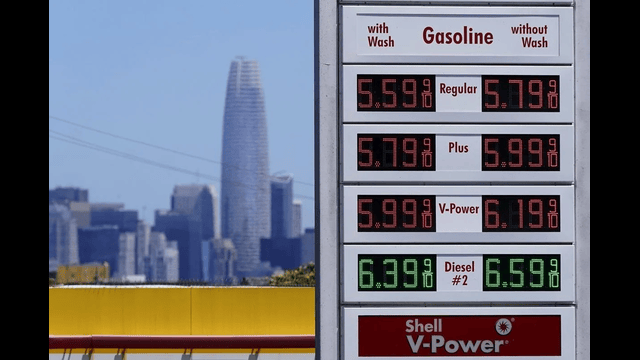
FILE – Gas prices are displayed at a San Francisco gas station, with the city skyline and Salesforce Tower visible in the background. (AP Photo/Jeff Chiu, File)
A leading California energy official is recommending a pause on Governor Gavin Newsom’s controversial plan to fine oil companies when their profits climb too high. The idea, introduced in 2023, was designed to hold oil giants accountable for gas price spikes—but so far, no penalties have been enforced, and no clear definition of "excess profit" has been finalized.
Siva Gunda, vice-chair of the California Energy Commission, released a letter on Friday suggesting the state shift its focus to more immediate strategies for lowering fuel prices and securing a stable fuel supply. Gunda emphasized that California must still move toward cleaner energy, but that doing so requires a smart, steady approach.
He wrote, “We must work together to phase out petroleum fuels by 2045, while also protecting workers, communities, and consumers—and making sure the industry can keep operating safely and reliably during this transition.”
The recommendation to pause the penalty plan is not final. The full commission would need to vote on it. Newsom’s original proposal was meant to discourage oil companies from inflating prices, but critics warned the policy could do the opposite—by prompting companies to raise prices even more to cover the cost of penalties.
Why Gas Is So Expensive in California
Gas prices in California are the highest in the country, with the average price for regular unleaded reaching $4.61 per gallon on Friday. In contrast, the national average sits at $3.20. Experts say California's higher costs stem from heavy fuel taxes and strict environmental laws.
To prevent shortages, the Energy Commission still plans to roll out new rules requiring refineries to keep a minimum fuel reserve. This would help maintain supply when refineries temporarily shut down for maintenance—a move inspired by a law Newsom signed last year after hosting a special session on fuel price hikes.
Two Major Refineries to Shut Down
Adding urgency to the issue, two key oil companies—Phillips 66 and Valero—have announced plans to close California refineries. These closures will reduce the state’s refining capacity by more than 17%, intensifying concerns about future fuel stability during the renewable transition.
In response, Newsom instructed regulators in April to coordinate with the oil industry and ensure California doesn’t face severe fuel shortages in the coming years.
A spokesperson for Newsom, Daniel Villaseñor, said the governor would review the energy commission’s suggestions carefully and remain focused on delivering safe, affordable, and consistent access to fuel for Californians.
Environmental Groups Push Back
Not everyone agrees with the idea of putting the penalty plan on hold. On Friday, a coalition of about 50 environmental and consumer advocacy groups sent a letter to Newsom urging him to stick to the original course.
“California oil refiners do not need a bailout,” the letter stated, arguing that the state should follow through on its promise to hold oil companies accountable and protect consumers from unpredictable gas prices.