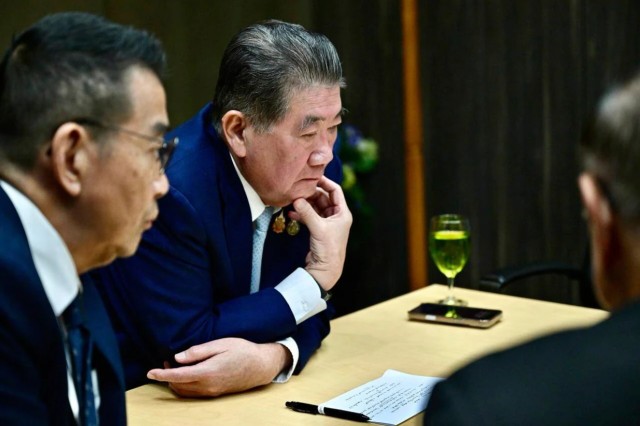
This image provided by the Thai Prime MInister’s Office shows Thailand’s Acting Prime Minister Phumtham Wechayachai, center, with his staff listening during his phone call with U.S. President Donald Trump, in Bangkok on Monday July 28, 2025, after returning from Malaysia, where he met Cambodian Prime Minister Hun Manet for peace talks which resulted in a ceasefire in the two nations’ five days of fighting along their border over a territorial dispute.
Tensions remain high along the Thailand-Cambodia border despite a recently agreed ceasefire brokered under U.S. pressure. Just hours after the two countries announced an “unconditional” halt to fighting, conflicting reports have emerged about whether hostilities have actually stopped.
Ceasefire Under Scrutiny
On Tuesday morning, Thailand and Cambodia offered sharply different versions of events. Thai military officials claimed Cambodian troops launched multiple attacks shortly after the midnight ceasefire deadline. In contrast, Cambodia denied any aggression, insisting no shots were fired anywhere along the border.
The ceasefire agreement was reached on Monday in Malaysia, where Cambodian Prime Minister Hun Manet and Thailand’s acting Prime Minister Phumtham Wechayachai met. Their decision followed five days of deadly border clashes that killed at least 35 people and forced 260,000 residents from their homes.
Conflicting Military Claims
Thailand accused Cambodia of breaking the ceasefire terms. According to Thai military spokesperson Major Gen. Vithai Laithomya, Cambodian forces initiated strikes in several zones, prompting a defensive response from Thai troops.
“These actions reflect a clear violation of the ceasefire and a serious breach of trust,” said Laithomya in a statement.
Cambodia, however, rejected the accusation. Maly Socheata, spokesperson for the Cambodian Defense Ministry, insisted there had been no armed activity after the ceasefire took effect.
“Cambodian leadership is fully committed to implementing the ceasefire,” she emphasized.
Hopes for De-escalation Amid Fragile Calm
While full clarity is lacking on the ground, some signs of calm are returning to affected regions. Local sources report that some families have begun returning to their villages, though fear of renewed violence remains.
Military commanders from both countries are expected to meet later Tuesday, marking their first formal discussion since the ceasefire was agreed. The meeting is part of the terms outlined in the peace pact.
ASEAN and U.S. Pressure Key to Agreement
The peace agreement was facilitated by Malaysian Prime Minister Anwar Ibrahim, acting as chair of the Association of Southeast Asian Nations (ASEAN). Anwar hailed the ceasefire as “a vital first step towards de-escalation and the restoration of peace and security.”
The U.S. also played a significant role in pushing for peace. Secretary of State Marco Rubio praised the ceasefire declaration and stressed that both sides must uphold their commitments.
“President Trump and I are committed to an immediate cessation of violence,” Rubio said in a statement. “We expect full compliance from both Cambodia and Thailand.”
Trade Deals on the Line
In a strong message, Trump warned that the U.S. might reconsider trade agreements with both nations if hostilities continue. The warning was seen as a critical factor in motivating the ceasefire decision and offering a diplomatic exit for both sides.
Border Dispute Runs Deep
The ongoing tension stems from a long-standing territorial dispute. The 800-kilometer (500-mile) border between Thailand and Cambodia has been a flashpoint for decades, though most confrontations have been brief and localized.
The current conflict escalated earlier this year when a Cambodian soldier was killed during a May skirmish. That incident deepened the rift between the two nations and stirred political instability within Thailand.
The latest clashes began last Thursday after a land mine explosion wounded five Thai soldiers. Each side accused the other of provoking the violence that followed.
Outlook Remains Uncertain
Although a ceasefire is technically in place, the situation remains fragile. The credibility of both governments is now tied to whether peace holds in the coming days. With thousands still displaced and tensions high, much depends on the outcome of Tuesday’s military talks and both nations’ willingness to commit to long-term peace.