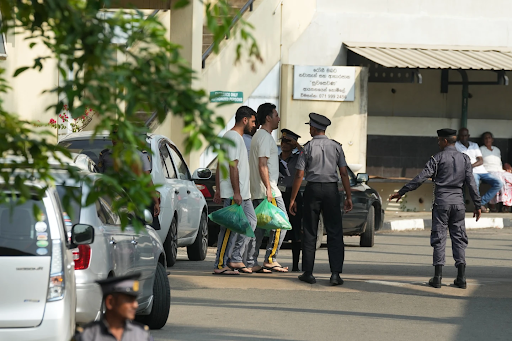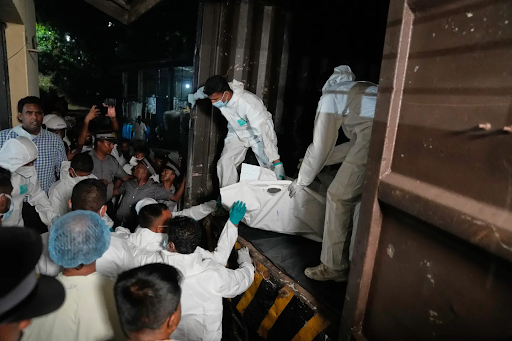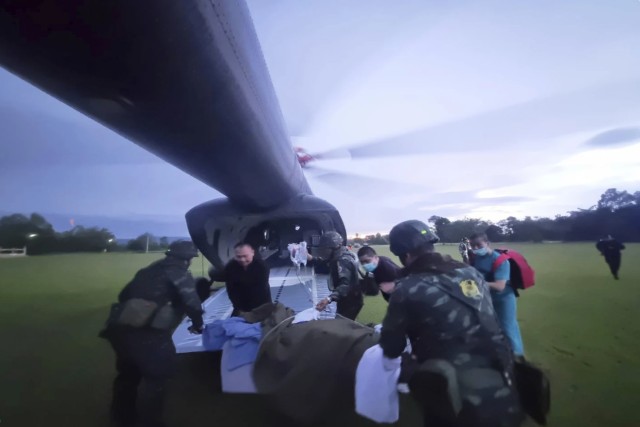
This photo released by the Royal Thai Army, shows an injured Thai soldier who stepped on a land mine being airlifted to a hospital in Ubon Ratchathani province, Thailand, Wednesday, July 23, 2025.
Tensions at the Thai-Cambodian border reached a dangerous peak on Thursday. Soldiers from both sides opened fire across several disputed locations. Three civilians were reported injured during the clashes.
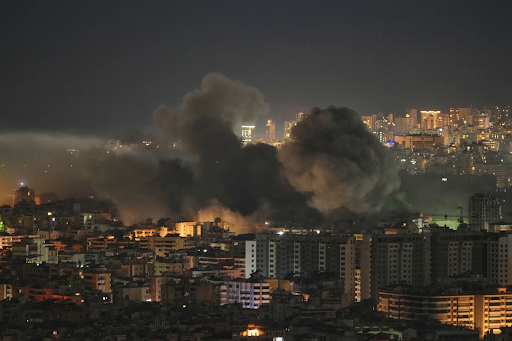
A video livestreamed from Thailand captured the chaos. Residents were seen fleeing their homes and seeking shelter in concrete bunkers as explosions echoed in the background. Multiple skirmishes appeared to be underway across the border zone.
Clashes Erupt Near Ancient Temple Sites
The first exchange of gunfire occurred near the ancient Prasat Ta Moan Thom temple. This historic site lies along Thailand’s Surin province and Cambodia’s Oddar Meanchey province.
Both nations claimed the other fired first. Cambodia’s Prime Minister Hun Manet accused Thailand of launching attacks on Cambodian military posts at both Prasat Ta Moan Thom and Prasat Ta Krabey.
He said the violence also extended toward the Preah Vihear province in Cambodia and Thailand’s Ubon Ratchathani province.
“We believe in peaceful resolution,” Hun Manet said. “But this aggression left us no choice but to respond with force.”
Diplomatic Ties Hit Rock Bottom
The exchange of fire followed Cambodia’s decision to downgrade diplomatic ties with Thailand. Phnom Penh expelled the Thai ambassador and recalled its embassy staff from Bangkok.
This move came after Thailand shut its northeastern border crossings, expelled the Cambodian ambassador, and withdrew its own envoy. These actions were triggered by a land mine explosion that injured five Thai soldiers on Wednesday.
The land mine blast is believed to have happened in one of the disputed zones. One soldier lost a leg in the incident.
Recent Incidents Fuel Hostility
Another land mine exploded just a week earlier, injuring three Thai soldiers. One of them lost a foot after stepping on the device.
Thai authorities claimed these mines were freshly planted in areas that had been declared safe. They identified them as Russian-made and not part of Thailand’s military arsenal.
Cambodia dismissed these accusations. Officials argued that leftover explosives from decades-old conflicts still litter the borderlands.
Mixed Narratives from Both Armies
The Thai military said its troops noticed an unmanned aerial vehicle on Thursday morning. Soon after, six armed Cambodian soldiers were seen approaching a Thai post. Thai soldiers claimed they tried to defuse the situation verbally, but were met with gunfire.
Cambodia’s Defense Ministry refuted the Thai version. It insisted the Cambodian army acted only in self-defense, accusing Thailand of violating their territorial integrity.
Authorities Urge Civilians to Stay Calm
Cambodia’s Senate President Hun Sen took to Facebook to reassure the public. He urged people not to panic and to trust in the government's handling of the crisis.
The Thai embassy in Phnom Penh warned its citizens to leave Cambodia if possible. It also advised against traveling to Cambodia unless absolutely necessary.
Historic Disputes Continue to Haunt the Region
Border clashes between Thailand and Cambodia are not new. Several areas remain under dispute, with nationalist fervor often making matters worse.
The most violent flashpoints often surround ancient temple sites like Preah Vihear and Ta Moan Thom.
In 1962, the International Court of Justice (ICJ) awarded Preah Vihear temple sovereignty to Cambodia. That ruling has long angered Thailand.
In 2011, following deadly skirmishes, Cambodia returned to the ICJ for clarification. The court reaffirmed Cambodia's claim in 2013. Thailand has never fully accepted the decision.
Leadership Under Scrutiny
Thailand’s internal politics have also influenced the situation. The country’s Prime Minister was suspended from office on July 1 amid an ethics investigation linked to the border dispute.
With leadership under review and nationalist sentiments flaring, the path toward peace looks uncertain.
As tensions rise, both sides appear trapped in a cycle of blame and retaliation. The hope for a diplomatic resolution remains distant—yet urgently needed.