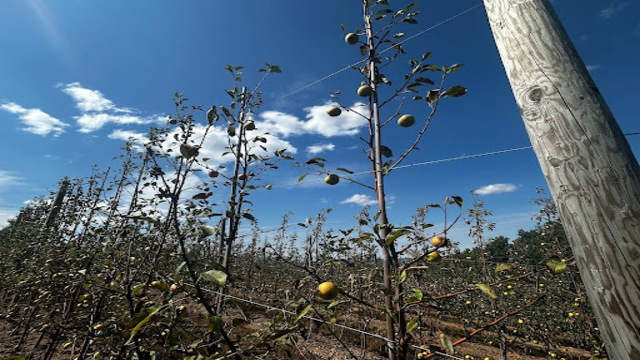
A drought in Nova Scotia’s Annapolis Valley is affecting this year’s apple harvest. CTV
A growing drought in Central and Atlantic Canada is raising alarms over water supply, crops, and wildfire risks. The latest national report shows extreme drought spreading across Atlantic Canada, while Ontario and Quebec also face moderate to severe dry conditions. Meanwhile, Western Canada generally saw improvement, though central British Columbia experienced worsening dryness.
About 71 per cent of Canada faced abnormally dry or drought conditions at the end of August, similar to July’s numbers.
Impact on Agriculture and Water Supplies
Trevor Hadwen, an agri-climate specialist with Agriculture and Agri-Food Canada, said August was one of the driest months on record for Atlantic Canada, the region most at risk. “Large crop losses and extreme impacts on the blueberry harvest have been recorded there,” he said.
Ontario and Quebec are also facing water challenges. Several local municipalities have issued advisories asking residents to conserve water. Hadwen explained, “We’re really concerned about the lack of moisture in that region to finish the crops off for this year. We’ve got a lot of crops in Ontario that are high-water-use crops, and those crops are certainly suffering through the dry conditions that we have seen over the last month.”
Communities Take Action
Crowe Valley became the sixth conservation authority in Ontario to declare a Level 3 low water response. The declaration signals a possible failure of local water supply to meet demand. Residents in Trent Hills, Marmora, and North Kawartha were urged to reduce water use by 30 per cent.
In August, all of Atlantic Canada’s agricultural land faced abnormally dry or drought conditions. In Ontario and Quebec, 84 per cent of farmland experienced dryness. Parts of Nova Scotia’s Annapolis Valley saw their driest August on record, with less than 15 millimetres of rain. Wildfires forced hundreds of residents to evacuate in the area.
Looking Ahead
The fall forecast provides little relief. Most of Canada may see near-normal precipitation, but Atlantic Canada could remain drier than usual. Hadwen warned, “I think we’re in for a continuation of drought concerns, especially through Atlantic Canada and parts of Central Canada as well.”
Experts say climate change, fueled by burning fossil fuels, increases the severity and frequency of droughts. Officials emphasize the need for water conservation and careful planning to protect crops, water supplies, and communities.