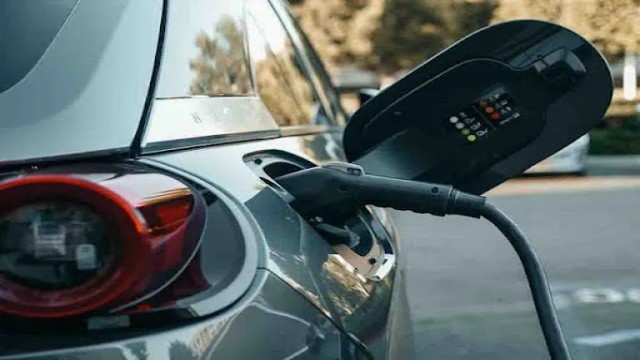
Statistics Canada and analysts linked the drop in EV sales to the loss of government rebate programs, which had lowered purchase costs, rather than to the U.S. 25 percent auto tariff or trade disputes. Image: Postmedia
Electric vehicle (EV) sales in Canada have taken a sharp turn downward, even as the broader auto market remains strong.
According to new data from Statistics Canada, the second quarter of 2025 saw registrations of battery-electric vehicles (EVs) tumble 39.2 per cent compared with a year earlier. Plug-in hybrid sales dipped more modestly, down 2.2 per cent. In contrast, total vehicle registrations jumped 5.9 per cent, reaching 541,566—the highest quarterly figure since before the pandemic.
Incentives Vanish, Sales Slide
The steep drop in EV sales wasn’t triggered by U.S. auto tariffs or global trade tensions, experts say. Instead, the culprit appears closer to home: shrinking government rebates.
Federal EV purchase incentives ran out of funds in January. Quebec suspended its program in February before reinstating a smaller rebate in May. British Columbia cancelled its program altogether in May. Without these subsidies, the upfront cost of going electric became much harder for many buyers to justify.
“It speaks to the importance of having incentives if you want to move electric vehicles,” said David Adams, chief executive of Global Automakers of Canada.
Some Bright Spots in the Market
Not every automaker is feeling the pinch. Hyundai Auto Canada recently reported a 27 per cent jump in electrified vehicle sales for August compared with last year. That success, however, appears to be an exception in a market where EV momentum has stalled.
Tariffs, Inventory, and Price Pressure
Adams also noted that U.S. tariffs on vehicles were widely expected, giving dealers time to stockpile inventory. Some buyers rushed to secure cars before tariffs took effect. But with those inventories now depleted and tariffs still looming, rising prices could soon weigh on the broader auto market.
EV Sales by the Numbers
In total, Canadians registered 46,366 new EVs in the second quarter, a 29.5 per cent drop from the year before. Quebec and British Columbia—historically the country’s EV leaders—saw the steepest declines, down 38.1 per cent and 27.6 per cent, respectively. Together, the two provinces once made up 60 per cent of all EV sales nationwide.
Ontario also reported an 18.6 per cent slide. The only province to buck the trend was New Brunswick, where sales rose slightly by 1.6 per cent.
Policy Shifts Add Uncertainty
The downturn comes just after Prime Minister Mark Carney announced a one-year suspension of the federal EV mandate. That policy had required automakers to ensure 20 per cent of new sales were zero-emission vehicles by 2026 or face penalties.
Industry groups welcomed the pause, though some argue it should be scrapped entirely. “The data reaffirms that the government has made the right decision,” said Brian Kingston, CEO of the Canadian Vehicle Manufacturers’ Association. “They should take the next step and repeal it fully.”
EV Momentum at a Crossroads
Just months ago, EVs appeared to be on a steady climb. In late 2024, zero-emission vehicles accounted for nearly 19 per cent of new sales. Now, that share has plunged to 8.6 per cent.
With fewer rebates, rising costs, and shifting policies, the road ahead for Canada’s EV market looks far less certain. For now, Canadians seem more inclined to stick with traditional options, even as automakers press forward with electrification plans.