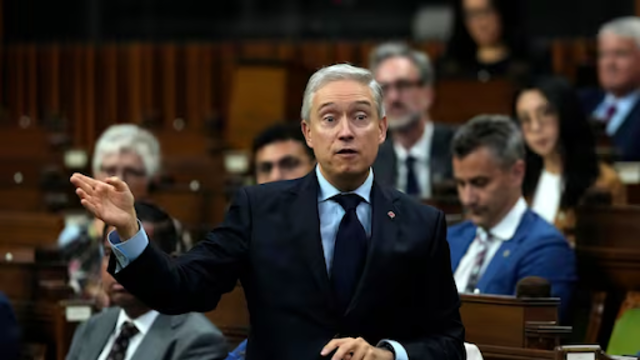
Finance Minister Francois-Philippe Champagne talks about the government’s new capital budget plan and revised budget schedule. CTV
In a move that breaks long-standing tradition, the federal government will now release its budget in the fall instead of the spring. The annual fall fiscal update will swap places and be tabled in the spring starting this year.
Finance Minister Francois-Philippe Champagne confirmed that Budget 2025-26 will be presented on November 4. He said the new schedule will make government spending more transparent and predictable for Parliament and provinces.
“This change gives more clarity for parliamentarians and more predictability for provinces and territories,” Champagne said.
From Spring Budgets to Fall Planning
Until now, Ottawa had typically released budgets each spring, followed by a fall economic statement. The last federal budget came in April 2024 under former prime minister Justin Trudeau.
Prime Minister Mark Carney’s government introduced this change shortly after taking office, aiming to modernize how the country manages its finances. Champagne said the timing adjustment is part of a new Capital Budgeting Framework, which separates day-to-day operational spending from long-term capital investments.
The finance minister explained that the approach would allow “more focus” in decision-making and help Parliament understand how much the government spends on routine operations versus infrastructure and other investments.
“People will see clearly how much we spend on salaries and operations, and how much we’re shifting toward building long-term projects,” he said.
Balancing the Books and Reducing Spending
Champagne said the government aims to balance its operational budget within three years but did not provide details on how it plans to achieve that goal. Ottawa also intends to cut federal spending by up to 15 per cent by 2028.
The minister added that this move toward fiscal clarity will help build confidence among Canadians while showing a stronger commitment to responsible budgeting.
Meanwhile, Canada continues to face economic challenges. The Parliamentary Budget Officer recently projected a deficit of $68.5 billion, raising concerns about the government’s financial direction.
Heated Exchange in Parliament
During Champagne’s appearance before the House of Commons finance committee, opposition members pressed him on when the entire budget — not just operations — would be balanced.
Conservative MP Pat Kelly accused the government of using “accounting tricks” to avoid accountability, while finance critic Jasraj Hallan claimed the minister was “cooking the books.”
Champagne dismissed those claims. “The deficit and the debt will be presented as they always are, in accordance with accounting principles,” he said, calling the Conservative language “irresponsible.”
Expert Reaction to the New Approach
Former parliamentary budget officer Kevin Page welcomed the change, calling it “an improvement on the financial cycle of the Government of Canada.”
He said the new system will help provinces and municipalities plan their budgets more efficiently. “It’s considered an OECD best practice to table a budget before the fiscal year begins,” Page said.
He added that fall budgets also allow the government to approve major construction projects in winter, ensuring a faster start to work in the spring.
What the New Framework Means
Under the revised framework, operational spending will cover daily costs such as government salaries, social programs, and health transfers. Capital investments will fund major projects like ports, housing, clean energy, and pipelines — initiatives aimed at growing Canada’s economy and creating long-term benefits.
Government officials said the goal is to provide a clearer picture of how public money supports both short-term services and future development.