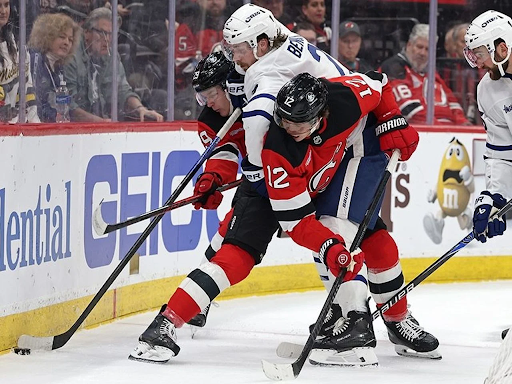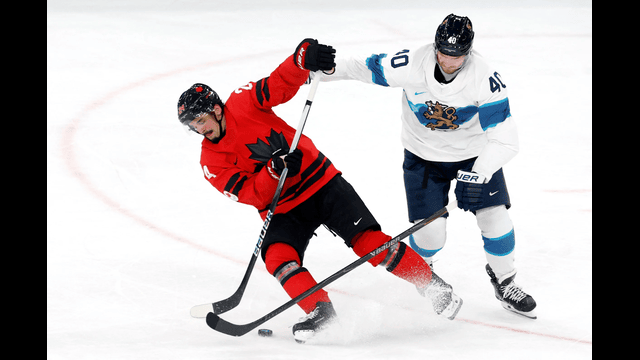
Seth Jarvis of Canada in action with Joel Armia of Finland
Canada’s dramatic win over Finland in the Olympic men’s hockey semifinal triggered strong reactions after the final whistle.
While Canada celebrated a narrow victory, several Finnish players and legends questioned key referee decisions.
The debate quickly shifted from the scoreline to officiating calls that influenced the tense closing minutes.
Late Penalty Decides the Olympic Clash
The match turned in the final minutes when Nathan MacKinnon drew a high-sticking penalty.
Replays showed Finnish defender Niko Mikkola striking MacKinnon’s face with his stick.
Officials immediately signaled the penalty as Canada pressed for a decisive breakthrough.
Moments later, MacKinnon converted the opportunity and scored the winning goal.
That sequence sealed Canada’s place in the Olympic final and stunned the Finnish bench.
Finnish Legend Voices Referee Concerns
Finnish hockey icon Teemu Selänne publicly criticized the officiating after the loss.
He questioned the late penalty call and highlighted the referees’ Canadian nationality.
Selänne suggested defeating Canada while facing Canadian officials felt nearly impossible.
His comments quickly spread online and fueled broader debate among fans and analysts.
However, video evidence showed clear contact to MacKinnon’s face, strengthening the referee’s decision.
Mixed Officiating System at the Olympics
The Olympic tournament uses a blend of NHL and international referees.
Officials familiar with NHL players often handle the highest-stakes matches.
This approach aims to ensure consistency in games featuring many professional stars.
Still, referee nationality occasionally sparks controversy during emotionally charged knockout matches.
Thursday’s semifinal proved no exception as frustration boiled over after the final horn.
Finland Questions Earlier Game-Tying Goal
The penalty call was not Finland’s only complaint about officiating.
Forward Joel Armia argued Canada’s tying goal involved goaltender interference.
He believed Canadian winger Brad Marchand obstructed the Finnish goalie before the puck crossed.
Defenseman Shea Theodore scored that equalizer, leveling the game earlier.
Armia insisted the goal should not have counted under stricter NHL interpretations.
Online discussions echoed those concerns, with many observers split on the call’s legitimacy.
Some analysts argued the contact looked borderline but still challengeable.
Missed Challenge Raises Questions
Finland had the option to challenge the tying goal but declined.
That decision later became a major talking point among commentators.
Critics argued a confident team would have used the review immediately.
Instead, Finland saved its challenge for Canada’s eventual winning goal.
Officials reviewed the play but upheld the decision without change.
The unsuccessful challenge left Finland with no further recourse.
Veteran Canadian Star Offers Tactical View
Former Canadian Olympic champion Chris Pronger offered a calmer assessment afterward.
He suggested Finland’s defensive approach contributed to its late collapse.
Pronger noted sitting back for long stretches invites pressure in elite tournaments.
His view shifted the discussion from referees toward game strategy and momentum swings.
Respect Remains After Fierce Battle
Despite the controversy, Marchand praised Finland’s relentless effort after the game.
He described the Finnish squad as disciplined, opportunistic, and extremely dangerous offensively.
Canada’s players acknowledged the semifinal demanded their full intensity until the final seconds.
Finland’s performance earned widespread respect despite the heartbreaking defeat.
Canada Turns Focus Toward Gold Medal Final
With the semifinal drama behind them, Canada now prepares for the championship match.
The team hopes for a stronger start after two nerve-racking knockout victories.
Their opponent in the Olympic final will be United States men's national ice hockey team, setting up a historic rivalry clash.
After one controversial semifinal, the gold medal showdown promises even higher stakes and global attention.