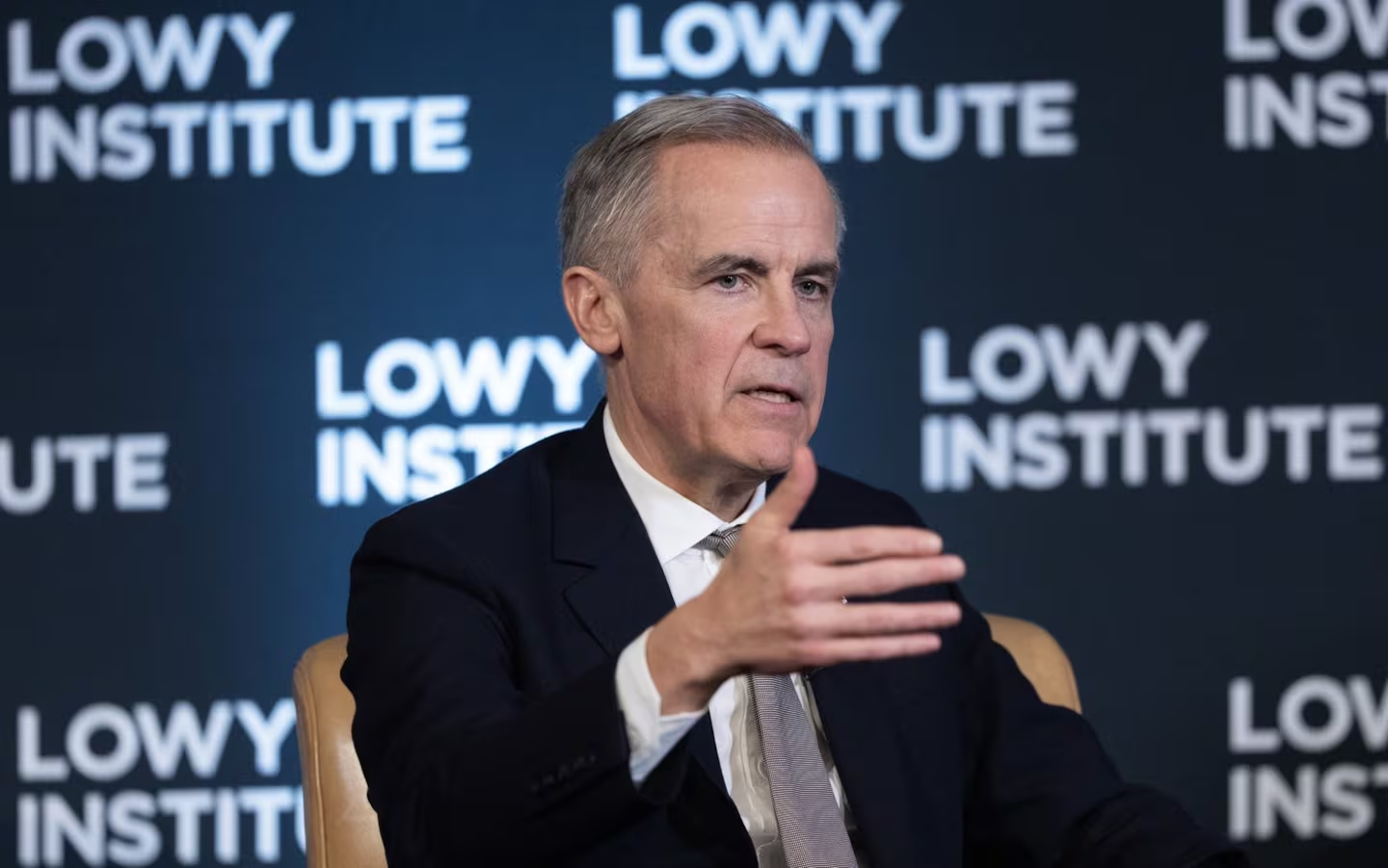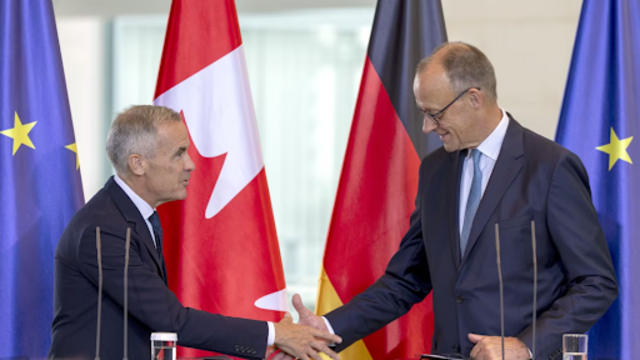
Prime Minister Mark Carney and German Chancellor Friedrich Merz are seen shaking hands after speaking to the media at the Federal Chancellery in Berlin, Germany, on Tuesday, Aug. 26, 2025. (The Canadian Press)
Canada has struck a new deal with Germany to boost cooperation on critical minerals and energy. The agreement, signed Tuesday in Berlin, focuses on joint public financing for mining and natural resource projects. Both governments hope the plan will speed up development and strengthen exports to Europe.
Prime Minister Highlights Opportunity
Prime Minister Mark Carney said Canada has long failed to fully develop resources like nickel and cobalt. He pointed out that China and Russia currently dominate global markets for these minerals, which are essential for energy and defence technology. Carney stressed that Germany’s efforts to reduce reliance on those countries present a chance for Canada to step up.
“Canada can play a role in accelerating that diversification for Germany, and for Europe,” Carney said at a joint press event with German Chancellor Friedrich Merz. He predicted demand for critical minerals will rise fourfold over the next decade.
Mining Firms Join Hands
Natural Resources Minister Tim Hodgson added that Canada can build supply chains from “mine-to-magnets,” offering an advantage in trade with close allies. He said this move would reduce dependence on countries with competing interests.
Three Canadian mining companies also announced new partnerships with German firms. Troilus Gold Corporation, Torngat Metals, and Rock Tech Lithium signed cooperation deals to advance projects together.
Focus on Energy Cooperation
Carney also emphasized energy, highlighting liquefied natural gas (LNG) and hydrogen. He revealed Ottawa will soon announce new investments in port facilities, including upgrades in Montreal and Churchill, Man., to support energy and mineral exports.
Hodgson said Canada could start exporting natural gas to Europe within five years. He noted that German officials view LNG as a vital transition fuel. “Natural gas is going to be a transition fuel that’s in greater demand in Germany and for a longer period of time,” he said.
Broader Partnership Efforts
Both governments also appointed senior officials to oversee the mining pact. Canada’s envoy will be Isabella Chan, senior assistant deputy minister for lands and minerals at Natural Resources Canada. Germany named Matthias Koehler, deputy director general of raw minerals policy.
Carney stressed that the partnership goes beyond trade. He said it represents a chance for Canada to grow its economy while helping Europe secure reliable supplies of energy and minerals.
The deal comes at a time when global markets are shifting, and countries are looking for trusted partners to meet rising demand for natural resources.