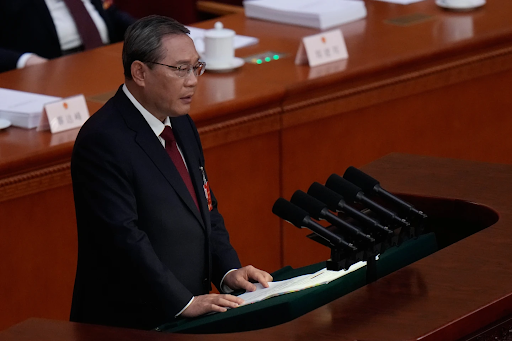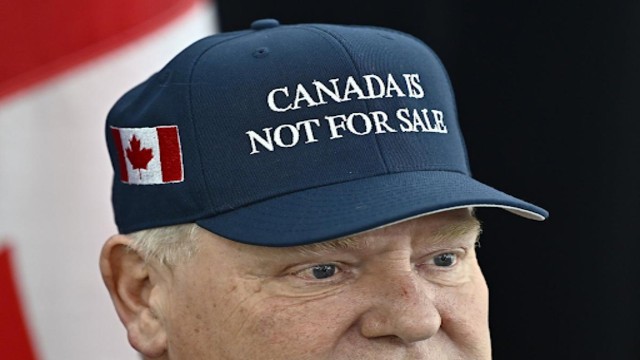
Ontario Premier Doug Ford, wearing a 'Canada Is Not For Sale' hat, speaks as he arrives for a first ministers meeting in Ottawa on Wednesday, Jan. 15, 2025. The Canadian Press
What began as a political statement stitched onto a baseball cap is now turning into a broader mission to strengthen Canadian manufacturing.
Liam Mooney, one of the creators behind the viral “Canada is not for sale” hats, says he wants to help other businesses learn how to make products at home — and keep them here.
The Ottawa-based entrepreneur said the idea first took shape in early January, after Ontario Premier Doug Ford publicly rejected comments from U.S. President Donald Trump about Canada being annexed. Watching the exchange left Mooney and his fiancée, now wife and business partner Emma Cochrane, feeling unsettled.
They decided to respond in a way that felt both creative and familiar to American political culture. Within days, they produced a hat bearing Ford’s blunt message.
From Protest to Purpose
Mooney described the hat as a “creative rebuttal,” but said its meaning quickly expanded.
“What started as a way for everyday Canadians to speak up became something bigger,” he said. “It turned into a conversation about building stronger Canadian supply chains.”
Demand surged. What began as a single product evolved into a growing online store through 2025. The lineup now includes tuques, sweaters, shirts and even a maple leaf–shaped tree topper.
Each new item brought fresh challenges.
Learning the Hard Way
Mooney and Cochrane spent much of the past year navigating Canada’s fragmented manufacturing landscape. They learned firsthand how difficult it can be to produce apparel domestically, even partially.
Finding local suppliers took time. Costs were higher. Production cycles were slower. Getting shelf space in Canadian stores proved more complicated than expected.
Before launching the merchandise line, the couple ran a creative agency called Jackpine. That business still operates. Now, it has taken on a new role.
Turning Experience Into Advice
Mooney says Jackpine will increasingly function as a consultancy for companies trying to manufacture in Canada.
“Our service work is becoming about big ideas that are actually made here,” he said.
The goal is to help businesses find local partners, reduce costs and shorten production timelines. Mooney believes these steps are essential if Canada wants to reduce its reliance on foreign supply chains, particularly those tied to the United States and China.
He argues that domestic manufacturing needs collaboration as much as capital.
Beyond Politics
Although the brand emerged during a period of trade tension with the U.S., Mooney insists the company’s future does not depend on political friction.
Retail demand has remained steady throughout the year, even as headlines shifted.
The company is already planning new product lines tied to major global events in 2026, including the World Cup and the Olympic Games.
“This isn’t about reacting to one president,” Mooney said. “It’s about rebuilding capacity in Canada, no matter what happens elsewhere.”
Measuring Success Differently
For Mooney, success is not defined only by revenue or growth charts.
One moment stood out. During the spring federal election campaign, the hats appeared in news footage beside leaders from across the political spectrum.
Seeing the message resonate nationally mattered more than sales numbers, he said.
“It showed Canadians were looking for something to rally around,” Mooney said. “Especially during a stressful time.”
As the business looks ahead, Mooney says the motivation remains personal.
“We’re proud to be part of this made-in-Canada story,” he said. “And we want to help others become part of it too.”