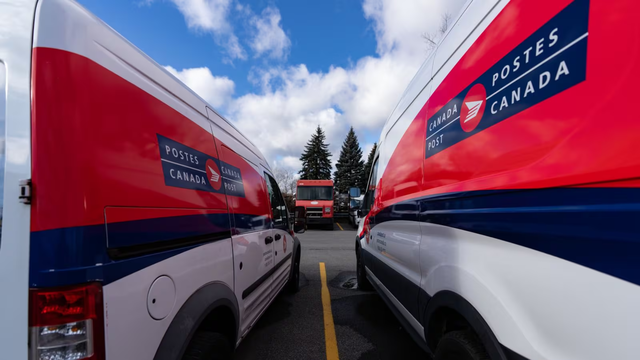
Canada Post delivery trucks are lined up at their Montreal distribution centre on Wednesday. (Photo: THE CANADIAN PRESS/Christinne Muschi)
In a bold move, the Canadian Union of Postal Workers (CUPW) is urging its 55,000 members to turn down the latest contract offer from Canada Post. The union believes this government-mandated vote on what’s being called a “final offer” is not just about wages — it’s about standing up for workers’ rights.
In a letter sent to members on Thursday, CUPW President Jan Simpson strongly encouraged a firm “no” vote. She warned that accepting the offer would set a harmful example. “If we say yes, we’re allowing Canada Post to walk over workers and ignore the proper bargaining process,” she wrote. Simpson emphasized that this vote goes beyond just a single contract—it risks weakening the union’s ability to negotiate in the future fairly.
The call for this vote didn’t come from the workers or even the union—it came from the federal government. Last month, Labour Minister Patty Hajdu asked the Canada Industrial Relations Board to hold a vote on the offer. That vote is scheduled to begin next week.
Talks Stall After 18 Months
Canada Post and CUPW have been locked in negotiations for more than 18 months without reaching an agreement. Now, the two sides are at a standstill. According to Canada Post spokesperson Jon Hamilton, the vote only concerns the current offer — not future talks.
“This is about the best and final proposal we’ve made for both urban and rural postal workers,” Hamilton said. “We’ve tried everything to reach an agreement. This is it.”
What’s in the Offer?
Canada Post’s deal includes a nearly 13.6% pay raise over four years. But there's a catch—it also involves hiring more part-time staff. Hamilton says these changes are essential for survival. “We’re facing real financial trouble,” he explained.
The company is losing about $10 million every day. In June alone, daily losses were more than double compared to the same month last year. Many customers are reportedly turning to private delivery companies due to concerns about delays and ongoing uncertainty.
Why the Union Says It’s a Bad Deal
For CUPW, the wage hike doesn’t outweigh the risks. They worry that bringing in more part-time workers could weaken job security and reduce full-time opportunities. While Canada Post promises that full-time roles will remain the majority, the union isn’t convinced.
Simpson stressed that voting no will not just reject the deal — it will also protect workers’ rights, support fair bargaining, and send a clear message that unions cannot be sidelined.
Final Word
As voting kicks off next week, postal workers face a tough decision. Do they accept a raise with strings attached? Or do they stand firm and demand a better, more respectful negotiation process? One thing’s clear — this vote could shape the future of labour relations in Canada’s postal service.