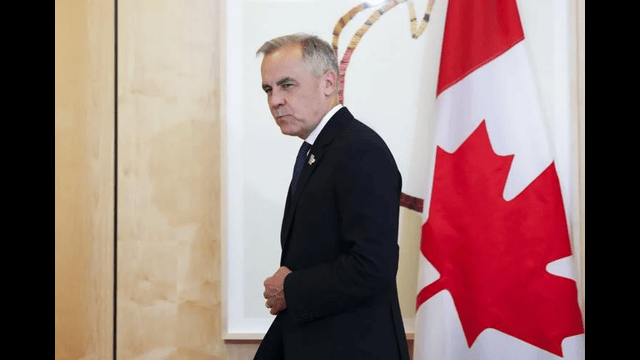
Prime Minister Mark Carney takes part in a meeting on the sidelines of the NATO Summit in The Hague, Netherlands on Tuesday, June 24, 2025.
Canada is taking bold steps to protect its domestic steel industry. On a visit to a Hamilton-based steel company, Prime Minister Mark Carney announced a series of sweeping trade measures, including new tariffs on steel linked to China. The move comes as global tensions rise and trade talks with the U.S. remain uncertain.
Targeting Chinese-Origin Steel
Starting later this month, Canada will impose a 25% tariff on all steel products that contain metal melted and poured in China. That’s not all—any non-U.S. steel imports exceeding new quota limits will face a hefty 50% tariff.
Carney explained that these tariffs aim to tackle unfair competition. Countries like China have long been accused of "dumping" steel into foreign markets—selling it abroad at lower prices than at home to undercut local producers.
"Foreign companies are benefiting unfairly from non-market practices," said Carney. "We must level the playing field for Canadian workers."
Applause from Industry and Labour
Catherine Cobden, head of the Canadian Steel Producers Association, welcomed the move. She called it a strong stance against global overcapacity in steel production—especially from China, which she labeled a "chronic offender."
“This is a stronger response than even the U.S. has taken,” she said.
Labour unions echoed her praise. Marty Warren of the United Steelworkers union described the announcement as a “major win for workers.” He noted that tighter import limits and a “Buy Canadian” approach would support jobs and help secure Canada’s supply chains.
How the Quotas Work
New import quotas are now based on each country’s 2024 export levels to Canada.
- Countries without a free-trade deal (like China and India) will have their quotas cut to 50% of their 2024 figures.
- Countries with trade deals can still export up to 100% of their 2024 levels.
But even those with agreements aren’t off the hook. Cobden pointed out that nations like South Korea and Vietnam—despite trade pacts—have engaged in unfair dumping tactics, and Canada has ruled against them in the past.
U.S. Trade Talks Still in Limbo
While Canada ramps up pressure on foreign steel, negotiations with the U.S. remain stalled. Carney said he’s still seeking a fair economic agreement but won’t settle for one that “doesn’t work for Canadians.”
U.S. President Donald Trump had set a July 21 deadline to finalize a deal but recently pushed that back to August 1. He also threatened a 35% across-the-board tariff on Canadian goods that don’t comply with the Canada-U.S.-Mexico Agreement (CUSMA). That’s on top of existing 25% tariffs on some Canadian exports.
Carney noted that while many Canadian goods are shielded from U.S. tariffs due to CUSMA, sectors like steel, aluminum, and lumber remain vulnerable.
He also confirmed that Canada is pushing for softwood lumber to be part of the broader trade talks.
Canadian Steel Industry Hit Hard
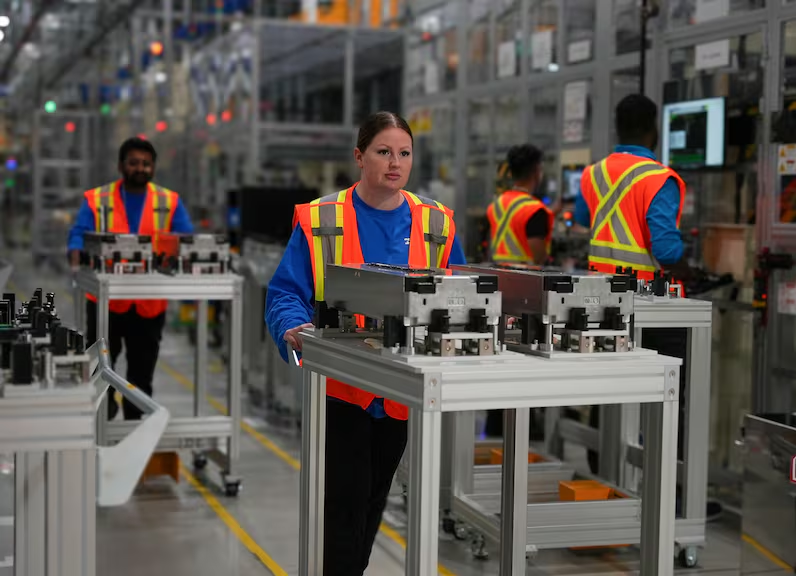
Carney’s visit took place at Walters Group, a structural steel manufacturer in Hamilton. Executive VP Walt Koppelaar shared how U.S. tariffs have choked their exports. "Seventy percent of our steel once went to the U.S.—now it's almost zero," he said.
Koppelaar added that the company is shifting focus to the Canadian market to keep operations running and employees working.
According to Industry Canada, Canada imported more than $16 billion in steel in 2024. Half of it came from the U.S., and around 10% from China. At the same time, 91% of Canadian steel exports went south of the border, making the country heavily reliant on the American market.
“We’ve become too dependent on the U.S.,” Carney admitted. “It’s time we put Canadian steel at the heart of Canadian projects.”
A Wider Support Plan for Steel
The federal government is also backing up its new policies with financial support. This includes:
- $70 million in employment and retraining benefits for up to 10,000 steelworkers
- Easier access to low-interest loans for steel companies
- Prioritizing Canadian steel in publicly funded projects
Still, criticism has surfaced. Bloc Québécois Leader Yves-François Blanchet accused the Liberals of mishandling U.S. trade relations, saying Canada has made too many concessions without seeing real returns.
For now, Carney’s plan signals a shift: protect Canadian industry, demand fair trade, and rely less on neighbours who might turn hostile in a trade war.