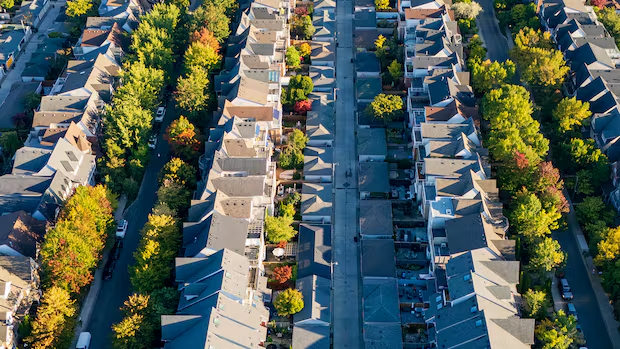
The Canadian Real Estate Association predicts a slight housing market rebound this year after a sluggish 2025.
Canada’s housing market enters 2026 with cautious optimism and lingering unease. After a year shaped by rate cuts and economic anxiety, buyers and sellers remain divided on what comes next.
New data from the Canadian Real Estate Association shows national home sales fell 1.9 per cent in December year over year. That modest drop closed a year marked by softer borrowing costs but stubborn affordability challenges.
Lower interest rates helped some regions rebound. Yet fears tied to unemployment and U.S. trade tensions kept many buyers waiting.
Rate Cuts Spark Uneven Momentum
The Bank of Canada lowered its key interest rate by a full percentage point in 2025. That move helped revive activity in several smaller and mid-sized markets.
Cities such as St. John’s, Regina, and Quebec City saw renewed buyer interest. Quebec City stood out, recording a sharp 17 per cent year-over-year price increase. Analysts say these gains reflect long-standing affordability advantages rather than speculative demand.
In contrast, high-priced regions struggled to respond meaningfully to cheaper credit. CREA now forecasts a 5.1 per cent rise in home sales for 2026. The increase is expected to be steady, not dramatic.
Affordability remains the dominant constraint nationwide. Limited housing supply, especially in urban cores, continues to restrict stronger growth.
Big Cities Face Lingering Weakness
Canada’s largest housing markets ended 2025 on a subdued note. Toronto and Vancouver both reported sales levels not seen in decades.
Toronto recorded just over 62,000 home sales last year, its lowest total since 2000. Vancouver followed with fewer than 24,000 sales, even below levels seen during the 2008 financial crisis.
Market watchers say any improvement in 2026 will come from a very low base. Economic uncertainty remains a powerful deterrent for buyers.
Sentiment among sellers has also shifted. Many now fear that delaying a sale could mean accepting a lower price later. That mindset marks a clear change from the pandemic boom years.
Inventory Builds, Urgency Fades
Southern Ontario and parts of British Columbia have seen a noticeable rise in new listings. Increased supply has reduced pressure on buyers to act quickly.
Hamilton’s home sales fell 12 per cent in December compared to the previous year. It was the slowest December for the city since 2010.
Economists say the cooling reflects a correction after extraordinary pandemic-driven price growth. Smaller cities that surged during that period are now adjusting more sharply.
Buyers, meanwhile, are taking their time. Negotiations are longer, and price expectations are becoming more realistic.
Affordable Regions Hold Their Ground
Not all regions are slowing. Markets in Quebec, Atlantic Canada, and the Prairies remain comparatively active.
New Brunswick, Nova Scotia, Prince Edward Island, Saskatchewan, and Manitoba continue to attract buyers. Prices in these areas remain within reach for many households.
Analysts point to relative affordability as the key driver. These markets avoided extreme price inflation during the pandemic years.
As a result, demand there has been more resilient.
Economic Outlook Shapes What Comes Next
The direction of the housing market in 2026 will largely depend on the broader economy. A stronger labour market could support demand and stabilize prices.
A weaker economic outlook could lead to further price declines in already soft regions. Trade uncertainty, including upcoming CUSMA renegotiations, adds to the unease.
While interest rates are expected to remain steady for now, policymakers have signaled flexibility. Any shift could quickly influence market sentiment.
For now, Canada’s housing market appears cautious rather than collapsing. Growth is expected to be gradual, uneven, and closely tied to economic confidence.