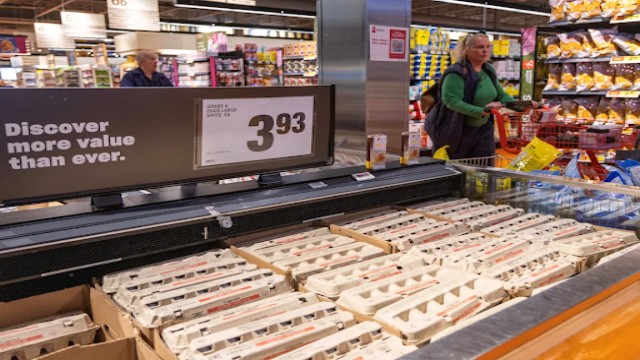
Food prices in Canada drove higher in July, with grocery prices increasing 3.4 per cent from the year before. Photo: Xinhua via Getty Images
Canada’s annual inflation rate slowed more than expected in July, dropping to 1.7 per cent from 1.9 per cent in June. Statistics Canada reported Tuesday that a sharp decline in gasoline prices was the main driver behind the moderation.
Gasoline prices were down 16.1 per cent compared with last year, reflecting the removal of the federal carbon tax. The pullback eased headline inflation, though Canadians continue to feel pressure from essentials like food and housing.
Groceries Still Weighing on Households
The latest report shows a mixed picture. While lower fuel costs brought some relief, grocery prices continued to rise. Overall food inflation climbed 3.4 per cent year over year. Coffee prices surged 28.6 per cent, while cocoa products jumped 11.8 per cent, with supply challenges in producing countries driving costs higher.
Shelter costs also accelerated after months of cooling. Overall, housing inflation reached three per cent. Rent prices climbed 5.1 per cent compared with last year, while mortgage interest costs, though easing slightly, remained 4.8 per cent higher.
On a monthly basis, consumer prices rose 0.3 per cent in July, or 0.1 per cent when seasonally adjusted.
Economists Divided on Rate Outlook
The slowdown adds to speculation about the Bank of Canada’s next policy move. Some economists argue the latest figures open the door to another interest rate cut in September. Others caution the central bank may hold steady after a series of reductions over the past year.
CIBC economist Andrew Grantham said July’s data “removed one obstacle” to a potential cut. He pointed to the three-month annualized pace of core inflation, now at 2.4 per cent — the lowest since September 2024.
Desjardins economist Royce Mendes echoed that view. He noted that earlier tariff-related price spikes have largely faded, with core goods prices rising only marginally. “Neither goods nor services price growth should keep officials from delivering further easing,” he said.
Shelter Prices Remain a Concern
Not all forecasters agree that more cuts are coming. BMO chief economist Douglas Porter acknowledged the softening in core measures but highlighted stubbornly high shelter inflation. Housing costs rose three per cent in July, up from 2.9 per cent in June.
“There were no big surprises in the report,” Porter said. “But at this point, we likely need a downside surprise to prompt the Bank off the sidelines.”
RBC economist Claire Fan also struck a cautious tone. She welcomed the easing but argued that recent government spending and earlier rate reductions may already be enough stimulus. “We don’t expect the BoC will cut again in this cycle,” she said.
National Bank economist Jocelyn Paquet agreed the numbers are “mildly positive” but not enough to change the Bank’s course. She added the central bank will likely wait for unemployment to climb further before acting.
Inflation Still Above Key Measures
Excluding gasoline, Canada’s inflation rate stood at 2.5 per cent in July. The Bank of Canada’s preferred gauges, CPI-trim and CPI-median, came in at three and 3.1 per cent. Both have softened on a three-month basis, which many analysts see as a sign that underlying inflation is gradually cooling.
TD Bank senior economist Andrew Hencic said the latest figures align with the conditions the central bank has outlined for easing. “With minimal job creation and softer inflation trends, the case for further rate cuts later this year remains,” he wrote.
Looking Ahead
Financial markets had expected inflation to cool to 1.8 per cent in July, according to consensus estimates. The slightly lower reading strengthens the debate about the Bank of Canada’s next steps.
The next consumer price index release is due September 16, just one day before the Bank’s scheduled policy decision. Until then, economists and households alike will be watching closely to see whether Canada’s inflation slowdown proves lasting or temporary.