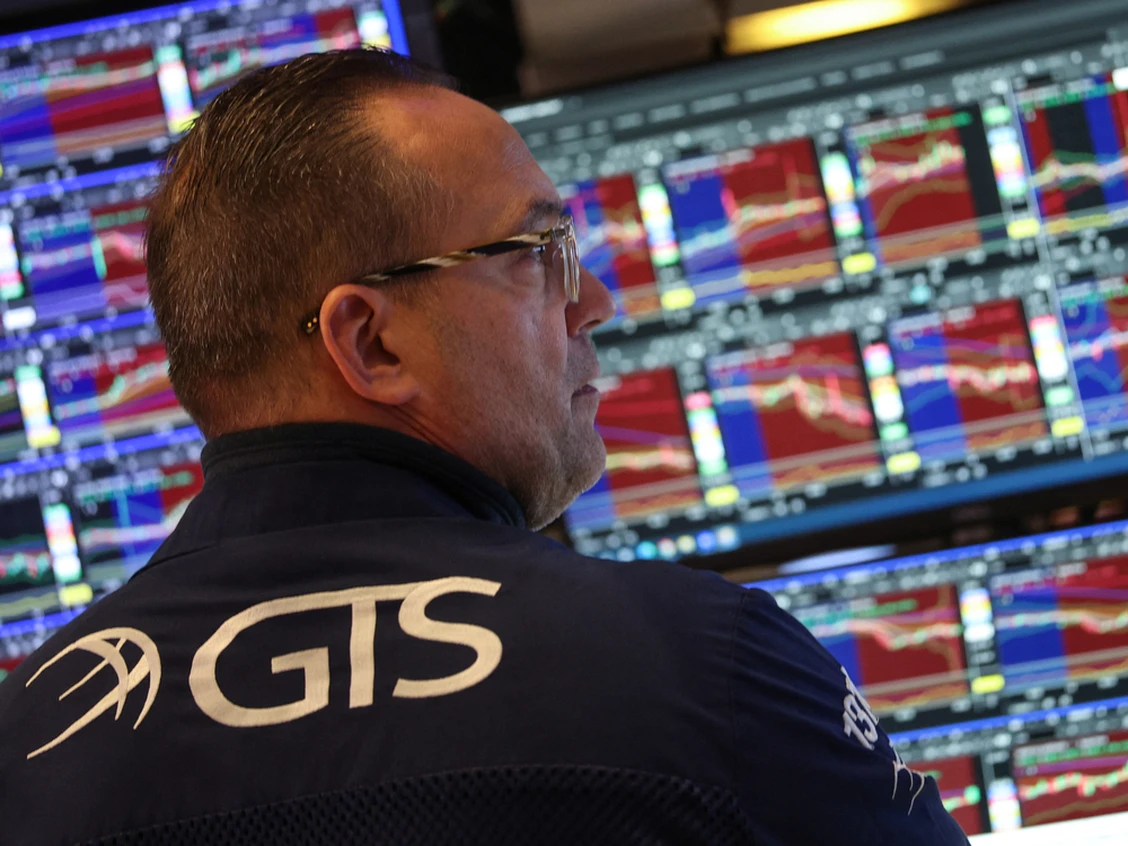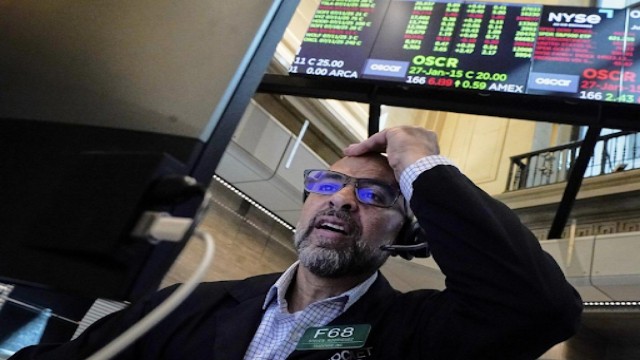
Steven Rodriguez, an options trader, is seen at work on the floor of the New York Stock Exchange on Tuesday, July 8, 2025. (AP Photo/Richard Drew)
Canada’s main stock index slid by more than 100 points Tuesday, ending the day on a sour note. The dip was largely driven by losses in the basic materials sector and growing concerns around international trade disputes. Meanwhile, U.S. markets closed with a mixed performance, reflecting investor unease.
The S&P/TSX composite index dropped 116.71 points, landing at 26,903.57 by the end of the session.
According to Theresa Shutt, chief investment officer at Harbourfront Wealth Management, the drop stemmed from two major issues. First, the uncertainty surrounding trade talks between Canadian Prime Minister Mark Carney and U.S. President Donald Trump continues to cloud investor confidence.
“There were hopes these discussions would wrap by summer’s end,” Shutt explained. “But things have been inconsistent. There’s hope, but also hesitation.”
The second blow came from the United States, where Trump announced plans to slap a hefty 50% tariff on copper imports. Though he didn’t specify a timeline, the figure was confirmed during a cabinet meeting by Commerce Secretary Howard Lutnick. No official orders were signed that day, but the threat alone shook the market.
This move could hit Canada hard. Natural Resources Canada reports that over half of Canada's copper export value in 2023—52%—came from the U.S. The overall worth of those copper exports was $9.3 billion. A tariff of this scale could shrink demand and put pressure on Canadian exporters.
“It’s unclear if the market had enough time to fully process this news,” said Shutt. “It might be reacting too quickly or not quickly enough. Either way, we’ll need more time to grasp what this really means for investors.”
In the U.S., the market story was less dramatic but equally cautious. The Dow Jones industrial average fell 165.60 points, closing at 44,240.76. The S&P 500 slipped by 4.46 points to 6,225.52, while the tech-heavy Nasdaq nudged up 5.95 points to 20,418.46.
“Markets in the U.S. are hanging in the balance,” Shutt observed. “There are mixed messages coming from the trade front, and investors don’t know what to expect.”
On Monday, Trump had already imposed a 25% tariff on imports from Japan and South Korea, with new tariffs on 12 more countries set to kick in by August 1.
Back in April, Trump delayed a round of global tariffs by 90 days, aiming to give time for trade negotiations. That window was set to close Wednesday, leaving investors bracing for what comes next.
“There’s a lot to be ironed out, especially with China,” Shutt noted. “It’s a big deal—China is a major global trading force. Until there’s more clarity, markets are holding back.”
Shutt warned that these tariffs may start biting into profits for some American companies and could dull consumer demand. “This won’t show up overnight, but we could see softer earnings in the final quarter,” she added.
Other market indicators showed modest shifts. The Canadian dollar edged down to 73.12 cents U.S. from 73.23 cents the day before. Crude oil prices rose by 40 cents to settle at $68.33 a barrel. Meanwhile, gold dropped sharply, losing $25.90 to close at $3,316.90 an ounce.