Ag Days in Brandon, Man.
Farmers across Manitoba are calling for long-term clarity as canola tariffs continue to disrupt planning and profitability.
While recent trade moves have offered some relief, uncertainty still dominates conversations in the farming community.
Canola tariffs remain a central concern for growers who depend on stable global markets.
Many say partial solutions are not enough for long-term confidence.
Canola tariffs impact crop decisions on Manitoba farms
Scott Perkin is a veteran farmer in southwestern Manitoba.
He operates a mixed farm near Elgin, around 250 kilometres southwest of Winnipeg.
His operation includes wheat, oats, soybeans, and purebred cattle.
Canola remains a key crop in his rotation.
Depending on the year, canola covers 25 to 30 per cent of his acreage.
That makes canola tariffs impossible to ignore.
Perkin says recent geopolitical tensions made growing canola uncomfortable.
Trade uncertainty added risk to an already challenging season.
“Canola is a big part of what we grow,” he explained.
“But tariffs and politics create unease at every level.”
Partial tariff relief offers limited comfort
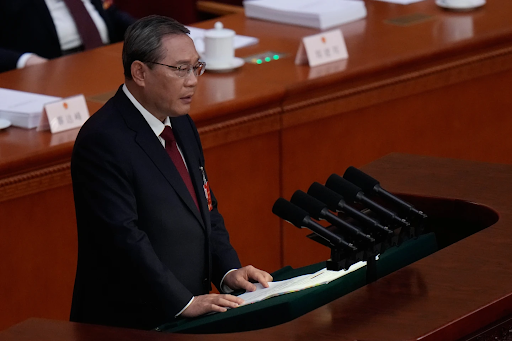
Perkin closely followed Prime Minister Mark Carney’s recent visit to China.
The talks resulted in some changes to canola tariffs.
China agreed to remove tariffs on canola meal.
Tariffs on canola seed were also reduced.
Ottawa expects similar relief for peas, lobsters, and crabs.
However, canola oil was not included.
Canola oil still faces a 100 per cent tariff.
It remains the smallest but unresolved segment of the industry.
Perkin says farmers want complete removal of canola tariffs.
Partial deals only delay bigger decisions.
“We do the work in the fields,” he said.
“Politics in the middle complicates everything.”
Interim deal leaves farmers cautious
The current agreement with China takes effect on March 1.
It is expected to last until at least year-end.
Perkin describes the deal as temporary.
He says it fails to deliver real certainty.
“There is still too much we don’t know,” he said.
“This feels like an interim fix.”
Without clarity, long-term crop planning remains difficult.
Canola tariffs dominate discussions at Ag Days
Uncertainty around canola tariffs was evident at Ag Days in Brandon.
The event is one of Canada’s largest indoor farm shows.
Farmers shared concerns with CTV News during the event.
Many expressed cautious optimism mixed with hesitation.
Price drops forced crop diversification
Tracy Court farms near Plumas, Manitoba.
Her community lies about 180 kilometres northwest of Winnipeg.
She is a seed grower and manages nearly 2,000 acres of canola.
Canola tariffs hit her operation hard.
When Chinese tariffs were introduced, market prices dropped sharply.
Farm profitability suffered almost immediately.
Court says the impact forced difficult decisions.
She is now reconsidering how much canola to plant.
Her farm has diversified into peas and soybeans.
Those crops replaced some canola acres.
She hopes long-term policy cooperation will stabilize markets.
Confidence, she says, depends on permanent tariff relief.
Trade talks beyond China worry farmers
Canola tariffs are not the only concern.
Farmers are also watching trade relations with the United States.
Amanda Ellis farms near Wawanesa, Manitoba.
Her seed business exports heavily to the U.S.
Ellis Seeds sends about 90 per cent of its products south.
Exports include fall rye and forage peas.
Some flax seed is also shipped to Mexico.
That makes North American trade talks critical.
Ellis says U.S. tariffs imposed last year caused disruption.
The impact was immediate and costly.
She wants certainty as Canada, the U.S., and Mexico prepare for new talks.
Trade agreements reopening later this year raise concerns.
“We’re comfortable now,” Ellis said.
“But that could change quickly.”
Farmers want long-term certainty on canola tariffs
Across Manitoba, the message is consistent.
Farmers want stability, not temporary relief.
Canola tariffs influence planting decisions, investment, and confidence.
Without clear outcomes, risk remains high.
Growers say food production should not suffer from political disputes.
They hope future agreements remove canola tariffs completely.
Until then, uncertainty continues to shape the fields.