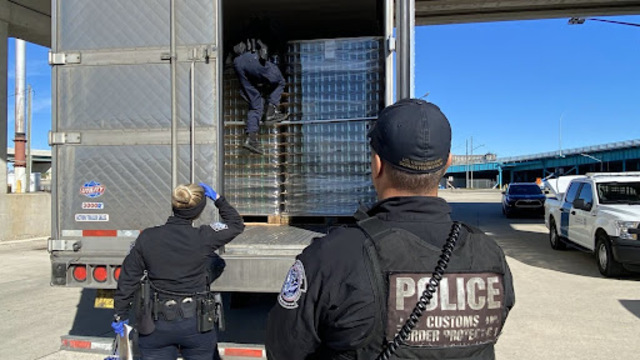
CBP officers in Detroit check the rear of a commercial truck during an inspection (U.S. Customs and Border Protection)
U.S. Customs and Border Protection (CBP) officers stopped 475.95 kilograms of cocaine last Thursday near the Ambassador Bridge, a key border crossing connecting the U.S. and Canada. Authorities flagged a trailer for inspection on September 11. Inside, officers found several bricks of a white powder hidden in multiple boxes and two duffel bags. Tests confirmed the substance was cocaine.
Border Security Statement
Marc Calixte, port director for the Port of Detroit, emphasized the importance of the seizure. “Preventing the scourge of dangerous narcotics from harming our communities is an essential part of our border security mission,” he said. “We’ll continue to hold the line against the illicit drug trade.”
Seizure and Arrest
The authorities seized the cocaine along with the truck and trailer used to transport it. One individual, a citizen of India, now faces federal prosecution in connection with the case. Officials did not release the person’s name, citing ongoing legal proceedings.
Ongoing Efforts
This seizure is part of a larger effort by the Detroit Field Office. Since the start of the fiscal year, officers have intercepted more than 4,300 pounds of cocaine and nearly 1,000 pounds of methamphetamine. These actions aim to protect communities on both sides of the border and disrupt organized drug networks.
Impact on Public Safety
Officials noted that stopping such large quantities of drugs prevents them from reaching local communities where they could contribute to addiction, violence, and crime. CBP continues to monitor shipments and use advanced inspection techniques to identify hidden narcotics.
Future Actions
Authorities plan to maintain strict inspection protocols and surveillance at major border crossings. CBP continues to work with federal, state, and local law enforcement to prevent illegal drugs from entering North America.
Community Importance
Calixte stressed that drug seizures like this play a key role in keeping neighborhoods safe. “Our mission goes beyond borders,” he said. “It’s about protecting families and ensuring that illegal narcotics do not destroy lives.”