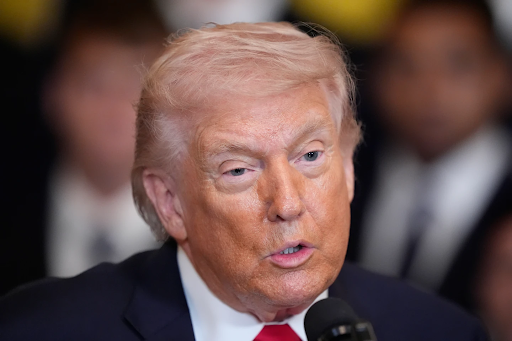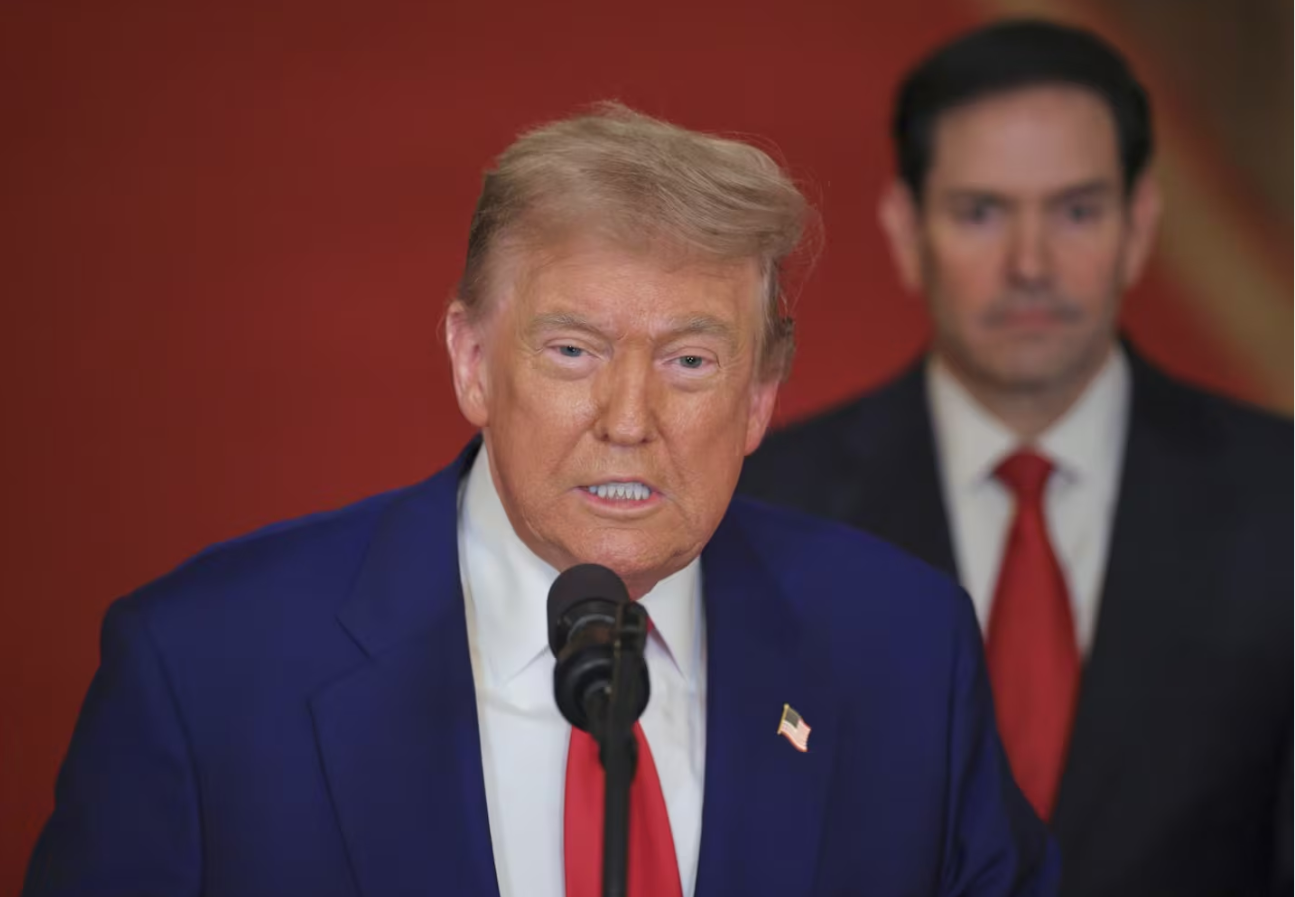
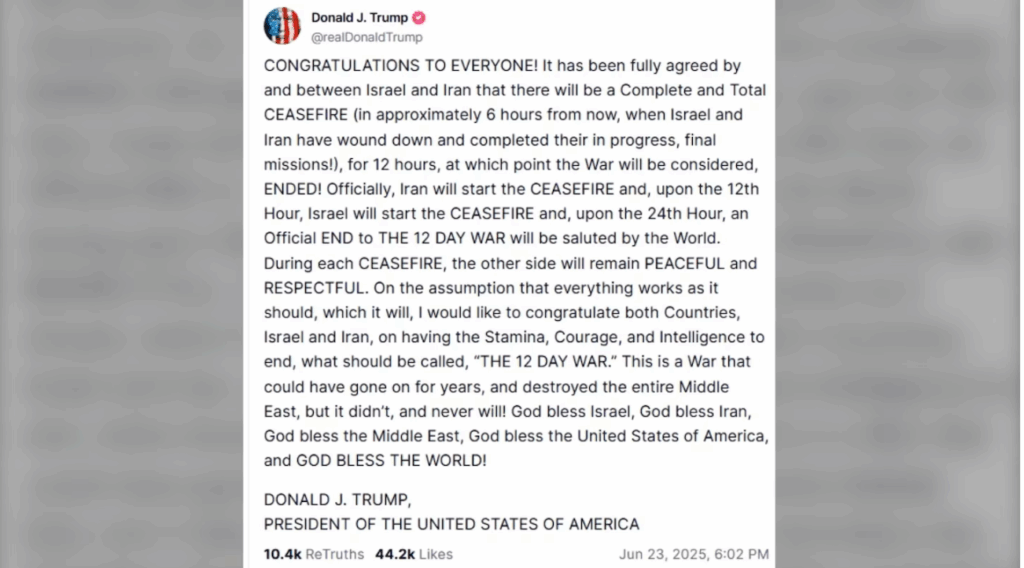
U.S. President Donald Trump shares a post on Truth Social claiming that both Israel and Iran have agreed to a "Complete and Total CEASEFIRE" on June 23, 2025.
The Middle East remains on edge despite U.S. President Donald Trump declared a “complete and total ceasefire” between Israel and Iran on Monday. But within hours, fresh missile attacks raised serious questions about whether the truce was real—or already broken.
Trump took to Truth Social to announce that both nations had agreed to end hostilities, promising what he called the “Official END” to the conflict. The ceasefire, he said, would take effect by midnight Tuesday (Eastern Time).
Confusion Follows Ceasefire Declaration
Trump’s statement came just hours after Iran retaliated for U.S. airstrikes on its nuclear facilities by firing missiles at a U.S. base in Qatar. Though Trump described the Iranian attack as a "very weak response," the move heightened tensions across the region.
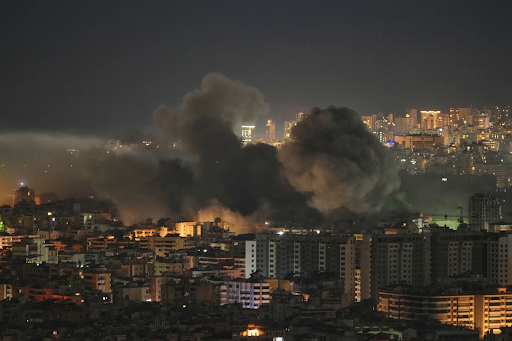
Iran’s Foreign Minister said the country would halt military action if Israel stopped its strikes by 4 a.m. Tuesday (Tehran time). Yet, within an hour of that deadline, missile sirens wailed across Israel. Footage even showed a missile being intercepted above Jerusalem.
This raised doubts about the truce’s viability, with experts unsure whether these launches would nullify the ceasefire before it even began.
Israel Pauses Strikes, But Remains Silent
While Israeli officials did not confirm any ceasefire agreement, no new Israeli strikes were reported after the 4 a.m. threshold. Intense bombing had continued in Tehran until shortly before then, hitting government sites and facilities linked to political repression.
Iran claimed its own missile strike was measured, targeting only military areas outside of population zones. State media called it a “successful response” to U.S. aggression, and officials emphasized the response mirrored the scale of American attacks on its nuclear infrastructure.
Executive Diplomacy Behind the Scenes
White House officials say the ceasefire was the result of intense negotiations. Trump reportedly communicated directly with Israeli Prime Minister Benjamin Netanyahu. Meanwhile, U.S. Secretary of State Marco Rubio and special envoy Steve Witkoff held indirect talks with Iranian officials. Qatar is said to have played a key mediating role.
Still, Tehran’s leadership remained cautious. Iran’s foreign minister clarified there was no official agreement yet, adding that a final decision would depend on Israel’s military actions.
“12 Day War” and Talk of Regime Change
Trump referred to the recent fighting as the “12 Day War,” drawing a parallel to the historic Six Day War of 1967. The conflict has already taken a heavy toll. Human rights groups report over 974 deaths in Iran and 24 in Israel, with thousands more injured.
While Israeli officials stated they did not aim to overthrow Iran’s government, Trump stirred controversy by floating the idea of regime change on social media. The White House later clarified it was only a rhetorical question.
What Lies Ahead?
Israel and Iran continued to trade missiles and drone attacks into Tuesday morning. While fighting has slowed, the ceasefire remains fragile and unofficial. Both nations appear to be weighing their next steps carefully.
Despite Trump’s optimistic tone, the region waits in suspense. For now, peace remains a promise, not a reality.