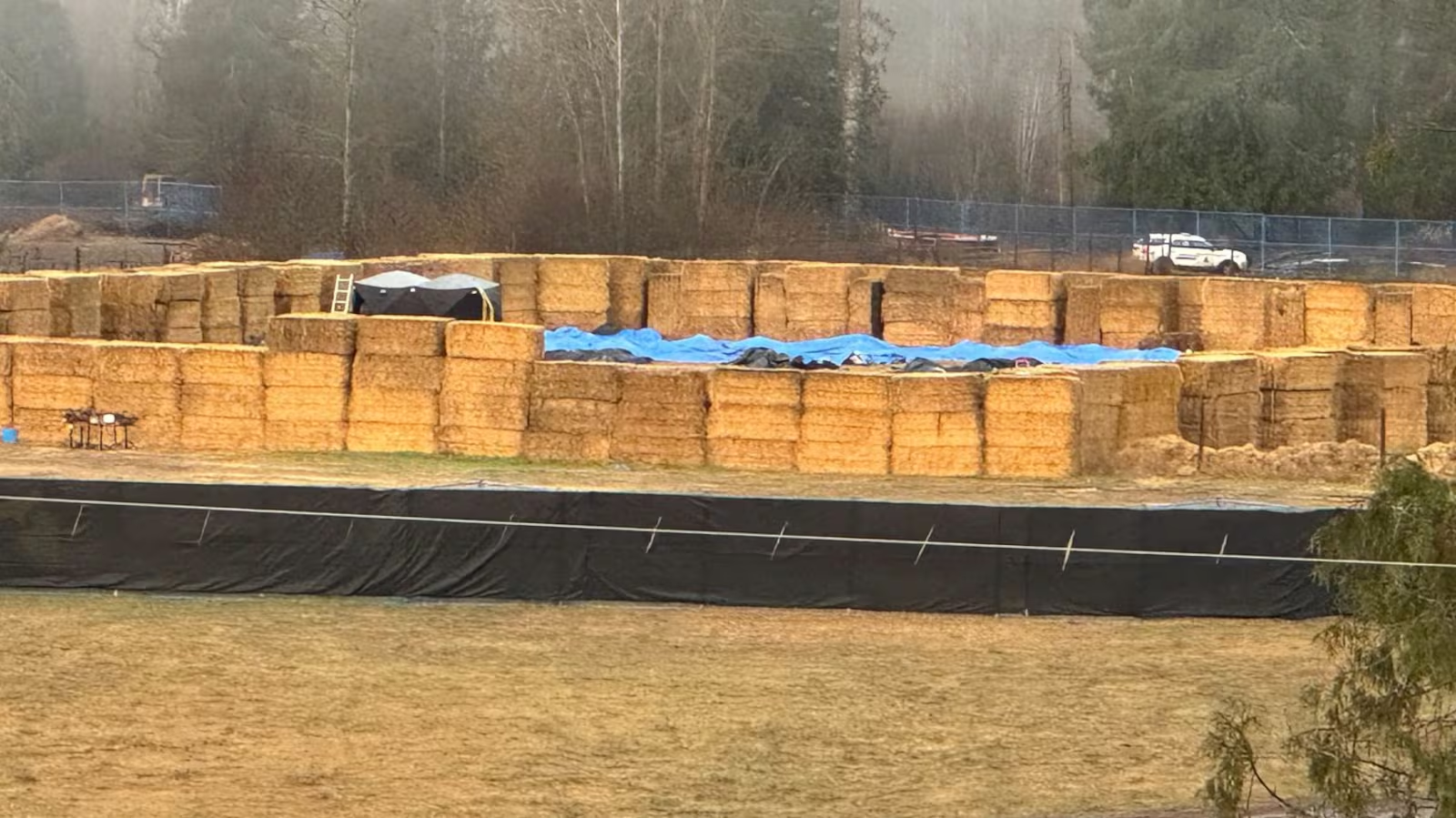
Tarps covered items on the ground inside a holding pen at Universal Ostrich Farms near Edgewood, B.C., on November 7, 2025. The pen had been filled with live ostriches the day before, before the overnight cull began, according to the Canadian Food Inspection Agency. The Canadian Press
The Canadian Food Inspection Agency announced Thursday that it finished its work at a British Columbia ostrich farm struck by avian flu. The agency carried out a full cull of the flock at Universal Ostrich Farms near Edgewood, a small community in the province’s southeast. The decision followed confirmed cases of highly pathogenic avian influenza.
A total of 314 ostriches were killed. The birds, along with eggs and related material, went through “deep burial” at a nearby landfill. The agency said this disposal method matched national standards for handling infected animals.
Farm Remains Under Tight Control
The ostrich farm stays under strict quarantine. Entry now requires approval, and anyone who enters controlled areas must follow biocontainment rules. The CFIA said all farms affected by highly pathogenic avian flu must move through a clear process before returning to normal operations. That includes cleaning, disinfection, and inspections signed off by CFIA officials.
The agency also said the farm may face a “fallow period” after cleaning, during which operations stay paused under supervision.
Farm representatives did not respond to new questions on Thursday. They had fought the cull order for more than ten months, taking their case all the way to the Supreme Court of Canada. The court declined to hear the appeal.
Concerns From the Farm
The morning after the cull, Katie Pasitney, whose mother co-owns the farm, called the process “inhumane.” She said the sound of gunfire went on for hours and left her family shaken. She described the experience as “overwhelming.”
The CFIA defended its decision. It said it chose professional marksmen based on advice from experts with experience handling disease outbreaks in ostriches. The agency called the method “the most appropriate and humane option” for this situation.
Safety Measures and Procedures
Workers wore full protective suits while carrying out the cull and disposal work inside restricted zones. The agency said everyone who entered “hot zones” used personal protective equipment or went through full disinfection procedures when leaving. Equipment received the same treatment.
Pasitney questioned why some RCMP officers and others outside the enclosure did not appear to be wearing protective gear. The CFIA responded by explaining that such equipment was required only inside specific containment zones.
Compensation Process Outlined
The CFIA said any compensation claim related to the destroyed flock would follow the rules set out in the Health of Animals Act. Those rules determine how financial support may be granted after the destruction of livestock or property during a disease response.
The agency noted that these regulations aim to support early reporting of animal illness and encourage owners to co-operate during disease control efforts. It said each case receives a review before decisions are made.
The farm now begins the long process of cleaning, disinfection, and assessment as it waits for the quarantine to be lifted.