

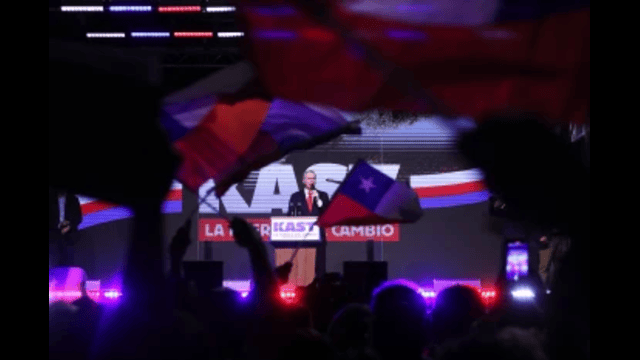
The speaker addresses the public at the press meet.
Chile is bracing for one of its most polarizing elections in decades after a tight first-round vote pushed the country toward a dramatic Chile presidential runoff. Voters will now choose between a lifelong Communist Party member and a far-right conservative who openly admires Donald Trump. The result has amplified divisions between Chile’s political extremes and set the stage for an intense December showdown.
A Deeply Split First Round
Jeannette Jara, 51, the Communist Party candidate and former labor minister, led the first round with 26.8% of the vote. Her slight lead was not enough to secure an outright victory.
Her challenger, 59-year-old José Antonio Kast, finished close behind with 24%. Kast is a conservative former lawmaker known for his hard-line views on security, immigration, and traditional family values. His rising popularity reflects growing public frustration over crime, a concern rarely seen in Chile until recent years.
Both candidates claimed momentum after the vote, and both framed the Chile presidential runoff as a defining moment for the country.
Kast Positions Runoff as a Battle for Chile’s Future
Kast quickly urged Chile’s fragmented right wing to unite. He described the upcoming contest as a “referendum between two models of society.” Speaking to cheering supporters, he warned that Chile is facing “destruction and stagnation” and cast his conservative program as a path of “freedom and progress.”
His message plays strongly with voters who feel threatened by rising crime and the influx of undocumented migrants from Venezuela and elsewhere. Kast has pledged mass deportations and the construction of barriers along the northern border.
Many right-wing votes from eliminated candidates, including Franco Parisi and Johannes Kaiser, are expected to shift toward Kast in the Chile presidential runoff.
Jara Calls for Unity and Rejecting Fear
Jara delivered a contrasting message of hope. “This is a great country. Don’t let fear freeze your hearts,” she told supporters in Santiago.
But she faces a complicated challenge. Her lifelong ties to the Communist Party raise concerns among moderate voters, especially after she referred to Cuba as a democracy earlier in her campaign. Critics fear her party’s sympathy toward authoritarian governments.
Even so, Jara insists her priority is security. Her plans include tightened border controls, actions against drug trafficking, and stronger anti–money laundering mechanisms. Experts note that both left and right now share similar approaches to security, but the issue traditionally benefits conservative candidates.
The Road to December 14: Winning the Center
Political analysts believe both candidates will moderate their tone as they try to win centrist and undecided voters.
Over the next month, Jara must convince skeptical Chileans that she supports democracy and economic stability. She highlights her achievements as labor minister, such as raising the minimum wage, improving pensions, and cutting the workweek to 40 hours.
Her economic plan includes a proposed “living income” of around $800, expanded infrastructure, and new housing to ease Chile’s cost-of-living pressures.
Kast Pushes a Radical Economic Overhaul
Kast offers a drastically different vision. Inspired by Argentina’s President Javier Milei, he proposes shrinking the state, eliminating ministries, slashing taxes, and cutting $6 billion in public spending. His supporters believe Chile’s fiscal deficits reflect government waste.
But Kast’s history continues to shadow him. His refusal to abandon traditionalist social positions and his German-born father’s Nazi past remain mobilizing factors for progressive voters.
A Nation Rooted in Anxiety and History
Chile’s political divide is shaped by memories of Augusto Pinochet’s dictatorship and the neoliberal economic model that survived long after his rule. Recent crime concerns and distrust of institutions have fueled fear—conditions that analysts say help conservative candidates thrive.
A Defining Moment for Chile
With the Chile presidential runoff set for December 14, voters must choose between two sharply different visions. The outcome will determine whether Chile moves toward a security-focused conservative project or a left-wing model centered on social welfare and economic reform. The final vote is expected to be close, tense, and historic.













