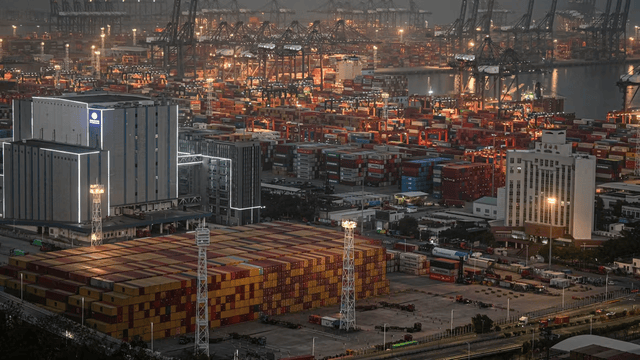
Shipping containers and gantry cranes are seen at the Yantian port at night in Shenzhen, in southern China's Guangdong province on April 14, 2025.
China’s economy delivered a positive surprise in the second quarter of 2025, expanding faster than expected despite global headwinds. According to the National Bureau of Statistics (NBS), GDP rose by 5.2% compared to the same period last year. This was slightly higher than the 5.1% average forecast by economists surveyed by Reuters.
However, the second-quarter growth figure was a modest dip from the 5.4% expansion seen in the first quarter. Still, China’s economy grew 5.3% in the first half of the year, inching past its official full-year growth target of “around 5%.”
Trade War with US Looms in the Background
The better-than-expected GDP report comes at a time when China is grappling with elevated tariffs imposed by the United States. President Trump’s trade strategy, which once saw tariffs peak at 145% on Chinese imports, has significantly disrupted trade flows. A temporary truce in May eased some of those tariffs, but a final deal is still pending.
Beijing has until August 12 to finalize a long-term agreement with Washington. The outcome of this negotiation could shape the future of China’s export-heavy economy. Even if tariffs are trimmed to double digits, the damage to Chinese manufacturers could be lasting.
Economic Resilience Amid Global Challenges
Sheng Laiyun, deputy commissioner of the NBS, acknowledged the tough global environment. He cited rising international uncertainties and growing external pressure as major challenges in the second quarter. Despite these hurdles, China maintained steady growth—thanks in part to strategic shifts in export markets and resilient industrial output.
Still, Sheng warned that internal issues remain unresolved. Structural weaknesses and a fragile economic foundation continue to threaten growth sustainability.
Domestic Troubles Cloud the Outlook
While international trade pressures have drawn attention, China's domestic problems are equally daunting. A sluggish property sector, high youth unemployment, and weak consumer sentiment continue to weigh down the economy.
Retail sales in June increased by only 4.8% compared to the same period last year, a drop from May’s 6.4% rise. Consumer spending, a key engine of growth, is falling short of expectations.
Conversely, industrial output offered some relief. It rose by 6.8% in June, up from 5.8% the previous month. Analysts believe the rebound was partly driven by the temporary easing of tariffs, which helped boost factory activity.
Market Sentiment Remains Lukewarm
Economists warn that headline growth figures may not reflect the reality experienced by households and businesses. Nick Marro of the Economist Intelligence Unit highlighted a disconnect between official data and on-the-ground sentiment.
“For many, this doesn’t feel like an economy growing at around 5%,” Marro said. He emphasized that consumer confidence, hiring activity, and wage growth remain muted. This could impact long-term investment decisions and slow retail recovery.
Economic Slowdown Expected in H2
Looking ahead, experts are cautious. With fewer policy tools left and global trade tensions unresolved, China's growth may taper in the second half of the year.
Zichun Huang, an economist at Capital Economics, noted that China’s fiscal space is narrowing. He also pointed out that structural headwinds—including persistent deflation and a fragile property market—will likely continue dragging down momentum.
“Growth is likely to slow further over the second half,” Huang said in a research note. He added that high tariffs and reduced fiscal spending will further challenge China's economic performance.
Conclusion
Despite surpassing expectations in Q2, China’s economy faces a complicated road ahead. Tariffs from the US, internal structural challenges, and subdued consumer confidence continue to threaten its growth trajectory. While the 5.3% first-half GDP growth offers a temporary win, sustaining this momentum may require more robust policy support and strategic reforms in the months to come.