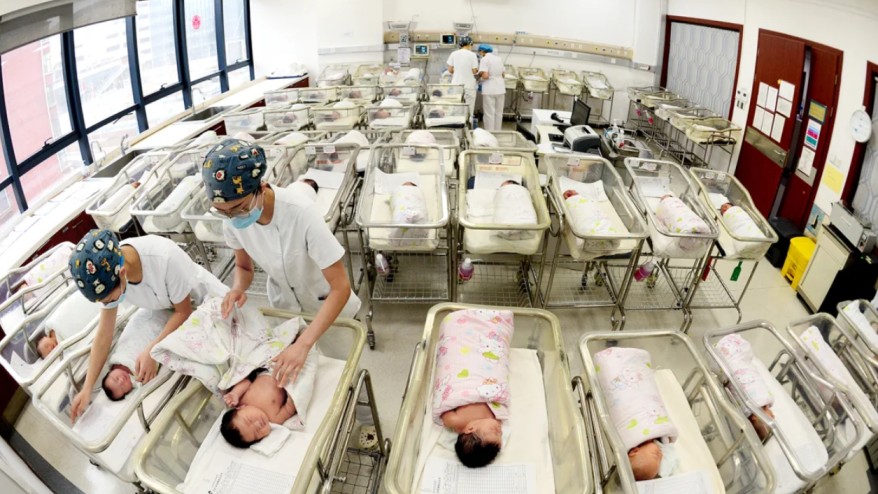
Nurses take care of newborn babies at a maternal and child health hospital on February 28, 2024 in Lanzhou, Gansu Province of China.
In a major policy shift, China has announced that all tertiary-level hospitals will be required to provide epidurals anesthesia during childbirth by the end of 2025. This decision, announced by China’s National Health Commission (NHC), aims to improve the childbirth experience and encourage more women to have children amid the country’s declining birth rate.
Mandatory Epidurals to Become the Norm
Starting this year, all tertiary hospitals, which are large facilities with over 500 beds, must begin offering epidural anesthesia services. By 2027, the same requirement will apply to secondary hospitals, which have over 100 beds.
This move reflects growing concerns over China’s falling birth rate. In 2024, the country’s population shrank for the third straight year, sounding alarm bells among policymakers. The population decline is expected to worsen, prompting the government to take urgent steps.
Low Epidural Usage Compared to the West
Currently, only about 30% of Chinese women receive pain relief during childbirth. This figure is significantly lower than in developed nations. For instance, in France, roughly 82% of women use epidurals, while the rate is over 67% in the United States and Canada.
The World Health Organization (WHO) recommends offering epidurals to healthy pregnant women who request pain relief. China’s move is in line with these global standards and aims to narrow the gap in maternal care.
Creating a Comfortable and Safe Birth Experience
The NHC emphasized that providing widespread access to epidural anesthesia would “improve the comfort and security” of medical services. It also added that the policy would help “enhance people’s sense of happiness” and foster a more childbirth-friendly environment.
Pain during labor is one of the major concerns deterring many women from childbirth. By promoting epidural usage, China hopes to reduce that fear and create a more positive birth experience for expecting mothers.
Financial Support and Insurance Coverage Expanding
To further support the policy, several provinces in China have started to include childbirth anesthesia under medical insurance coverage. This move is designed to ease financial burdens and encourage childbirth among young couples.
High childcare expenses, job insecurity, and a slowing economy are among the key reasons why many young Chinese people are avoiding marriage and family planning. Offering medical and financial support could help shift this trend.
Additional Incentives for a Fertility-Friendly Society
Beyond medical upgrades, local governments are also offering extended leaves and benefits. In Sichuan province, for example, officials have proposed 25 days of marriage leave and up to 150 days of maternity leave.
These steps reflect a broader national strategy to build a fertility-friendly society, where childbirth and parenting are seen as more manageable and supported both socially and financially.
A Timely Move to Tackle a Growing Crisis
China’s declining birth rate poses a long-term challenge for its economy and workforce. By making epidural anesthesia widely available, the government is tackling one of the many hurdles that discourage women from giving birth.
With this new policy, China is not just addressing the physical discomfort of childbirth, but also sending a strong signal of support to women and families. If successfully implemented, the move could be a turning point in China's efforts to stabilize its population and secure its future.