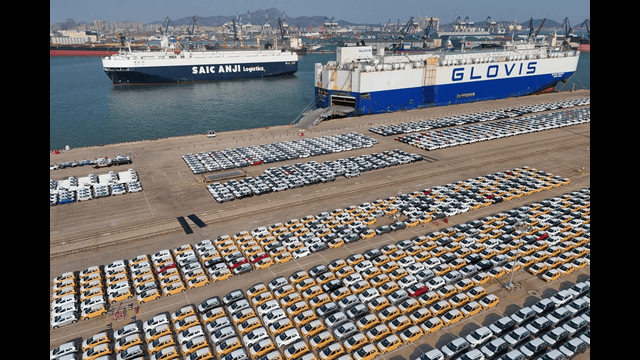
Vehicles and trucks for export wait for transportation from a port in Yantai in eastern China’s Shandong province on Jan. 2, 2025.
China’s exports recorded a solid rebound in November, offering a rare bright spot in a year marked by global uncertainty and weakening external demand. Customs data released Monday showed a 5.9% rise in China’s exports, reaching $330.3 billion, reversing October’s unexpected 1.1% decline. However, exports to the United States continued their steep slide, falling 29% year-on-year—the eighth consecutive month of double-digit drops.
Export Growth Returns, but U.S. Shipments Plummet
The overall export growth surpassed economists’ expectations, signaling resilience in China’s trade engine. But the sharp drop in shipments to the U.S. underscores a lingering divide between the world’s two largest economies.
Despite the slump in U.S.-bound goods, China has expanded its reach in other regions. Shipments have surged in Southeast Asia, Africa, and Latin America, helping cushion the impact of shrinking U.S. demand.
Imports Strengthen but Economic Pressures Remain
China’s imports grew 1.9% in November, slightly better than the 1% rise in October. The improvement suggests modest recovery in domestic demand, though the country’s prolonged property sector downturn continues to drag on household spending and corporate investment.
Economists point out that consumer confidence remains fragile, and real estate weakness still weighs heavily on broader economic activity.
U.S.-China Trade Truce Offers Relief but Challenges Persist
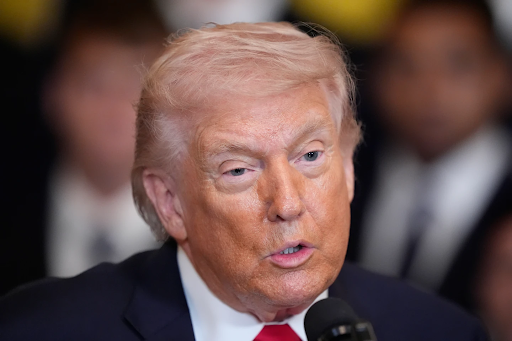
A turning point in trade relations arrived in late October, when U.S. President Donald Trump and Chinese leader Xi Jinping met in South Korea and reached a year-long trade truce.
Under the agreement:
- The U.S. reduced tariffs on Chinese goods.
- China committed to lifting its export controls on rare earth materials, easing pressure on global supply chains.
Economists at ING Bank warn that while the truce supports export stability, “unfavorable base effects” from strong pre-tariff-hike export numbers will likely keep China’s trade growth modest in coming months.
Factory Activity Still Weak
Despite November's export gain, China’s factory activity remains subdued. An official PMI survey showed eight straight months of contraction, raising questions about whether the trade truce has sparked genuine recovery in external demand.
Manufacturers continue facing global headwinds, from high interest rates abroad to cautious purchasing behavior among major trading partners.
China Expected to Meet 2025 Growth Target
With exports stabilizing, many economists believe China is on track to meet its growth target of around 5% for the year.
Beijing has placed strong emphasis on advanced manufacturing, a priority laid out during a high-level meeting in October. Further details are expected at the government’s annual economic planning session later this month.
Long-Term Outlook: China to Gain Global Market Share
Some analysts expect China’s export dominance to grow, despite geopolitical challenges.
Morgan Stanley projects China’s global export share will rise to 16.5% by 2030, driven by competitive strength in:
- Electric vehicles (EVs)
- Robotics
- Battery technology
- Advanced manufacturing
Chief Asia Economist Chetan Ahya noted that China could continue expanding its presence even amid protectionism, trade tensions, and shifting industrial policies across G20 nations.
Cooling Tensions May Not Last
Analysts caution that the current trade calm may be temporary. China-U.S. relations remain fragile, and geopolitical uncertainties could resurface quickly.
BNP Paribas strategist Chi Lo emphasized that the truce does not resolve the deeper strategic standoff between Beijing and Washington.
The Bottom Line
China’s 5.9% export growth in November signals renewed momentum, supported by expanding markets beyond the U.S. But the 29% plunge in U.S. shipments highlights persistent friction in bilateral trade.
As China navigates weak factory activity, a sluggish property market, and a wary global economy, its long-term bet on high-tech manufacturing may ultimately define its future export trajectory.